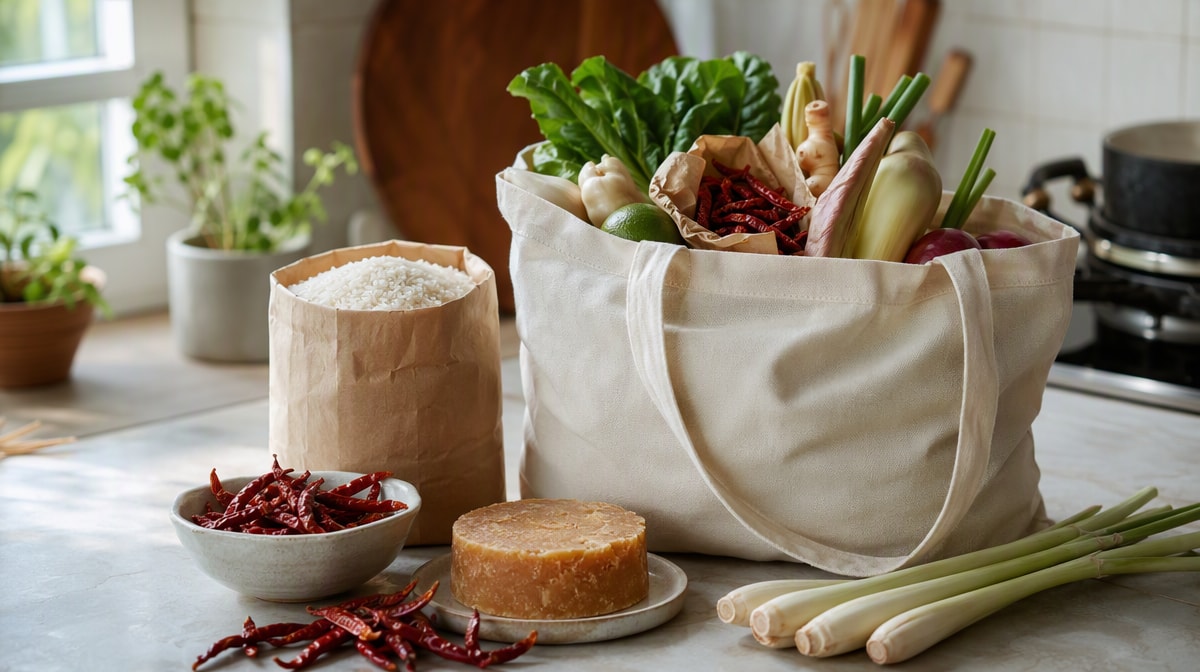
Most of the good Thai cooking in this country is being done with an ingredient someone drove past a shop to get.
The problem isn't that Thai food is hard to find. It's that a person with no connection to Thailand has no idea which of the two Thai shops in their town is the real one, and it's almost always the smaller, shabbier, cheaper-looking one that has the actual imported pastes.
This is where to look, and what to look for once you're standing in it.
The rule that actually works

Before any list, one rule, because it saves you from every other mistake on this page.
A shop that stocks a full Thai pantry has kapi. Kapi is shrimp paste, and it's a Thai-only ingredient that sits in one short aisle in a dedicated Thai shop and is simply absent from a general Asian supermarket.
So look for the shrimp paste. If it's there, the shop is importing properly and everything else in the list will be there too. If it's not, the shop is stocking a curated selection of what sells in the UK, which is a perfectly reasonable business model but not what you want.
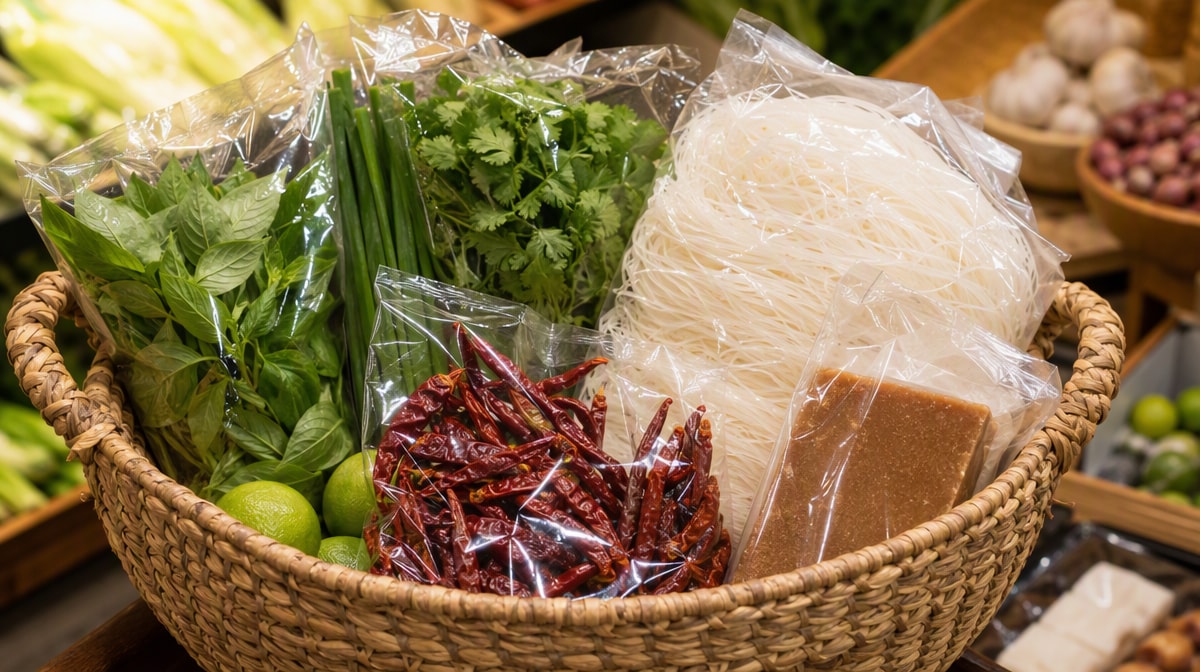
Second marker, nearly as reliable: a freezer with individually packaged Thai basil, kaffir lime leaves and lemongrass. Fresh herbs tell you about the produce side, frozen herbs tell you about the importer.
If you can get to a proper shop
This is the better option by a distance, because you can see the produce and a lot of the useful Thai ingredients are fresh.
Manchester has the densest concentration in the country by a wide margin, with Wing Yip, Worldwide Foods, Blue Whale, Oseyo, Woo Sang, W.H. Lung and Wing Fat all carrying Thai stock. This is the best-covered city in the UK and it's not close.
London has plenty online and one or two in person, though the well-known Thai shop on Upper Richmond Road has closed, so don't drive to it. The Earl's Court shops serve the capital well, and there's a broad spread across the boroughs rather than a single destination.
Birmingham has Mai Thai Supermarket on High Street, Erdington, which is a dedicated Thai store rather than a general Asian one.
Leeds has Nong Fern Thai Supermarket on Vicar Lane.
Edinburgh has Thai@Haymarket on Dalry Road, which is one of the best-stocked Thai shops in the UK and brings stock direct from Thailand. It's cash only, which is worth knowing before you go, and it's open daily.
Essex and Colchester have JOY Thai Spices in Brightlingsea, which is a physical shop and an online store, with a small weekly import. It also runs cookery classes, which is a different reason to go.
The general observation is that outside London, Manchester and Birmingham, there tends to be exactly one proper Thai shop, and it's a community institution that nobody outside that community knows about. Ask, rather than guessing.
If you're ordering online
The online side is genuinely good and it solves the problem for most of the country, because the delivery is usually next day and the selection is better than the physical shops.
Thai Food Online is the longest established, operating since 2007, with a very large catalogue and next day delivery. It's the one I'd recommend to somebody starting out, because the range means you can find the specific thing you want rather than the popular thing.
Tuk Tuk Mart is Manchester-supplied with a huge range, and it's one of the few that packs chilled and frozen properly with ice packs in insulated boxes, which is the difference between frozen lemongrass arriving usable and arriving thawed.
Thai Food Direct is Hertfordshire-based and has the lowest free delivery threshold of the lot at ten pounds, which makes it the sensible choice for small orders.
Muay Supermarket runs a London shop in Earl's Court and gets fresh stock weekly on Mondays, with free delivery over fifty pounds.
Bee Thai Food, in Kidderminster, does UK-wide delivery of authentic stock.
The Asian Cookshop has around two hundred Thai products and free delivery over about fifty pounds.
Several others exist, including JOY Thai Spices, Oriental Mart, Thai Food 2U, RaanThai, and a handful of wholesalers. The wholesalers, including Vegetarian Express and Lung Wah Chong, are trade suppliers rather than retail, so they're not what you want unless you're feeding a room.
The brands are the same across all of them, which is the reassuring part. Mae Ploy, Squid Brand, Tiparos, Chaokoh, Lee Kum Kee and Lobo appear on essentially every one, so if your local shop doesn't have the brand you want, an order does.
The general supermarket fallback
Every large supermarket chain here now has a world food aisle, and in most of them it will be somewhere between poor and adequate.
What you'll reliably get: soy sauce, rice vinegar, coconut milk, jasmine rice, rice noodles, curry powder, dried curry leaves, and a curry paste if you're lucky.
What you won't get: kapi, fresh galangal, kaffir limes, lemongrass, Thai basil, bird's eye chillies, real nam prik, fish sauce that isn't a house brand, or full fat coconut milk in any quantity you'd need.
The two things worth making a special trip for are full fat coconut milk and a decent curry paste. Everything else on that list, you can improvise around.
There's also the wholesale club route, if you're cooking for a group. Cases of Aroy-D coconut milk are dramatically cheaper per tin than the retail price, and the research has them at around thirteen pounds for a case, which is a serious saving against buying them singly.
What things actually cost
Useful, because people assume Thai cooking is expensive and it isn't.
Fish sauce, £1.59 to £4.09 for 300 to 700ml. Coconut milk, £1.35 to £2.35 for a 400ml tin, or about £13 for a case. Curry paste, from 69p for a small tub to £3.25, up to £6.75 for a kilo. Fresh galangal, about £3.19. Fresh lemongrass, about £3.15. Dried kaffir lime leaves, about £1.49 for 5g. Jasmine rice, about £3.75 for a kilo, though sticky rice is nearly five times that per kilo at £17.85 for 5kg.
So a full pantry restock, covering everything on this site, is somewhere in the region of fifty to sixty pounds and lasts months. A week of cooking for two is closer to fifteen.
Note that the expensive items are all either fresh herbs or the specialty stuff. The pantry is cheap. Nobody has ever gone broke on fish sauce.
What to buy first, in order
If you're building a pantry from nothing, this is the order I'd actually go in.
Fish sauce. Squid Brand, the bottle with the squid on it. It underpins more Thai cooking than any other single ingredient and there are more ways to use it than recipes.
Aroy-D or Chaokoh, 40% extract. Get the case if you'll use it. Do not buy the light version, our ratio guide explains why it matters more here than almost anything.
Light soy sauce. Healthy Boy or Lee Kum Kee.
Red or green. Better than the jar versions, and they freeze.
Rice vinegar and white distilled vinegar. Cheap, and one of the ingredients that most improves a home-cooked Thai dish.
Palm sugar. A block, not granulated, and our palm sugar guide covers why the block is the right form.
Rice noodles. Three widths if you can, and the flat one for pad thai.
Then fresh, in this order: lemongrass, kaffir limes or a pack of frozen leaves, galangal, Thai basil, coriander, bird's eye chillies, limes, red shallots, garlic, spring onions.
And one piece of equipment rather than an ingredient, which is a mortar and pestle. If you think there's any chance of making your own paste, buy it now, because it's a one-afternoon job to season and it'll be the single biggest upgrade to your cooking for the price of a takeaway. Our pestle method guide covers the technique and the twelve minutes it'll take you the first time.
Frozen is the smart buy

The most useful single piece of advice on this page, and it applies whether you're in a shop or ordering.
Individually quick-frozen lemongrass, galangal, kaffir lime leaves, Thai basil, coriander and chillies are as good as fresh for anything cooked in a pan or a pot. They're cheaper, they need no trimming, and they don't rot in the fridge while you forget about them.
Fresh kaffir lime leaves are the extreme case. They're expensive in every shop and they go off within days, so a pack of frozen leaves solves a problem that otherwise stops people buying them at all.
Buy fresh only what goes in raw or at the very end, which is really just mint and the top of a coriander bunch.
Our first supermarket trip guide covers the route through the shop, which is a different problem from finding the shop.
Ordering, and the courier problem
Two things that will bite you the first time you order.
Fresh herbs, particularly lemongrass and galangal, will arrive tired or limp. That doesn't matter, because the aromatic oils have already been released by the time you get to it and it's all going into a hot pan. If the package is warm when it arrives, the herbs are still fine. Leaves are less forgiving, so if you can avoid a weekend delivery of a Monday's order you'll do better.
Chilled and frozen items need to be sent with ice packs, and most of the good shops do this. The ones worth avoiding are the shops where it's unclear. If you're ordering a lot of frozen, that's the deciding factor, not price.
What to cook first, and where to start
Because a stocked pantry is only useful if you know what to make with it, and because the first dish is the one that teaches you the rest.
Tom yum. It's the fastest thing in Thai cooking, it needs almost nothing from the pantry beyond fish sauce and limes, and it's very hard to make badly. It's also the dish that teaches you what a properly seasoned Thai broth tastes like, which is the foundation for everything else.
Then green curry, because it uses paste, coconut milk, kapi, kaffir lime and lemongrass together and teaches you the balance of the whole kitchen in one dish. Our green curry paste guide has the ratios.
Then pad kra pao, which is the honest test of your wok and your heat, and which you should expect to be disappointing the first two or three times.
Seasoning sauce is a different product from fish sauce and it's worth knowing before you buy. It's a savoury, slightly sweet, ready-made blend that sits in a Thai kitchen fridge and goes into stir-fries and marinades, and it's the reason so much restaurant Thai food tastes more rounded than home cooking. Our seasoning sauce page explains what it is and what it replaces.
A note on sources
The retailer list is the weakest part of this page, because businesses close, move and change their delivery policies and this research is a snapshot. The one that mattered most already closed during the research period, which is a fair illustration of the point. The price figures are from retailer listings at the time and are indicative rather than current. The kapi test and the rest of the decision framework is my own and is not from the sources.
Frequently asked questions
Where can I buy Thai ingredients in the UK?
For online, Thai Food Online, Tuk Tuk Mart, Thai Food Direct, Muay Supermarket and Bee Thai Food all deliver UK-wide, usually next day. For physical shops, Manchester has the best coverage in the country, and there's a dedicated Thai shop in Birmingham (Erdington), Leeds (Vicar Lane) and Edinburgh (Dalry Road). Outside those cities, look for a community Thai supermarket rather than a general Asian one.
How do I tell if an Asian supermarket is a proper Thai one?
Look for the shrimp paste, kapi. It's a Thai-only ingredient that sits in one short aisle of a dedicated Thai shop and is simply absent from a general Asian supermarket. A second good marker is a freezer with individually packaged Thai basil, kaffir lime leaves and lemongrass. If both are there, the shop is importing properly and the rest of the Thai pantry will be there too.
Can I cook Thai food with ingredients from a normal supermarket?
Mostly, but not properly. Every chain here stocks soy sauce, rice vinegar, coconut milk, jasmine rice, rice noodles and curry powder, and with a decent curry paste you can make a good curry. You won't get kapi, fresh galangal, kaffir limes, lemongrass, Thai basil, bird's eye chillies or full fat coconut milk in the quantity you need. Full fat coconut milk and a real curry paste are the two worth a special trip.
What is the cheapest place to buy Thai ingredients?
A wholesale case of coconut milk is the single biggest saving, around thirteen pounds for a case against a retail price of two pounds a tin. Beyond that, buying fresh herbs frozen rather than fresh is a real saving, and the pantry itself is cheap. A full restock covering everything on this site is roughly fifty to sixty pounds and lasts months. Nobody has ever gone broke on fish sauce.
Are fresh or frozen Thai ingredients better?
Frozen, for most things. Individually quick-frozen lemongrass, galangal, kaffir lime leaves, Thai basil and chillies are as good as fresh in anything cooked in a pan or liquid, they're cheaper, they need no trimming and they don't rot. Buy fresh only for what goes in raw or at the very end, which is really just mint and the top of a coriander bunch.
What should I buy first if I'm starting from nothing?
Fish sauce, full fat coconut milk, light soy sauce, a Mae Ploy curry paste tub, rice vinegar and white vinegar, a block of palm sugar, and rice noodles. That covers most of Thai home cooking. Then fresh, in this order: lemongrass, kaffir limes or frozen kaffir leaves, galangal, Thai basil, coriander, bird's eye chillies, limes, red shallots, garlic and spring onions.
Do Thai ingredient shops deliver frozen food properly?
It varies and it's the deciding factor for a large order. The better shops pack chilled and frozen with ice packs in insulated boxes, which means the frozen lemongrass arrives usable rather than thawed. If you're ordering a lot of frozen, check this before you compare prices. One more thing to know: fresh herbs arriving limp is normal and doesn't matter, because they're going into a hot pan.
Is it cheaper to buy Thai ingredients in bulk or in small quantities?
In bulk for the pantry, and small for the fresh. A case of Aroy-D coconut milk is dramatically cheaper per tin than buying singly, and dried goods like soy sauce and vinegar keep for years so there's no reason to buy them small. Fresh herbs and vegetables are the opposite, because they don't keep, and a bulk buy of those means waste. The rule is that anything shelf-stable is worth a case and anything perishable isn't.

Comments