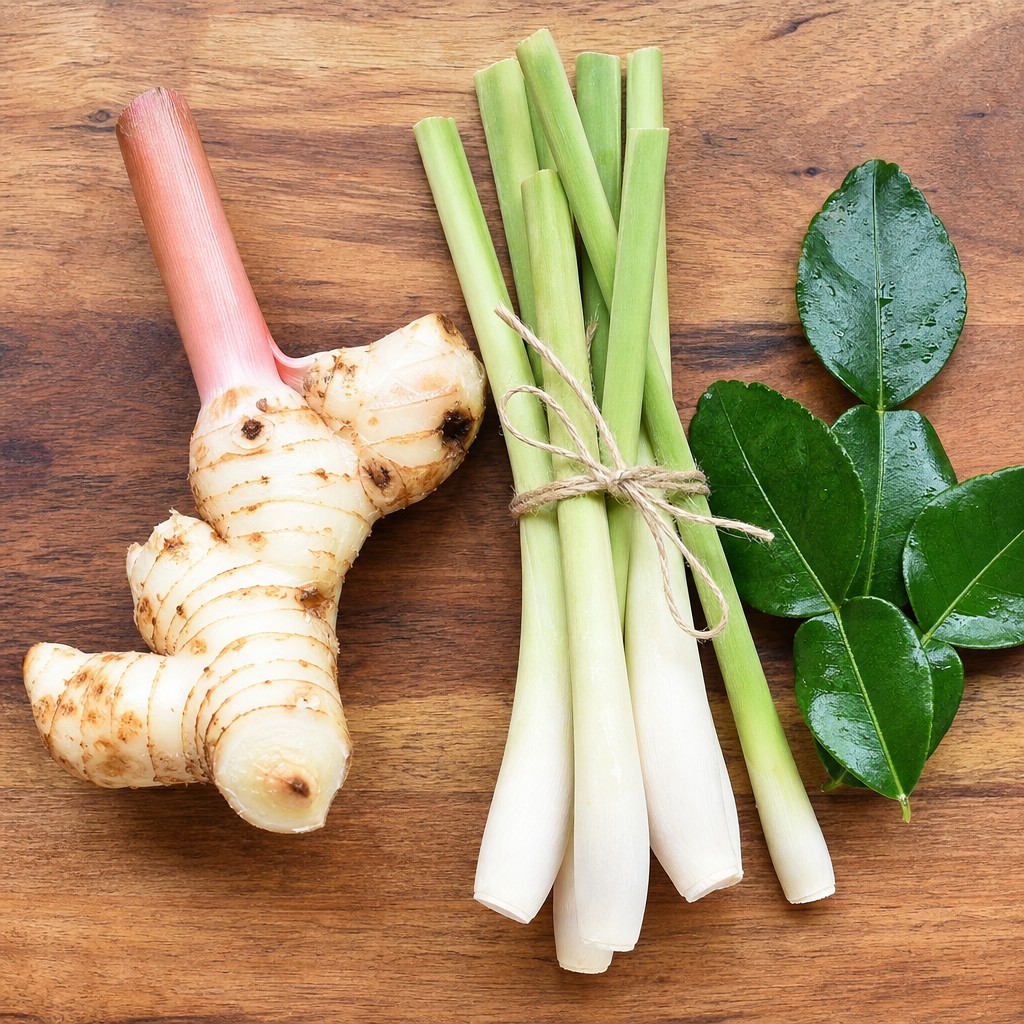
If you cook Thai food in the UK, you'll know the problem: galangal, lemongrass and kaffir lime leaves are sold in big bunches, but a single curry or pot of tom yum only needs a few slices, a stalk or two, and a handful of leaves. The rest wilts in the fridge before you can use it. The good news is that all three of these aromatics store beautifully, and all three freeze brilliantly. Get them into the freezer in the right form and you'll have fresh Thai flavour on hand for months, with almost nothing wasted.
Here's exactly how to keep each one, in the fridge and the freezer, plus the batch trick I use so I never run short.
The quick answer
In the fridge, all three keep roughly 2 weeks wrapped well in the crisper. In the freezer, galangal lasts 6–12 months, lemongrass up to 6 months, and kaffir lime leaves up to a year, and you can cook all three straight from frozen. The golden rule: don't wash them before storing, because moisture is what makes them rot.
First, the golden rule: don't wash before you store
Whatever you do with these aromatics, keep them dry until you're ready to cook. Surface water is what turns them slimy and mouldy in the fridge and gives them freezer burn in the freezer. Wash them right before you use them, not before they go into storage. For fridge storage, a slightly damp (not wet) paper towel is fine; for the freezer, you want them dry and airtight.
Galangal
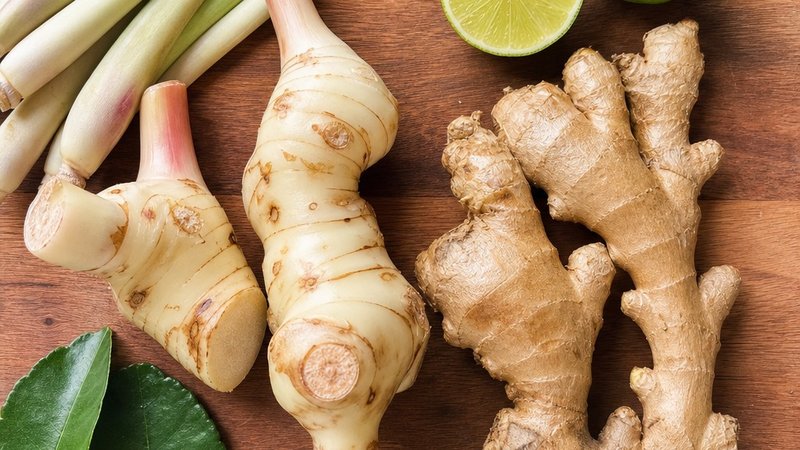
In the fridge, a whole knob keeps about 2–3 weeks wrapped in a lightly damp paper towel inside a bag in the crisper drawer. It should be firm and smooth; if it's gone soft, shrivelled or spotty, it's past it.
The freezer is the better option: galangal freezes for 6–12 months with little loss of flavour. Don't peel it, as the skin helps protect it. Slice it into coins (the form you'll actually use), or freeze it whole in an airtight bag with the air pressed out. There's no need to defrost: slice or grate it straight from frozen into your tom yum or curry, where the heat thaws it in seconds. Freezing softens the texture a little, but since galangal is only simmered to infuse and then left in the bowl, that doesn't matter. (More on the root itself in what is galangal, and on swaps in galangal substitutes for tom yum.)
Galangal can also be dried and will keep for a year or more, but the bright, piney notes fade. Freezing keeps it far closer to fresh.
Lemongrass
In the fridge, whole stalks keep about 2 weeks wrapped in plastic or a damp paper towel in the crisper; once chopped, use it within 2–3 days. Limp-but-not-spoiled stalks can be perked up by standing them in a glass of water or soaking in ice water for a few minutes.
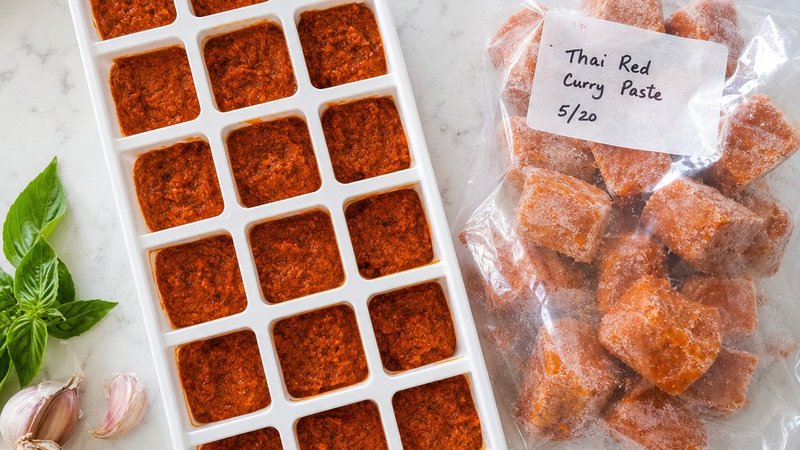
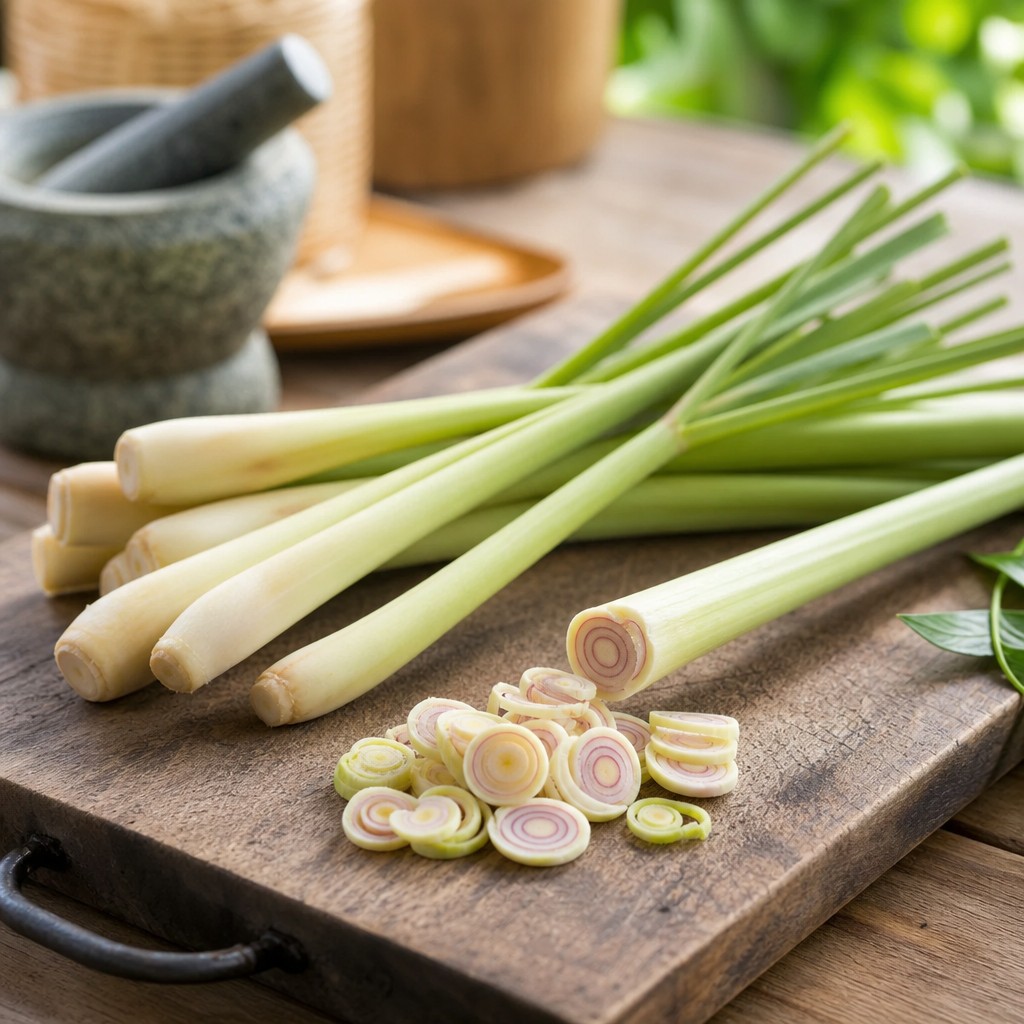
In the freezer (up to 6 months), lemongrass freezes very well, and freezing actually breaks down its tough fibres so it's easier to slice afterwards. You have three options. Whole stalks: trim the root and dry top, freeze on a tray, then bag. Sliced or minced: freeze in a bag or tub, ready to grab by the spoonful. As a paste: trim, peel the tough outer layers, blitz with a splash of water, and freeze in an ice-cube tray; one cube is about a tablespoon, perfect for a single curry.
Paste and sliced lemongrass go straight from the freezer into a hot pan; whole stalks are best thawed in the fridge first, then bashed to release their oils. See more uses in what is lemongrass.
Kaffir lime leaves (makrut)
In the fridge, they keep about 2 weeks in a sealed bag in the crisper, ideally with a dry paper towel to catch moisture.
The freezer is where they shine: kaffir lime leaves freeze better than almost any other herb (up to a year), which is why I always keep a bagful in. Just pop the whole leaves into a thick, well-sealed freezer bag (a flimsy one lets the aroma escape), press the air out, and freeze. Drop them straight into a curry or soup from frozen; the thin leaves thaw instantly in the heat. They look a little less glossy once frozen, but the fragrance is all there. See what are kaffir lime leaves for more on using them.
Dried leaves are sold too, but they lose a lot of aroma. If you use dried, roughly double the quantity. Frozen beats dried every time here.
Can't decide what to eat tonight?
Take our 60-second quiz and we'll pick for you

The batch trick: buy once, freeze in portions
This is the habit that changes everything for Thai cooking at home. When you buy a bunch, prep the whole lot at once and freeze it in recipe-ready portions: galangal in coins, lemongrass sliced or as paste cubes, lime leaves loose in a bag. Label and date each bag. Then a midweek curry is just a case of grabbing a few slices, a cube and a few leaves, with no thawing and no waste.
You can take it one step further and freeze a combined aromatic base: blitz galangal, lemongrass and lime leaves (plus garlic, chilli and a little oil) into a paste and freeze it in cubes. One cube is then a whole curry's worth of fragrance, ready to go.
Can you cook them straight from frozen?
Yes, and that's the whole point. Galangal (slices or grated), lemongrass paste or slices, and whole kaffir lime leaves all go straight from the freezer into the pot; the heat thaws them in moments. Whole lemongrass stalks are the one exception: thaw them in the fridge first, then bruise them before use.
Freezing vs drying: which keeps more flavour?
Freezing wins, comfortably. All three of these aromatics are about volatile, fragrant oils, and freezing locks far more of that aroma in than drying does. Dried galangal and dried lime leaves lose a noticeable amount of their character (which is why you double dried lime leaves), and dried lemongrass goes woody and faint. Drying is a fine backup for long-term storage, but if you want the dish to taste fresh, reach for the freezer.
How to tell if they've gone off
Some things are salvageable: a slightly limp lemongrass stalk or a softening leaf can be revived in ice water; use up tired stems soon. Others need binning: any mould, sliminess, a sour or musty smell, or galangal that's gone soft, dark and shrivelled. When in doubt, throw it out.
Frozen aromatics that have lost their glossy looks are usually fine; that's just the freezer, not spoilage. Give them a sniff and they'll still smell fragrant.
Frequently asked questions
Can you freeze galangal?
Yes, and it's the best way to keep it: 6 to 12 months. Don't peel it; slice it into coins or freeze it whole in an airtight bag, and slice or grate it straight from frozen into soups and curries.
Can you freeze lemongrass?
Yes, for up to 6 months. Freeze whole stalks, sliced lemongrass, or a blitzed paste in ice-cube trays. Freezing even softens the tough fibres, making it easier to chop afterwards.
Can you freeze kaffir lime leaves?
Yes. They freeze better than almost any other herb and keep up to a year. Seal whole leaves in a thick freezer bag and drop them into curries straight from frozen; the thin leaves thaw instantly.
How long does galangal last in the fridge?
About 2 to 3 weeks, wrapped in a lightly damp paper towel inside a bag in the crisper drawer. It should stay firm and smooth; soft, shrivelled or spotty galangal is past its best.
How long does lemongrass last in the fridge?
Whole stalks keep about 2 weeks wrapped in the crisper; once chopped, use it within 2 to 3 days. Limp stalks can be revived by soaking in ice water.
Do you need to defrost frozen aromatics before cooking?
Mostly no. Frozen galangal, lemongrass paste or slices, and whole kaffir lime leaves go straight into the pan and thaw in the heat. The only exception is whole lemongrass stalks, which are best thawed in the fridge and then bruised.
Should you wash these aromatics before storing them?
No. Surface moisture is what makes them rot in the fridge and burn in the freezer. Keep them dry in storage and wash them only right before you cook.
Is it better to freeze or dry Thai aromatics?
Freeze them. Their flavour lives in volatile oils that freezing preserves far better than drying. Dried galangal and lime leaves lose noticeable aroma (double dried lime leaves), and dried lemongrass goes woody and faint.
How should I freeze them so I don't waste a whole bunch?
Prep the whole bunch at once and freeze in recipe-ready portions: galangal coins, lemongrass slices or paste cubes, lime leaves loose in a bag, labelled and dated. Then take just what one curry needs.
Can I freeze all three together as a paste?
Yes. Blitz galangal, lemongrass and kaffir lime leaves with garlic, chilli and a little oil, and freeze in ice-cube trays. One cube is a whole curry's worth of aromatic base, ready to drop straight in.

Comments