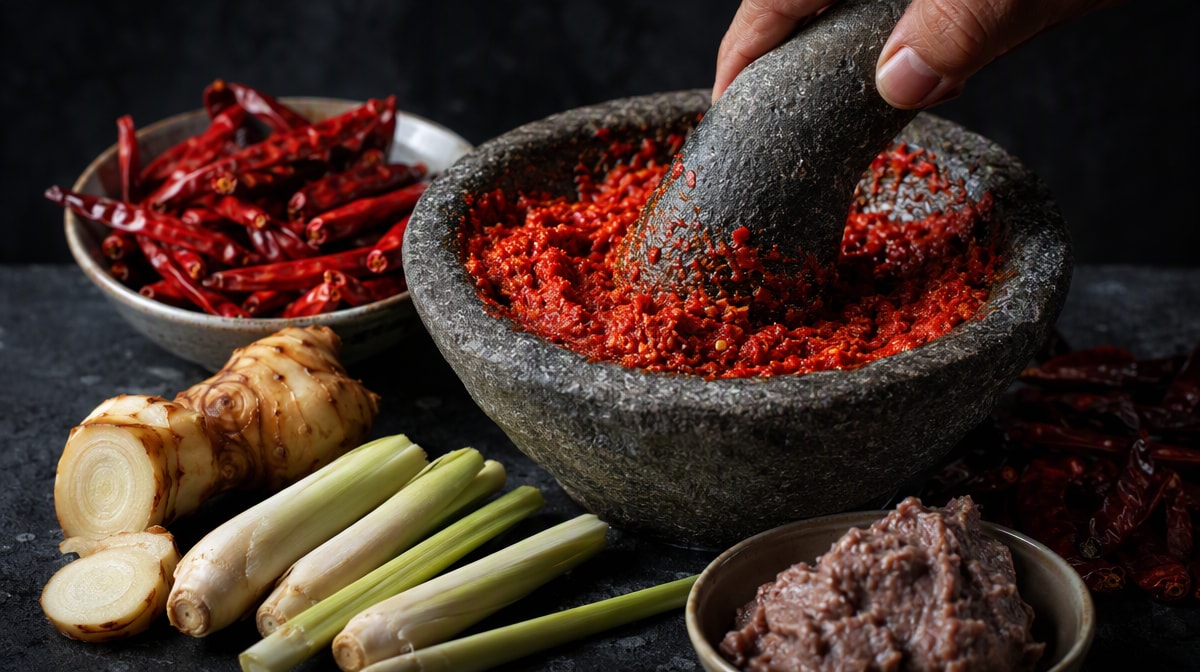
A granite mortar and pestle is called a khrok hin in Thai, a stone mortar, and it isn't the compromise option. It's the original one. Every food processor in the world is a machine built to imitate what a pestle does.
That reframing matters, because most people treat the mortar as a nostalgic fallback for when the processor breaks. It's better equipment for this specific job, and once you own one you'll use it for a lot more than paste.
Why the pestle actually wins
There's a mechanism here, and it's not mystical.
Pounding crushes the plant cell walls. It ruptures them, which releases the volatile aromatic oils that carry nearly all of the flavour in a chilli, a lemongrass or a galangal.
A food processor slices. The blades cut through the tissue rather than rupturing it, so a good proportion of those oils stay trapped inside the fibres and never make it into the paste. You end up with something that tastes diluted rather than weak.
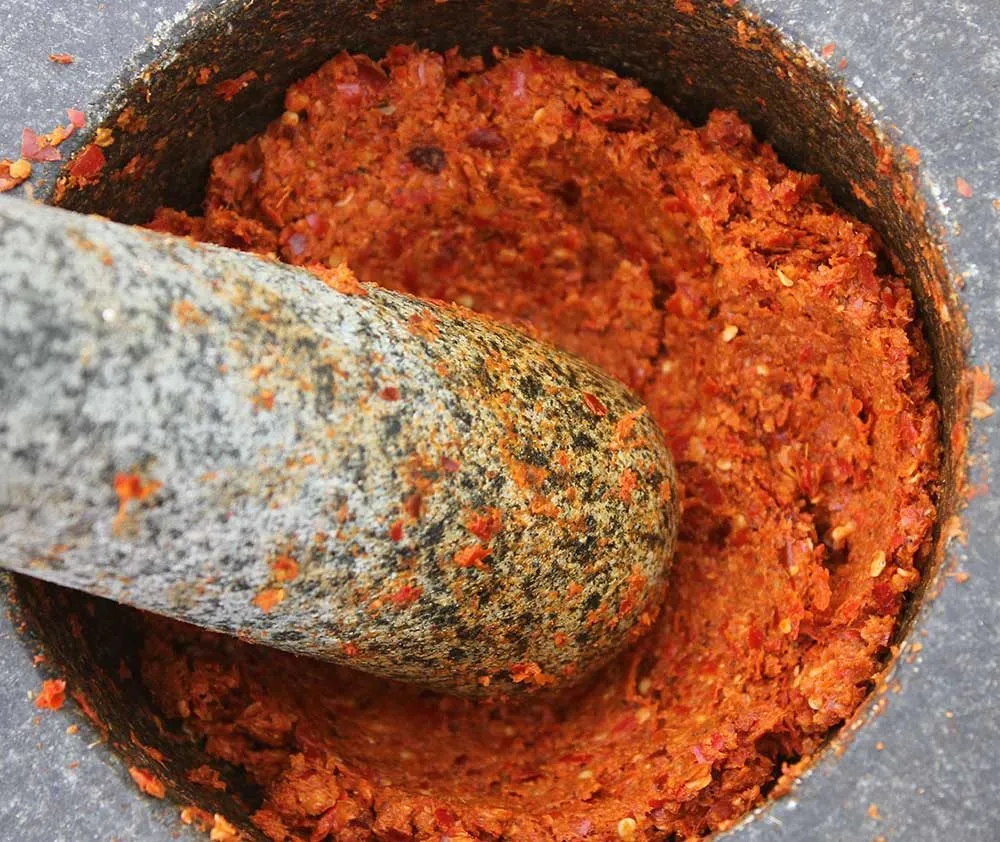
The texture difference follows from the same thing. Processed paste retains fibrous shards of lemongrass and galangal that never break down properly, and those shards stay in the finished curry as grit. Pounding pulverises the fibres completely, and you get a paste that's smooth and cohesive.
Then there's heat. A processor generates friction, and friction generates heat, and heat drives off the volatile aromatics you're trying to keep. Pounding doesn't. The paste stays cool and the top notes survive.
And the fourth one is the one people notice in the pan. A processor usually needs added water or oil to get the blades moving, and that liquid dilutes the paste. A mortar needs nothing added at all. What goes in is what comes out.
Multiple Thai cooking authorities describe mortar-made paste as having greater depth and breadth of flavour, and while nobody has put a blind taste test against a processor in the literature, the mechanism is plausible and consistent.
If you don't own a mortar
A granite mortar and pestle is the gold standard, 15 to 20cm across at minimum, and it's a one-off purchase that lasts decades. If you're going to buy one thing for Thai cooking, buy this.
Granite specifically, because it's heavy, stable, and porous enough to grip ingredients as you work them. Skip marble, which is too smooth to hold anything, and wood, which absorbs flavour permanently. Clay mortars are fine for som tam, where you're pounding a wet mass, but they're too light and fragile for paste, which is hard work.
If you can't or won't buy one, the honest answer is that a food processor is still much better than a jar. The consensus across the sources is unambiguous on this: if your only choice is between shop-bought paste and processor-made paste, make the paste. It's a real upgrade even though it's not the best available.
There are also versions with no processor and no mortar. Finely mince everything, then mash it with the flat of a knife blade or the back of a spoon. It works, and it works well if the ingredients are minced very finely to begin with. It's less effective on fibrous things like lemongrass, because mincing and mashing doesn't rupture the cell walls the way pounding does.
Other workarounds: a rolling pin in a sealed bag, which is a reasonable way to crush chillies and garlic but won't produce a paste. A stick blender, which is better than a processor for small batches but still doesn't handle fibrous aromatics. A microplane, which is genuinely useful for galangal and lemongrass, pre-shredding them so they mix into softer ingredients more easily.
The technique, and why the angle matters

Most people hold the pestle wrong and wonder why it's hard.
Hold it at about 65 degrees and pound into the side of the mortar, not straight down. Straight down, the ingredients bounce out and land on the worktop. Angled into the curve of the bowl, they stay put and get worked.
The motion is pound and drag. Pound down to break the fibres, then drag the pestle outward and around to separate what you've broken. Both halves of that motion are needed, and skipping the drag gives you a paste that's crushed but still stringy.
There are really two distinct movements. Pounding is up and down and it's for moist fresh ingredients. Grinding is circular and it's for dry spices and seeds. Using the wrong one on the wrong ingredient wastes your time, which is why toasting and grinding the dry spices first is not optional.
Budget 10 to 30 minutes of active work per batch, depending on quantity. Several sources describe it as a workout, and they're not exaggerating. It's the least convenient thing about this method and the reason most people don't do it.
The order you add things, which is the part people get wrong

This is more important than the pounding technique, and it's the thing that turns a twenty-minute job into a forty-minute one.
Add ingredients in order from hardest to softest.
Dry spices first. Coriander seed and cumin, toasted in a dry pan, then ground in the mortar to a powder. Powder is soft relative to everything else, so putting it in first and grinding it into a base gives you a fine even foundation.
Then the tough fibrous aromatics. Lemongrass sliced thin, galangal, kaffir lime zest. These are the hardest things in the paste and they need the mortar when the mortar is freshest. This is where the work goes.
Then the chillies, fresh or dried and rehydrated, with a good pinch of salt. The salt is doing real work here: it's an abrasive, and it helps the pestle grip. This is why salt goes in early with the chillies rather than at the end for seasoning.
Then garlic and shallots. Harder than herbs, softer than chillies.
Then the soft herbs. Coriander root and stems, which is the part most Western cooks throw away and which has a serious, almost engine-oil flavour, or a little Thai basil.
And shrimp paste last, stirred in rather than pounded. Kapi is soft and sticky, and pounding it at the end just gums up the pestle. Stir it through at the end with a spoon. Adding it earlier means repeatedly pulling a sticky mass off the pestle, and that's the most tedious failure mode in the whole process.
Making it a proper red paste
For red curry paste, the dried chillies need rehydrating first, which is the most commonly skipped step. Cover them in warm water for 20 to 30 minutes, and don't throw the water away, because several recipes use that soaking liquid in the paste itself.
Toasting the spices before grinding is the other commonly skipped step, and it's the difference between a paste that tastes of chilli and a paste that tastes of a specific place.
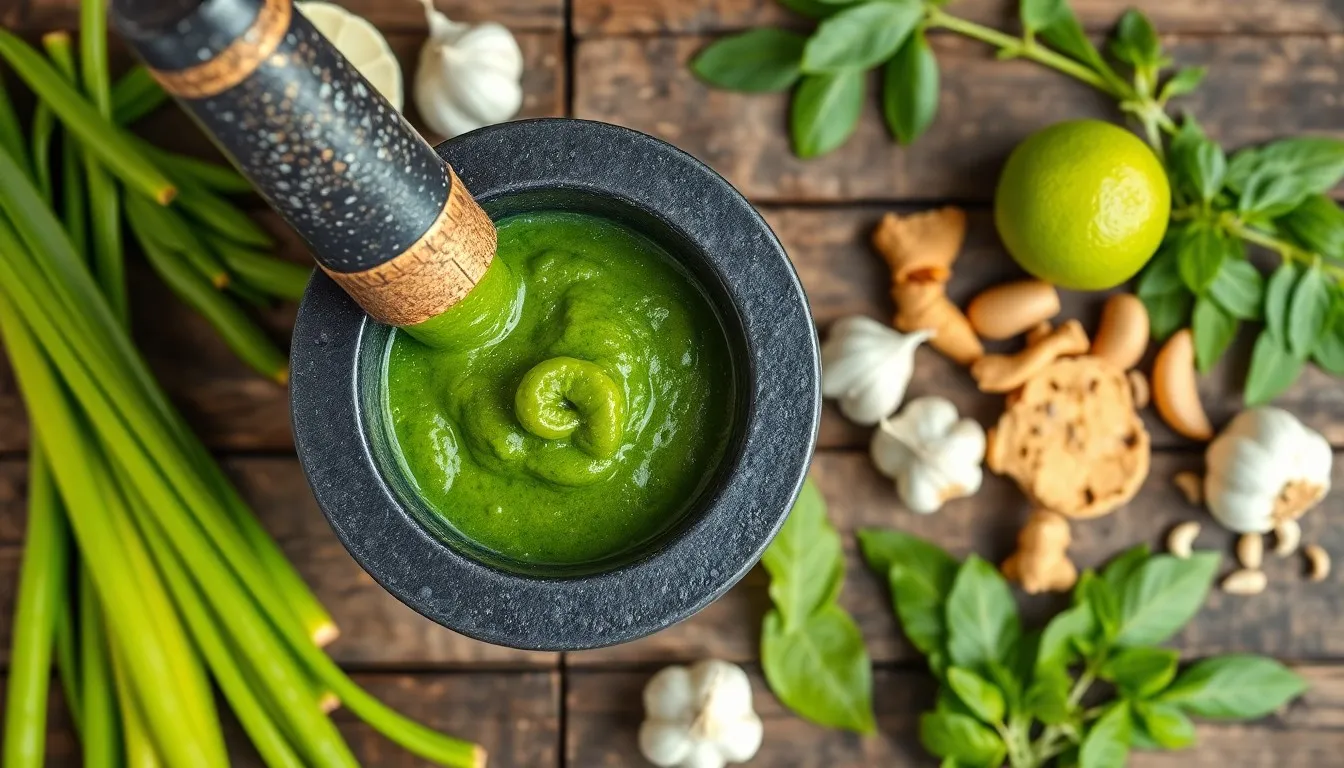
Full ingredient quantities for both are in our red curry paste recipe and green curry paste recipe. This page is about how to process them, not what to put in them.
A no-mortar version that genuinely works
The knife-and-board method, in full, because sometimes you have neither a mortar nor a processor and the question still needs an answer.
Finely mince everything separately, as finely as you can manage. Garlic first, then shallots, then chillies, then the fibrous aromatics, then herbs. Drier and harder ingredients need to go first in the mincing because you're removing water as you go.
Zest the galangal and lemongrass on a microplane if you have one, which turns the hardest part of the job into the easiest.
Then mash. Put the back of a heavy knife blade or the back of a spoon onto the pile and press, drag, gather, press again. It's slower and less effective than pounding, particularly on the aromatics, but with a small batch and fine prep it's entirely serviceable.
The honest limitation is that fibrous ingredients, which is most of what makes a paste taste like a specific curry, don't respond well to mincing. Expect a good paste rather than a great one.
Batch it

A mortar is a small vessel and this is genuinely awkward to do in quantity, which is one of the real advantages a processor has.
Do it in small batches and freeze. Spoon or cube the paste into ice cube trays, freeze, then bag up the frozen cubes. A tablespoon-sized cube is roughly the right portion for one person in a curry, and it means you can make a big batch once and have paste for a month without any preparation each time.
Store paste in an airtight container in the fridge for a week or two, with a thin layer of oil on the surface to keep it from oxidising. Freezer is better for anything past that.
Fresh is always best, and flavour does degrade over time even frozen. But paste made at home and frozen beats shop-bought paste that's been sitting, and the gap is wide.
The loudness problem
One thing almost nobody mentions, and if you live in a flat it's the deciding factor.
A pestle is loud. Not mildly loud. Genuinely loud, for ten to thirty minutes, and the sound is a sharp percussive crack rather than a low thud, which carries through walls in a way that's worth thinking about before you commit.
If that's a problem, the food processor is the answer and no amount of technique will beat it into submission. Or make your paste outside, or at a time of day when it doesn't matter.
If your hands don't work like they used to
One gap in all the research is worth naming, because it's the one that matters.
Pounding paste for ten to thirty minutes is hard physical work, and for anyone with limited hand strength, joint pain, or a repetitive strain injury, the mortar method may simply not be available. None of the sources address this, and the advice is uniformly "it's a workout, worth it", which is advice that quietly assumes a body most people have.
The knife and board method works fine here, and so does the food processor, and neither asks anything of your hands beyond ordinary chopping. A stick blender is the lightest option of all if you can hold one.
The honest position is that a food processor paste is a genuinely good curry paste, just not the best one, and if it's the method you can actually repeat every week then it's the better paste.
A note on sources
The mechanism for why pounding outperforms blending is well described and chemically coherent, and I'd trust it. The ingredient order is consistent across several independent sources including two I'd weight heavily, and it's the most practically useful thing on this page. The blind-taste-test evidence everyone cites is essentially absent, so treat claims of "greater depth and breadth" as informed opinion rather than demonstrated fact. The cost figures are US prices and will be higher here.
Frequently asked questions
Can I make curry paste without a food processor or a mortar?
Yes, by mincing every ingredient very finely and then mashing the pile with the back of a heavy knife blade or a spoon. It's slower and less effective on fibrous ingredients like lemongrass and galangal, so expect a good paste rather than a great one. Zesting the fibrous aromatics on a microplane first makes the biggest difference.
Is a mortar and pestle really better than a food processor?
Yes, for paste specifically. Pounding ruptures plant cell walls and releases the aromatic oils, while processor blades slice and leave the oils trapped in the fibres. It also avoids the heat a processor generates, which drives off volatiles, and it needs no added liquid, which would dilute the paste. Most cooks use a processor anyway because it's faster.
What's the right way to hold the pestle?
About 65 degrees, angled into the side of the mortar rather than straight down, or ingredients bounce out onto the worktop. The motion is pound and drag: down to break the fibres, then outward and around to separate them. Skipping the drag gives you crushed but still stringy paste, which is the most common reason people find the method disappointing.
Why do I have to add ingredients to the mortar in a particular order?
Because the mortar is most effective on the hardest ingredients, while it's still clean. Going hardest to softest means the fibrous aromatics and chillies are broken down when there's nothing sticky in the bowl yet. Shrimp paste goes last and is stirred in with a spoon, because pounding it earlier means repeatedly pulling sticky paste off the pestle, which is the slowest possible way to make paste.
Does mortar and pestle paste keep as well as processor paste?
The same, more or less. Both keep one to two weeks in an airtight container in the fridge, ideally with a thin layer of oil on the surface to slow oxidation, and both freeze well. Freeze it in ice cube trays so you get tablespoon portions, which is roughly the right amount per person. Flavour degrades over time even frozen, so make it and use it within a few months.
Why is my homemade paste weaker than the jarred one?
Usually the dried chillies weren't rehydrated long enough, or the spices weren't toasted before grinding, or the paste was over-browned when you fried it off. Another common cause is using a processor rather than a mortar, which slices rather than ruptures the cell walls and leaves much of the aromatic oil trapped. Toast the spices, soak the chillies properly, and fry the paste gently over medium heat rather than hot.
Is a granite mortar worth buying for Thai cooking?
Yes, it's the one piece of equipment that genuinely has no substitute for this job. Get granite, 15 to 20cm or larger, and avoid marble, which is too smooth to grip anything, and wood, which absorbs flavour permanently. Clay is fine for som tam but too light and fragile for paste. A good set lasts decades and costs considerably more here than the US prices usually quoted.
Can I make a big batch of curry paste without a food processor?
Not easily, because a mortar is a small vessel and this is genuinely awkward to do in quantity. The workaround is many small batches made over a period of a couple of days, with each one spooned into ice cube trays and frozen as you go. Then you can make a large total amount without ever needing a large vessel.


Comments