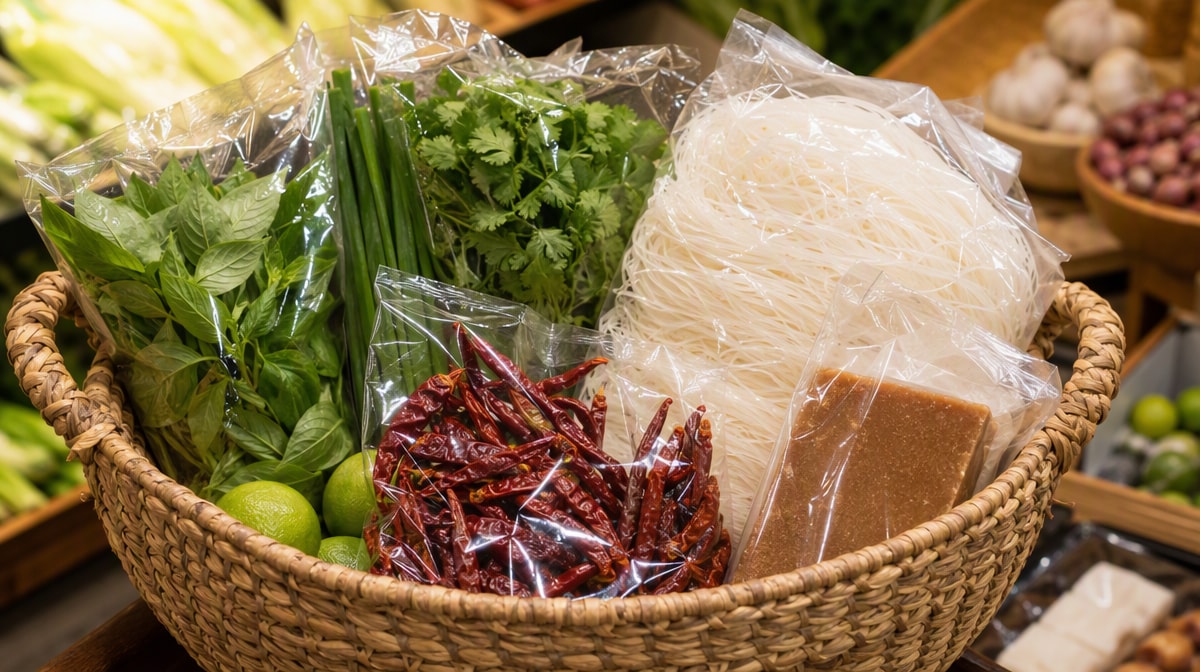
The first time, the problem isn't finding things. It's that an Asian supermarket is laid out for people who already know what everything is, and you're trying to learn the shop while you're standing in it.
So this is a route, not a list. Follow it in order and you'll come out with everything you need for about fifteen dishes, because the route is built around how the shop actually flows.
Ten minutes, one basket, and you'll know the shop well enough to go back without this page.
Before you go
Worth saying, because it saves a wasted trip.
Check whether your local shop has a website with a stock list. Most large branches do, and the fresh produce availability is the only thing that genuinely varies. Everything else, the sauces, the pastes, the rice, the noodles, is always there.
Go late in the day if you can. The fresh herb section is picked over in the evening, and the bread and the ready-made stuff is heavily discounted. Saturday morning is busiest and best for produce.
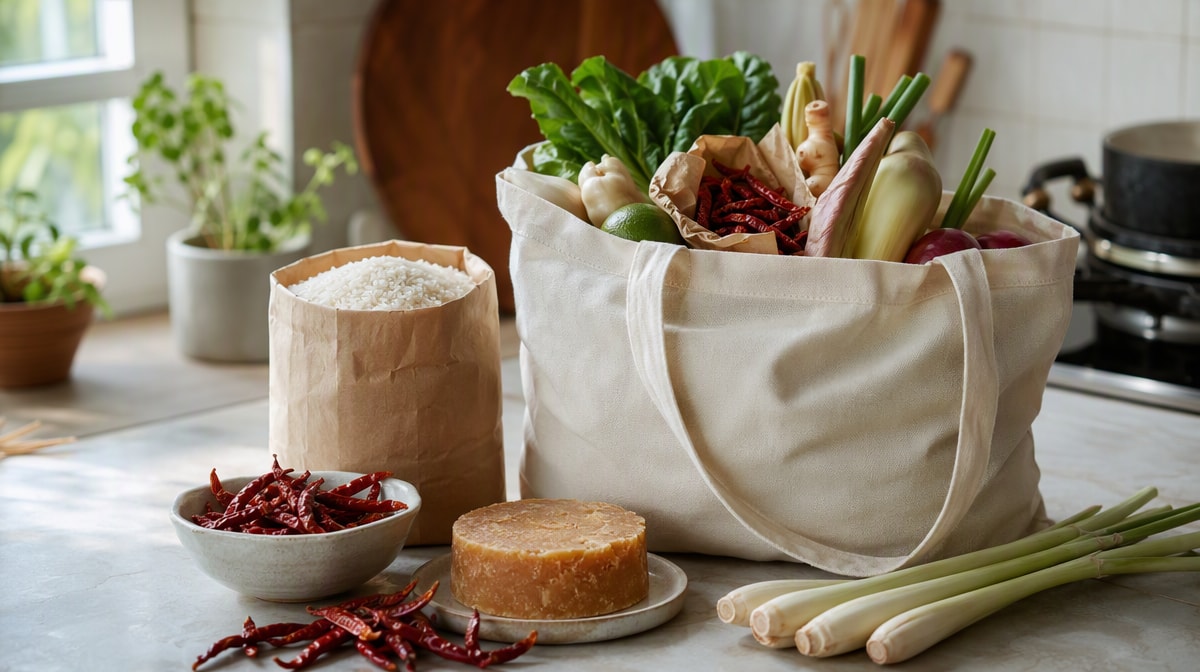
Bring your own bags. This is a small thing but the amount of packaging at one of these shops is genuinely striking, and the fact that they charge for bags is a real cost argument.
And don't go hungry, because the food at the back is a genuine trap and it's very good.
The route

The order matters for a practical reason. The fresh section goes at the end, so anything perishable ends up on top of the dry goods rather than underneath a bag of rice.
Cold and frozen first, then dry goods and sauces, then fresh at the end.
Start with the freezer. This is the opposite of instinct and it's the most useful tip on this page. A good Thai shop's freezer is full of individually quick-frozen portions of Thai basil, coriander, lemongrass, galangal, kaffir lime leaves, chillies, and pre-made curry pastes.
Individually frozen herbs, not washed and not in a bag with other things, and they're as good as fresh for cooking. Thaw in the pan and they go straight in, no washing, no prep. The one thing they're better than fresh for is a soup or curry, where you want the flavour to go into liquid.
A pack of individually frozen kaffir lime leaves is the single most useful thing in the freezer for anyone starting out, because fresh ones are expensive and go off in days.
Then the dry goods and sauces. This is the aisle that'll take the longest, because there are four brands of fish sauce next to each other and they are not the same. That's the subject of its own section below.
Then fresh, last. Lemongrass, galangal, kaffir limes, Thai basil, coriander, chillies, limes, spring onions, garlic, shallots, jasmine rice if it's sold loose.
Rice goes in the bottom of the basket, and everything perishable goes on top of it.
The sauces, and the brands that actually matter

The supermarket aisle is a wall of near-identical green bottles, and picking at random is how people end up with a fish sauce they don't like and don't know why.
Learn two brands and buy those.
Squid Brand for fish sauce. Squid Brand and Squid are the same company, and the bottle with the squid on it is the one most Thai cooks here reach for. It's a proper Thai fish sauce, salty and full-flavoured, and it's the right default.
Healthy Boy for light soy sauce. Widely available, cheap, and reliable across the whole range.
Mae Ploy for curry paste. If you're not making your own, this is the one to buy. It's the brand on most Thai tables, it's strong, and it's a reasonable heat. Be aware it's hotter than the mild supermarket jars, so use slightly less than a recipe says if it's your first time.
Aroy-D for coconut milk. Full fat, 40% extract, in a blue and white can. The light version exists and you don't want it for curry. Our ratio guide covers why fat matters more here than almost anything else.
The brands named above are the ones that come up most across the research. There are plenty of others and plenty of them are good. The point is to have a default rather than to buy whatever's cheapest.
The produce, and how to pick it
The fresh section is where a first visit gets lost, so pick a short list and stick to it.
Lemongrass. Look for pale, firm stalks that aren't split down the middle. If the ends are dry it's been sitting. Buy two if you're making soup, because you use about one stalk and the other is a casualty of trimming.
Galangal. This is the one people mistake for ginger and it matters. It's smoother, paler, with a slightly purple tint and no stringy fibres when you slice it. If you can only find ginger, you can use it and nobody will be harmed, but they're different ingredients and galangal is sharper and more floral.
Kaffir limes. Buy the whole fruit when you can, not just the leaves. The leaves are the more useful of the two for a beginner, because the zest is the thing you need and it's hard to get. Fruit is for when you want the juice.
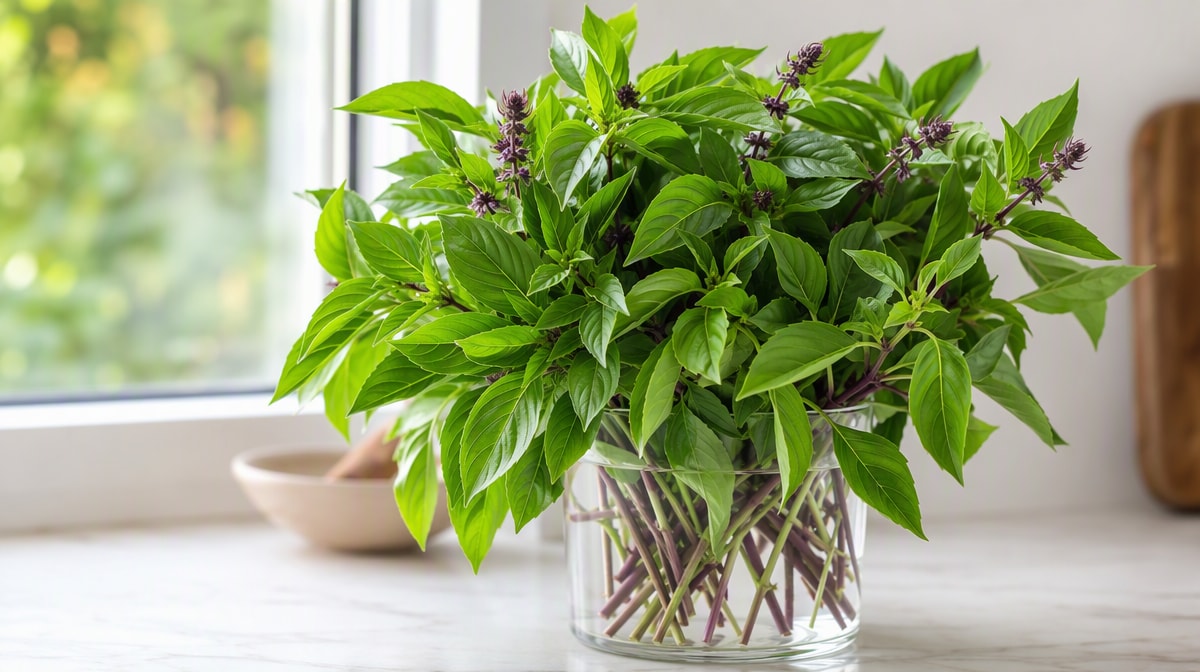
Thai basil. The essential one, and it is not the same as sweet or holy basil. There's a specific variety with narrower leaves and purple stems. If the shop has only regular basil, that works, but Thai basil is genuinely different and worth finding.
Coriander. Include the roots if they still have them. The roots are the strongest part and Thai cooks use them, and it's a nice thing to know about an ingredient most people throw away.
Bird's eye chillies. Buy the green ones. The red are the same chilli riper and considerably hotter, and the green are what most recipes mean. Buy a big bunch, because they go in everything and they keep for weeks in the fridge.
Limes. Small, unwaxed, heavy. Unwaxed matters, because Thai dishes are built on lime and the zest of a waxed lime is unpleasant.
Spring onions, garlic, shallots. The shallots are Thai red shallots, small and purple, and they're genuinely different from the big Spanish ones.
The things that surprise people

A few items that are worth stopping for and that a first visit usually walks past.
Thai sweet rice, khao niao mamuang. You'll need it for mango with sticky rice, and once you have it you'll use it for things you hadn't planned. A good shop will also have banana leaves, which you need if you're making that.
Rice noodles. Three widths, and the flat one is the one for pad thai. If a shop has only the thin vermicelli, you can use it but the dish won't be right.
Vinegar. Rice vinegar and white distilled vinegar, both cheap. Every starchy Thai dish wants one of them and it's the ingredient that makes an Asian shop's dishes work at home.
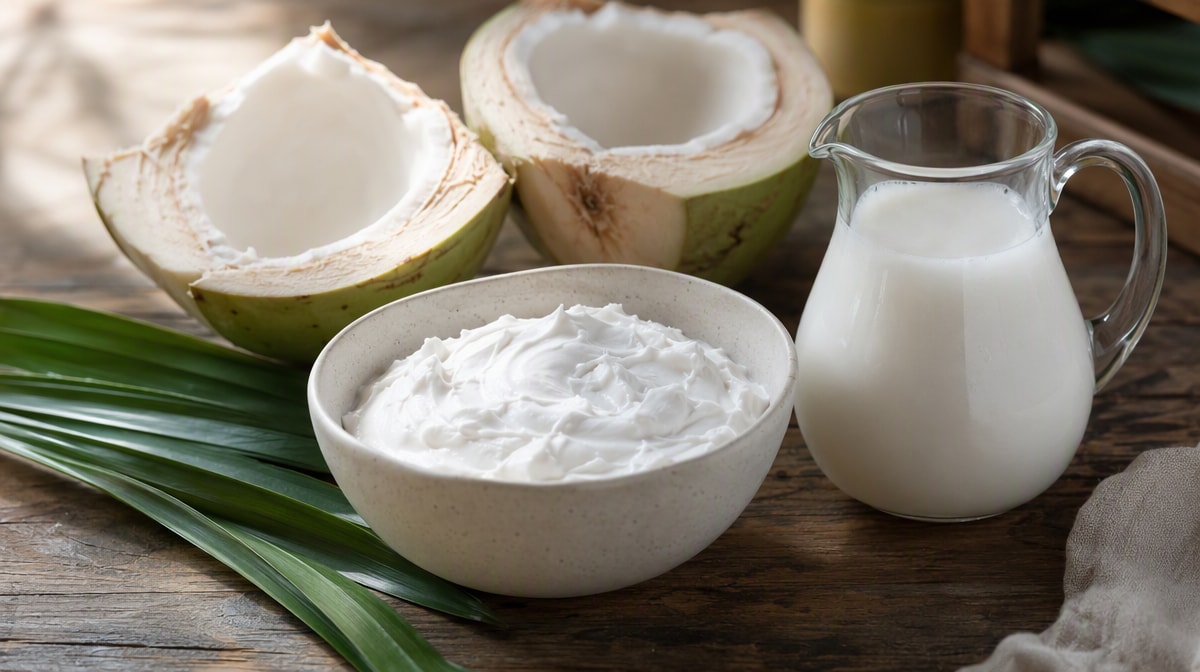
Coconut cream, in a carton. Not coconut milk. This is the thick cream you fry curry paste in, and it's the most common mistake on a first trip because people see "coconut" and assume they have it. They're not the same product. Our coconut guide explains the difference.
Frozen curry paste tubs. Mae Ploy sells these and they're better than the jar versions, and they keep a long time frozen. If you're not making your own, buy two and freeze one.
What to skip
Almost all of it.
The instant noodle section is enormous and none of it is what you want. Not the cup noodles, not the bowls. Buy proper rice noodles and make it properly, which takes fifteen minutes.
Supermarket curry powder, for curries. Curry powder is a Western thing, and it's not what a Thai curry tastes like. If you're making green curry, buy paste.
The tinned coconut milk in the international aisle, which is the light one. Get the full fat from the Asian aisle.
And the "Thai" branded things in the world food section, which are usually made for export and are a completely different product from what's in the same shop three aisles away.
A first basket
If you want one trip that gets you cooking, this is it. Fish sauce, light soy sauce, one Mae Ploy curry paste, a tin of Aroy-D full fat coconut milk, two stalks of lemongrass, a bunch of Thai basil, a bunch of coriander with roots, a bag of bird's eye chillies, a head of garlic, shallots, six limes, a block of palm sugar, a bag of rice noodles, a bottle of rice vinegar, and a bag of jasmine rice.
That covers tom yum, pad kra pao, green curry, pad thai, a stir-fry and about four other things, and it should come to roughly twenty-five pounds depending on where you are.
The first time you cook from it, make the green curry. It uses the most of the basket at once, and if it goes wrong you'll have learned more than from anything easier.
What not to buy fresh
One counter-intuitive piece of advice. Buy more frozen than you think you need.
Frozen lemongrass, galangal, kaffir lime leaves, chillies and Thai basil are all as good as fresh for anything that gets cooked in liquid or a hot pan, which is most Thai cooking. They're cleaner, they're cheaper, they don't need trimming, and they don't rot.
Fresh is worth it only where the ingredient is used raw or added at the very end, so mint, and coriander if you're finishing a dish with it.
This is the single biggest money-saving change most people can make, and it's why the freezer aisle is step one on the route.
What to cook first
Because a full basket is useless if you don't know what to make, and because the first dish should teach you the most.
Green curry, from the paste you bought. It uses the paste, the coconut milk, the kaffir lime, the lemongrass, the green chillies and the fish sauce all at once, which means it teaches you the balance rather than one ingredient at a time. Our green curry paste guide has the ratios, and our curry paste amounts guide has the paste-to-milk ratio.
If that goes wrong, go back to tom yum next. It's the fastest thing in Thai cooking, it's nearly impossible to ruin, and it teaches you what a properly seasoned broth tastes like before you add fat to complicate things.
Then pad kra pao, which teaches you the wok heat problem honestly. And leave pad thai until last, because it's the most demanding and the one that most rewards a hot pan.
A note on sources
The brand recommendations are the most useful part of the research and are consistent across it, though the same caveat applies to the rest of this site: formulations change and it's worth checking the label. The freezer-and-fresh ordering argument is mine rather than something the sources make, and I'd defend it. Specific shop policies around stock lists and late-day discounting vary a lot and aren't in the research, so treat the pre-trip checklist as a general approach rather than anything reliable about your local branch.
Frequently asked questions
What should I buy first at an Asian supermarket for Thai cooking?
Fish sauce, light soy sauce, a Mae Ploy curry paste tub, a tin of full fat coconut milk, and fresh lemongrass, Thai basil, coriander, bird's eye chillies, garlic, shallots and limes. Add rice noodles, rice vinegar and a block of palm sugar and you'll have enough to cook about fifteen Thai dishes, one trip, for roughly twenty-five pounds depending on where you are.
What is the most useful thing in the freezer aisle?
Individually quick-frozen Thai herbs and aromatics, particularly kaffir lime leaves, lemongrass, galangal, Thai basil and chillies. They're cheaper than fresh, they don't need trimming, they don't rot, and for anything cooked in a pan or liquid they're as good. Fresh kaffir limes are expensive and go off in days, so frozen leaves are the single best-value item for a beginner.
How do I tell galangal from ginger?
Galangal is smoother and paler, sometimes with a faint purple tint, and has no stringy fibres when you slice it. Ginger has visible fibrous strands running through the root. Galangal is sharper, more floral and more citrus-like, and it's the ingredient in red and green curry pastes. Using ginger instead is completely fine and the dish will still be good, so don't stress if you can't find it.
How do I know which fish sauce to buy?
Pick one and stick to it, because the wall of near-identical bottles is genuinely confusing. Squid Brand, in the bottle with the squid on the label, is the reliable default and widely available. The important thing is that it's a real Thai fish sauce rather than a British supermarket house brand, which tends to be saltier and less complex. Once you've got one you like, buy that one every time.
Should I buy fresh or frozen Thai ingredients?
Mostly frozen, genuinely. Frozen lemongrass, galangal, kaffir lime leaves, chillies and Thai basil are all as good as fresh for anything that gets cooked in a pan or liquid, which is most Thai cooking. They're cheaper, need no trimming and don't rot. Buy fresh only for things used raw or added at the end, so mint above all, and coriander if you're finishing a dish with it.
What should I avoid buying in an Asian supermarket?
The instant noodle section is the big one. It's huge and none of it is what you want, so buy proper rice noodles and spend the extra fifteen minutes. Also skip the international-aisle light coconut milk, supermarket curry powder for Thai curries, and anything labelled Thai in the world food section, which is usually a different product made for export rather than the import next door.
What is the difference between coconut milk and coconut cream in the shop?
Coconut milk is the thin liquid, sold in tins, and it's what you build a curry with. Coconut cream is the thick cream from the top, sold in cartons, and it's what you fry curry paste in before adding the liquid. They're different products and most people buy only the tin and don't realise there's a second thing. You want both, and they're in different places in the shop.
How often should I shop at an Asian supermarket?
Weekly, if you're cooking Thai food regularly, and the reason is freshness rather than convenience. Fresh herbs, limes and lemongrass genuinely don't last, while the dry goods, pastes, rice and tinned coconut milk last for months. A weekly top-up of the fresh section with a large but infrequent shop for the dry goods is the pattern that works, and most shops will let you pay for the rice and milk separately from the herbs if you ask.

Comments