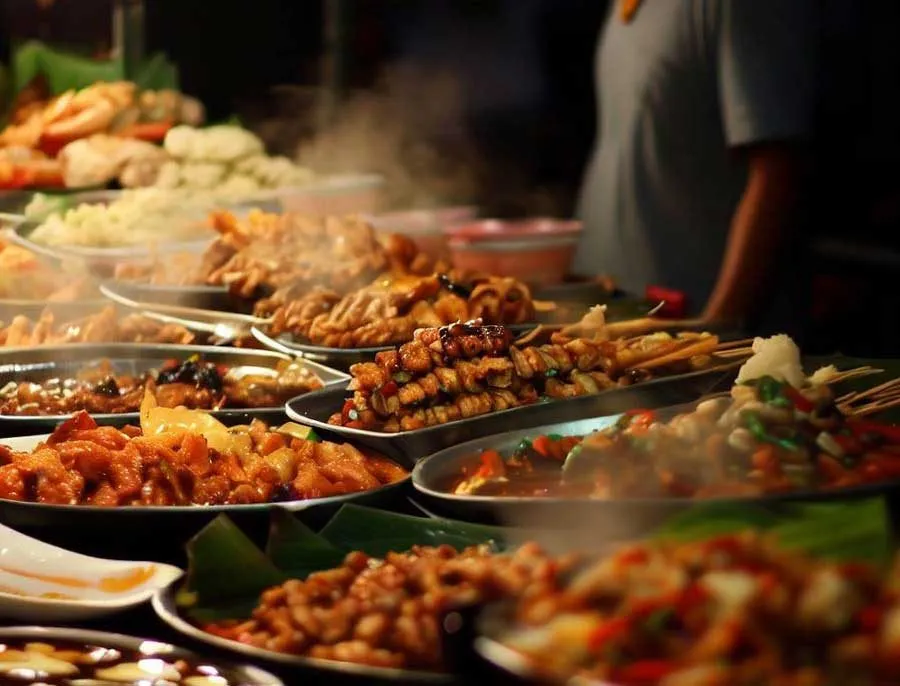
Thai street food – what to try
The dynamic and diversified street food scene in Thailand is what attracts many visitors — tourism marketing leans heavily on it, and Thai food heritage bodies celebrate it as a defining part of the cuisine. Many stalls cook one dish, have done for decades, and do it better than any restaurant. These five are the ones you'll see on street corners from Bangkok's Chinatown to the night markets of Isaan — and the ones I'd tell a first-time visitor to try first.
Thai street food offers a wide variety of alternatives to suit every appetite, from flavourful curries to scrumptious snacks. If you are going to visit Thailand, these are the top 5 Thai street foods that you must try.
1. Pad Thai (ผัดไทย)

Without indulging in a plate of Pad Thai, a street food journey in Thailand is definitely incomplete.
This famous Thai meal combines rice noodles, tender prawns or chicken, eggs and a variety of veggies in a delicious sauce made from tamarind, fish sauce and spices.
Pad Thai is a dish that encapsulates the essence of Thai cuisine and is topped with crushed peanuts, fresh herbs, and a squeeze of lime. Curious why street stall pad thai has that vivid orange colour when homemade looks pale? We explain exactly why restaurant pad thai is orange.
2. Som Tum (ส้มตำ)

Som Tum, also known as green papaya salad, is a hot and zesty dish som tam recipe that perfectly captures Thais’ love of strong, colourful flavours. Beware though, because this can be one of the spiciest dishes you may ever try!
Tomatoes, garlic, chilli peppers, peanuts and dried prawns are mixed with chopped green papaya to create a mouthwatering array of flavours and textures.
Lime juice, fish sauce, and palm sugar are then used to season the dish, creating a spicy, acidic, and pleasantly crisp salad that is both energising and addicting.
3. Moo Ping (หมูปิง)

In Thailand, grilled pork skewers, also known as moo ping, are a popular street food among the locals.
Pork chunks that have been marinated are grilled to perfection while being strung onto bamboo sticks, giving them a delectable smokiness. Soy sauce, oyster sauce, palm sugar, garlic, coriander root, and other ingredients are frequently used in the marinade to produce a flavourful fusion of sweet and savoury overtones.
For lovers of beef, Moo Ping, which is served with sticky rice and a side of tangy dipping sauce, is the one to order first.
4. Gai Yang (ไก่ยัง)

Gai Yang, or grilled chicken prepared in the Thai style, is a delectable street snack that personifies simplicity at its best.
Before being grilled to juicy perfection, chicken pieces are marinated in a mixture of garlic, coriander root, white pepper, soy sauce, and fish sauce.
A delicious dish with a tasty, slightly scorched skin and tender interior is the ultimate result. Gai Yang is a popular option among both locals and tourists since it is frequently served with a side of sticky rice, shredded cabbage, and a tangy dipping sauce.
Can't decide what to eat tonight?
Take our 60-second quiz and we'll pick for you
5. Khao Niew Mamuang (ข้าวเหนียวมะม่วง)

Thai food may not be known for its deserts but, Khao Niew Mamuang, or mango sticky rice, will definitely satisfy your sweet craving and make your tour of Thai street cuisine complete.
In this delectable delicacy, rich and creamy coconut sauce is poured over glutinous rice and topped with exquisite pieces of ripe mango.
The tropical sweetness of the mango and the soothing creaminess of rice flavoured with coconut combine to create a decadent dessert that perfectly encapsulates Thai cuisine.
This guide sits around the existing list of five dishes. If you have read the five most popular Thai street foods, that list is the what; this is the how. It covers the stall system, ordering, portion size, safety, the restaurant comparison, drinks and the vegetarian and halal question. The five dishes are not described again here.
What Is Thai Street Food?
Thai street food is not one cuisine. It is a system of small vendors, each with a short menu, selling food close to where it is cooked. Bangkok's eating places range from wheeled carts to five-star dining rooms, with the tastiest food in between: decades-old, family-run shophouses with a limited repertoire. A good stall is a kitchen with a narrow specialism and a high turnover.
Bangkok alone runs from Thai-Chinese to Thai-Muslim food and most regional cuisines. The Tourism Authority of Thailand separates stalls with a specific menu from street-food restaurants with rice, curries and salads laid out for choosing. One cart does noodles, another grilled skewers, another fruit, so a street meal is assembled from more than one stop.
The Dishes to Try
The five dishes on this page are the entry point: pad thai, som tum, moo ping, gai yang and khao niew mamuang. They are recognisable and widely sold. They are not the whole repertoire.
The wider menu sorts into noodles, stir-fries and deep-fries, hot and tangy salads, and chilli dips. The noodles come in four main kinds, from wheat-and-egg bà·mèe to rice sheets cut as sên gŏo·ay đĕe·o. The yam are the hot, sour salads; the nám prík are the chilli dips the guidebook calls more home food than restaurant food.
The five are where to start. The categories are what to try next.
How to Order at a Thai Stall

Ordering is mostly naming the noodle and then seasoning the bowl yourself. You generally have to specify which noodle you want, and the bowl often arrives slightly underseasoned. That is deliberate. The eater uses the condiment caddy: sliced mild chillies in vinegar, fish sauce, dried red chilli flakes and plain white sugar. The four give you hot and sour, hot and salty, plain hot, and sweet.
At a one-dish stall, point at what is cooking and hold up the number of fingers you need. At a rice-and-curry stall, point into the trays. The eating custom is fork and spoon: the fork pushes food onto the spoon, and chopsticks are for Chinese-style noodles rather than Thai food generally. If chopsticks are not offered, do not ask.
Order less than you think you need. If heat is the worry, see is Thai food spicy first.
How Much to Eat in One Go
Thai street food is grazing food. Thai meals are family style, dishes arriving from common platters in whatever order the kitchen can manage, and no more than one spoonful at a time. Street food turns that into a walk: one bowl here, one skewer there, a bag of cut fruit later.
Yam and similar dishes are gàp glâam, snack food to accompany a night of drinking. A plate of som tum and a plate of grilled chicken are not a starter and a main; they are things to eat alongside rice and conversation. So: one dish per person per stop, shared where possible, and no attempt to build a three-course meal from one cart.
Is Thai Street Food Safe?

The honest answer is that there is no separate street-food rule. Food-safety guidance applies to a cart as much as to a kitchen. The Food Standards Agency's four points are cleaning, cooking, chilling and cross-contamination. Its Safer Food, Better Business pack is the system it gives UK food businesses. A stall in Thailand is not inspected against UK rules, so the four points are a way of reading what you see, not a certificate.
The NHS travel advice is more direct. NHS 111 Wales says street food is safer when recently prepared and served hot on clean crockery, and warns about food left at room temperature or exposed to flies. NHS Fit for Travel says to choose food served fresh and steaming hot, avoid pre-prepared food not kept hot, refrigerated or cooled on ice, and notes that ice may be made with unsafe water.
Put together, the useful questions are: is it cooked to order, is it hot, is the surface clean, and is there a queue? A busy stall with a hot wok and a short menu answers them better than a quiet tray of pre-cooked food. The tips on this page cover the queue and the clean hands.
Street Food vs Restaurant Food
The difference is the job each one does. A street stall sells a narrow menu, fast and cheap, often to people eating standing up. A restaurant sells choice, a table, air conditioning and a longer meal. The guidebook's hierarchy runs from carts to shophouses to five-star dining, and it judges the shophouse in the middle to cook best.
Seasoning differs. Street noodles are often served underseasoned so the eater can finish the bowl at the condiment caddy. Restaurant versions are more likely to arrive finished. Neither is more authentic; one is handing you the last step.
Hygiene is where the comparison gets lazy. A restaurant kitchen is not automatically safer than a cart. The same handling rules apply, and the visible signals matter more than whether there is a roof: hot food, clean surfaces and turnover.
What to Drink
The drink list is unromantic. Fruit juices are served with sugar, salt and a lot of ice; the salt helps in the heat, even if foreign palates object. Beer comes in several domestic and licensed brands the guidebook finds largely indistinguishable. Rice whisky and rum are cheaper and common at family gatherings, usually with ice, soda and a splash of cola.
For a street meal, the simple order is bottled water, hot tea or a cold beer. If you are unsure about the ice, the NHS advice is to avoid it; sealed drinks are the safer default. The guidebook's cool-season beer halls and their spicy drinking snacks are a pleasant institution, not a hydration strategy. Drink water alongside the beer.
Vegetarian and Halal Street Food
Vegetarian food exists on the street, but it is not the default. Vegetarianism is not widespread in Thailand, tourist-oriented restaurants cater for it, and Bangkok has inexpensive vegetarian buffets. It distinguishes ordinary vegetarian from jay, the stricter Chinese-Buddhist diet that excludes meat, fish sauce, egg and dairy. Many restaurants and stalls go meatless during the Vegetarian Festival, and the yellow flags outside a stall are how you tell its food follows the rules.
The practical problem is hidden fish sauce and shrimp paste. Som tum, curries and dips can all carry them. Asking for jay is more specific than asking for vegetarian, and a stall that understands the word will know what to leave out.
Halal is a harder question. Thailand has a Thai-Muslim cooking tradition, so halal food is not a foreign idea. But halal is a certification claim, not a guess from a name or a sign. Look for certified premises or a certifier's mark, and do not assume a stall is halal because it sells no pork. For UK shopping, see Thai ingredients in England.
Frequently Asked Questions
What does gàp glâam mean?
It is the term for snack food eaten with a drink, rather than part of a seated meal. Yam, grilled meat and other small plates fit the category. It explains why street food and drinking food overlap so much in Thailand: the same dishes do both jobs.
How do I eat sticky rice with grilled chicken?
Tear off a piece of sticky rice with your right hand, press it into a small ball, and use it to pick up the chicken and dip. The rice is the utensil as well as the staple. A basket is shared, and you take from the edge rather than the middle.
Can I take street food away?
Yes. The TAT says street food is normally eaten there or taken away, and many stalls will bag a noodle dish, grilled items or rice and curry. Take-away portions are smaller and the food steams in the bag, so eat it soon. Bring your own container if you want to avoid plastic.
What is a yam?
A yam is a hot and tangy salad, usually built around seafood, meat or vegetables. Lime juice gives the sourness and chilli gives the heat, and most are served at room temperature. The guidebook notes that a yam works both as part of a meal and as a snack with a drink.
What is nam prik?
Nam prik is a chilli-based dip, eaten with rice and with fresh or steamed vegetables and herbs. It is more home food than restaurant food and one of the most regional things in Thai cooking: the dip in front of you can tell you which province you are in.
Are the raw herbs and vegetables safe to eat?
The NHS advice is cautious about uncooked vegetables and salads, especially where they may have been washed in unsafe water. In practice, herbs and raw vegetables are core to the meal. Use the same judgement as for the rest of the stall: clean handling, fresh preparation, and a busy trade.
Should I use a fork or chopsticks?
Fork and spoon, with the fork pushing food onto the spoon. Chopsticks are for Chinese-style noodle dishes and are usually supplied with them. If they are not offered, do not ask: you are in a Thai eating house, not a Chinese one.
Is street food in Bangkok different from street food in Isaan?
Yes. Bangkok's street food carries the city's Thai-Chinese and Thai-Muslim mix and a huge regional spread. Isaan's street food is built on sticky rice, grilled meat, pounded salads and pla ra. The cooking is related but the balance is different: more fermentation and more chilli in the northeast.
Why is there sugar on the table?
It is one of the four standard noodle condiments, alongside fish sauce, chilli flakes and chillies in vinegar. The bowl is often served underseasoned on purpose, and the sugar is there to round the sour and salty notes. Use a little; the aim is balance, not sweetness.
Thai street food in Bangkok: food paradise

1. Yaowarat (Chinatown):
- Navigate the narrow streets and indulge in street food; the stalls worth stopping for are in our Bangkok Chinatown food guide.
- Evening visits provide the most extensive options.
2. Nang Loeng Market:
- A traditional market with picturesque surroundings.
- Try dishes like “khao gaeng” (Thai rice and curry) and “Nam Tok Moo” (roast pork salad).
3. Victory Monument (Anusawari Chai Samoraphum):
- Famous for its boat noodles and rice flour flat noodles.
- Try Kuay Jab Nam Sai (rolled rice noodles).
4. Charoen Krung:
- Stroll down Charoen Krung Road for aromatic dishes.
- Vegetarian option: Tien Sin.
- Seafood Special: Khao Tom Pla Thao Thuy.
5. Ratchawat Market & Sriyan Market (Dusit district):
- Traditional markets with a variety of food options.
- Ratchawat offers noodles bars and roast duck stalls.
- Sriyan Market features jungle curry and more.
6. Rangnam:
- Offers dishes from the Isan Province and seafood stands.
- Restaurants: Kuang Seafood, Rod Ded Isan Restaurant.
7. Tha Pra Chan & Banglamphu:
- Old districts near the Chao Phraya River.
- Visit Thipsamai (the best Pad Thai in Bangkok) and Khao Kluk Kapi (fried rice with shrimp paste).
8. Petchaburi Soi 5:
- Located between the Siam shopping centre and Victory Monument.
- Offers take-out food options with places to sit.
- Recommended: Pe Aor for “tom yum goong” and Gai Pad Pongali (chicken curry with eggs).
9. Sam Yan Market:
- Located in the heart of Bangkok, near Chulalongkorn University.
- Notable spot: Steak Today for meat lovers.
- Visit in the morning for the best experience.
10. Ramkhamhaeng (opposite side from the university):
- Popular among students, offering various Thai dishes.
Tips and advice for eating Thai street food

Exploring Thailand’s vibrant street food scene is an adventure for the senses. The aromatic herbs and spices, the sizzle of the woks, and the colourful array of dishes on display make for an unforgettable culinary experience. To help you make the most of your Thai street food adventure, here are some essential tips and advice:
Start with popular stalls
When in doubt, follow the locals. If you see a street food vendor with a line of Thai people, it’s a good indicator of quality and taste. Locals know where to find the best street food gems.
Observe hygiene
Choose vendors who maintain a clean and organised workspace, with clean utensils, fresh ingredients, and a tidy setup. Vendors who wear gloves or use utensils when handling food demonstrate a commitment to hygiene and reduce the risk of contamination. It’s also worth paying attention to the vendor’s personal hygiene: clean attire, regular handwashing, and hair restraint are all good signs.
Go for high turnover
Select stalls where food is prepared and served quickly. High turnover indicates that ingredients are fresher, reducing the risk of foodborne illness.
Customize your spice level
Thai cuisine can be fiery, but it doesn’t have to be overwhelming. Don’t hesitate to ask for your dish to be prepared with less chilli if you’re sensitive to spice. Conversely, if you love heat, request extra chilli.
Try everything
Be adventurous and try dishes you’ve never heard of before. Thai street food offers a vast range of flavours and textures, from spicy curries to sweet desserts. Expand your palate and discover new favourites.
Eat what’s in season
Thai street food often features ingredients that are in season. This not only ensures freshness but also supports local agriculture. Ask vendors about seasonal specialities.
Stay hydrated
Thailand’s tropical climate can be scorching, so stay hydrated. Carry a reusable water bottle and drink bottled water to quench your thirst. Avoid tap water and ice in drinks.
Street food timing
Street food vendors are typically busiest during meal times, so plan your street food adventures accordingly. Breakfast, lunch, and dinner are prime times to savour the best offerings. Thai breakfast is its own menu, though, and the stalls change what they cook after the morning rush; what Thais actually eat before work is on its own page.
Be mindful of allergies
If you have food allergies or dietary restrictions, communicate them clearly to vendors. While some dishes can be customized, it’s essential to ensure your safety.
Bring small bills
Carry small denominations of Thai Baht (THB) as many street food vendors may not have change for large bills. This will make your transactions smoother.
Don’t forget desserts
Thai street food isn’t just about savoury dishes; it offers delightful desserts too. Try classics like mango sticky rice (khao niew mamuang) and coconut pancakes (khanom krok).
Use utensils correctly
Thais typically eat with a fork and spoon. The fork is used to push food onto the spoon, which is used for eating. Chopsticks are mainly reserved for noodle dishes.
Sources
Thai street-food heritage: Thailand Foundation (Thai Food); Tourism Authority of Thailand.


Comments