Fish sauce is made by packing small fish, usually anchovies, with salt and letting them ferment for months. The salt draws liquid out of the fish, enzymes break the flesh down, and the liquid that collects is drawn off, filtered, blended and bottled. That is the whole process. The variables are the fish, the salt, the time, the grade and the blend, and they are the reason two bottles of the same colour can taste completely different.
Thai fish sauce is called nam pla. It is not a by-product or a shortcut; it is a fermented food with a long tradition, and the best bottles are made from two ingredients. Once you understand how it is made, the label stops being a mystery and the price difference starts to make sense.
What Is Fish Sauce Made Of?
Good fish sauce is made of fish and salt. That is the short answer. The fish is usually anchovy; the salt is sea salt; the third ingredient is time. Some brands add a small amount of sugar to round off the salt, and lower-quality brands add water, colour, flavour enhancers or MSG to make up for a weak first press.
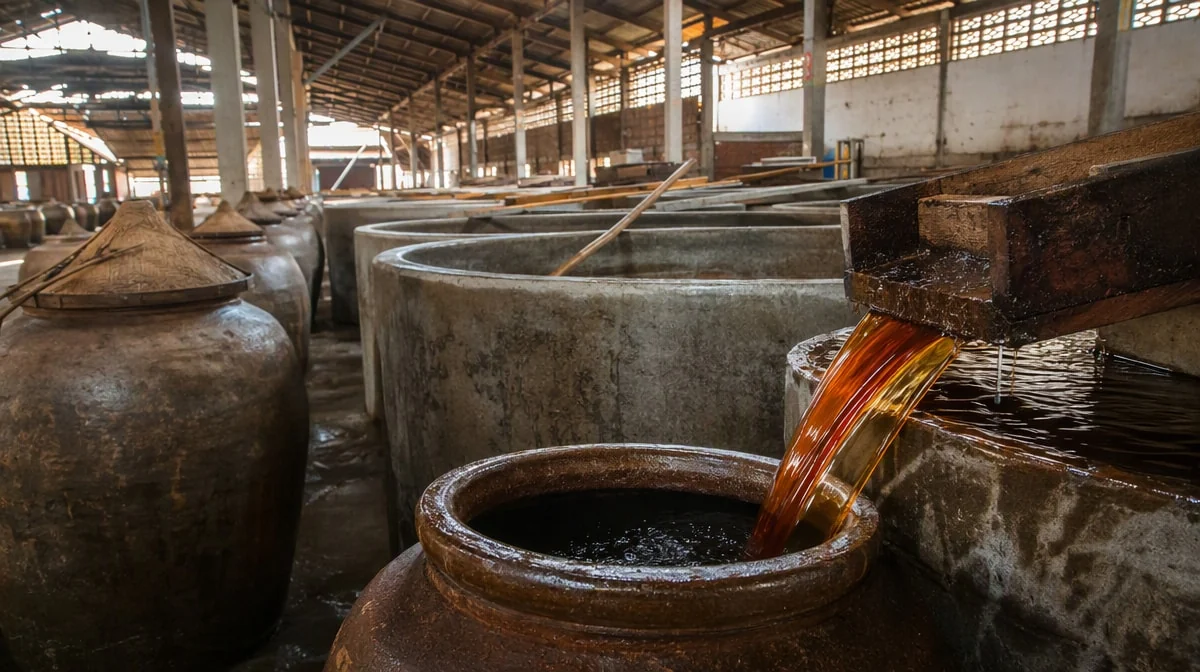
The cooking-school book's factory caption describes the process at Tang Sang Hah, a Thai producer: anchovies are brought to the factory from all over Thailand and mixed with salt before going into tanks. The fish ferments in its own juices, aided by the heat of the sun and preserved by the salt. After 12 months, the solids have sunk and the fish sauce is at the top. The liquid is drawn off, filtered, blended, tested for quality, and a small amount of sugar is added before bottling.
That is the baseline. If the ingredient list is longer than fish, salt and maybe sugar, the bottle is probably diluted or corrected. The site's fish sauce brand page covers the brand question; this page is about what is in the bottle.
What Fish Is Fish Sauce Made From?
Anchovies are the answer, and small ones are the point. The fish are packed whole, with their enzymes and oils, and the salt pulls the liquid out of them. Bigger fish would take longer, give a coarser flavour and cost more. The classic Thai and Vietnamese fish sauces are anchovy-based for the same reason.
The label may say "anchovy" or "anchovy extract". The extract wording does not mean artificial flavouring; it means the bottle contains the liquid that came out of the fish, not the fish itself. Some brands use a mix of small fish, and some use a different species; the flavour changes accordingly. If the label does not name the fish, the ingredient list is your only clue.
The fish are not cooked first. They are salted raw and fermented. That is why fish sauce is a preserved product rather than a fresh one, and why the quality of the fish and the salt matters so much.
How Thai Fish Sauce Is Made
The process has five steps: salt the fish, ferment, draw off the liquid, filter and blend, bottle.
Salt the fish. Anchovies and salt are mixed and packed into tanks or jars. The salt draws water out of the fish and creates the brine that becomes fish sauce.
Ferment. The mixture sits for months. The book's caption says 12 months at Tang Sang Hah; Hot Thai Kitchen gives 12 to 24 months; Muay gives 12 to 18 months for Thai brands. The heat and the salt do the work, and the fish breaks down into liquid and solids.
Draw off the liquid. The first liquid that comes out is the first press, the purest and most concentrated. The
Thai term is hua nampla, "the head of the fish sauce". It is the best of the batch.
Filter and blend. The liquid is filtered, blended with other batches and tested. This is where consistency comes from. A brand's house style is a blend, not a single tank.
Bottle. A small amount of sugar may be added to round the salt. The bottle is filled, labelled and graded. The grade is often a protein number or a "first press" claim, and the price follows.
Is Fish Sauce Fermented?
Yes. Fish sauce is a fermented product, not an infusion and not a brine. The salt preserves the fish while enzymes break down the proteins into savoury compounds, and the liquid that results is fish sauce. The fermentation is anaerobic, salty and slow, which is why the product is shelf-stable and why it tastes the way it does.
The fermentation time is months, not days. The book's caption gives 12 months; Hot Thai Kitchen gives 12 to 24; Muay gives 12 to 18 for Thai brands. The exact time depends on the fish, the salt, the temperature and the producer. A longer fermentation gives a deeper, more complex flavour, but it also costs more.
This is why fish sauce does not "go off" in the way fresh fish does. It can change colour and flavour over time, and it can lose its edge, but the salt and the fermentation protect it. The site's storage page covers what happens after opening; the short version is that it is a preserved food, not a fresh one.
Jars vs Concrete Tanks

The book's caption is a small piece of food history. It says fish sauce was "originally made in ceramic jars" and is "now made in concrete tanks". The Tang Sang Hah factory had tanks two metres deep and three thousand of them, with new fish coming in every day. The fish in the photograph was one month old and already breaking down.
The jar-to-tank shift is a scale story, not a quality story. A small producer can still ferment in jars or small tanks and make excellent fish sauce; a large producer can make a consistent, good product in concrete. What matters is the fish, the salt, the time and the blend, not the material of the vessel.
The tank method is also why industrial fish sauce is consistent. A large tank can be tested and blended, and the brand can reproduce the same flavour year after year. A small jar batch varies more, which is part of its charm and part of its risk.
Why Does One Bottle Taste Different from Another?

The biggest reason is the first press. When the first liquid is drawn off, the producer can add water and salt back to the same fish and get a second press, then a third. Each press is weaker. Regular, inexpensive fish sauce is a blend of first press and later presses, in whatever ratio the brand chooses. The more first press in the blend, the stronger and more expensive the bottle.
The second reason is the fish and the salt. Different species, different salt levels and different fermentation times give different flavours. A Thai fish sauce is usually anchovy and sea salt, with a salty, aromatic profile; a Vietnamese fish sauce may be sweeter and milder; a Filipino patis may be stronger and fishier. They are not interchangeable in every dish, though they can often stand in for each other.
The third reason is the additives. A good bottle has fish, salt and maybe a little sugar. A cheap bottle may have water, colour, flavour enhancers or MSG. The ingredient list is the fastest way to tell. The fourth reason is the blend: a brand's house style is a consistent blend, not a single tank, and that is why the same brand tastes the same from bottle to bottle.
The practical test is protein. Hot Thai Kitchen recommends at least 2g of protein per tablespoon; Red Boat has 4g, Squid and Megachef have 2g, and a cheap brand can have zero. The protein number is a rough guide to how much first press is in the bottle.
Nam Pla vs Nam Pla Wan
Nam pla is fish sauce. Nam pla wan is not a different fermentation; it is a sweet fish sauce dip, made by cooking fish sauce with palm sugar, shrimp paste, shallots, chilli and dried shrimp. It is served with sour fruit, especially green mango, and it is a snack, not a seasoning for the whole dish.
The name is confusing because both contain the words nam pla. The difference is the sugar and the aromatics. Nam
pla wan is thick, sweet, salty and spicy, and it is meant to be dipped into, not poured over rice. If a recipe asks
for nam pla, use plain fish sauce; if it asks for nam pla wan, make the dip.
The site's som tam recipe uses plain fish sauce, not the sweet dip. The distinction matters because the sweet dip would change the balance of the salad.
Buying Fish Sauce in the UK
UK supermarkets and Asian grocers stock a wide range. The common Thai brands are Squid, Megachef and Tiparos; Red Boat is Vietnamese and widely available; Three Crabs is Vietnamese too. The Guardian's buying guide recommends Red Boat and Megachef, and Hot Thai Kitchen's brand guide is a good place to start if you want a deeper comparison.
Look for a short ingredient list, a protein content of at least 2g per tablespoon if the label gives it, and a first-press claim if you want the best. Do not pay extra for a bottle with a long ingredient list; you are paying for water and additives. The guide to buying Thai ingredients in England covers the shop types.
If you are vegan or cooking for a vegan, fish sauce is not an option. The site's vegan green curry uses a fish-free seasoning, and the vegan pages cover the alternatives. Do not assume a "vegetarian" fish sauce is the same as fish sauce; it is a different product.
Frequently asked questions
What is fish sauce made from?
Small fish, usually anchovies, and salt. The fish are salted raw and fermented for months, and the liquid that comes out is fish sauce. Good brands add nothing else, or only a little sugar. Cheap brands may add water, colour or flavour enhancers.
What fish is used to make fish sauce?
Anchovies are the classic choice, especially small ones. Some producers use a mix of small fish, and the species changes the flavour. The label may say "anchovy" or "anchovy extract"; both mean the liquid from the fish, not a flavouring.
Is fish sauce fermented?
Yes. It is a fermented product, not an infusion. The salt preserves the fish while enzymes break it down, and the liquid that collects is fish sauce. The fermentation takes months, usually 12 to 24, depending on the producer and the style.
How long is fish sauce fermented?
Most Thai fish sauce is fermented for 12 to 18 months, and some producers go to 24. The book's factory caption says 12 months; Hot Thai Kitchen gives 12 to 24. The time depends on the fish, the salt, the heat and the strength the producer wants.
Why does fish sauce taste different from brand to brand?
Because the first press is blended with second and third presses in different ratios, and because the fish, salt and fermentation time vary. A bottle with more first press tastes stronger and costs more. A cheap bottle may be mostly later presses with added water and flavour.
What is first press fish sauce?
The first liquid drawn off the fermented fish is the first press, the purest and most concentrated. The Thai term is
hua nampla, "the head of the fish sauce". Later presses come from adding water and salt back to the same fish, and
they are weaker. A first-press bottle is not blended with those later presses.
Why is fish sauce so salty?
Salt is the preserving agent. The fish are packed with salt, and the salt draws out the liquid and stops the fish rotting while enzymes break it down. A good first-press sauce is salty because it is concentrated, not because salt was added at the end. Diluted later presses taste saltier for their strength.
Is fish sauce halal?
Plain fish sauce is generally considered halal, because it contains fish and salt. Some Muslims avoid it because of the fermentation or the brand's certification, and some sauces contain alcohol or other ingredients. Check the certification if it matters to you.
Does fish sauce go bad?
It is a preserved food, so it does not spoil quickly. It can darken, thicken or lose its aroma over time. Keep it sealed and in a cool place, and follow the bottle's date. The site's storage page covers the details; this page is about how it is made.
What is the best fish sauce?
A first-press bottle with a short ingredient list and at least 2g of protein per tablespoon. Red Boat, Megachef and Squid are common recommendations. The best bottle is the one you can afford and use often; a cheap bottle with a long ingredient list is a false economy.


Comments