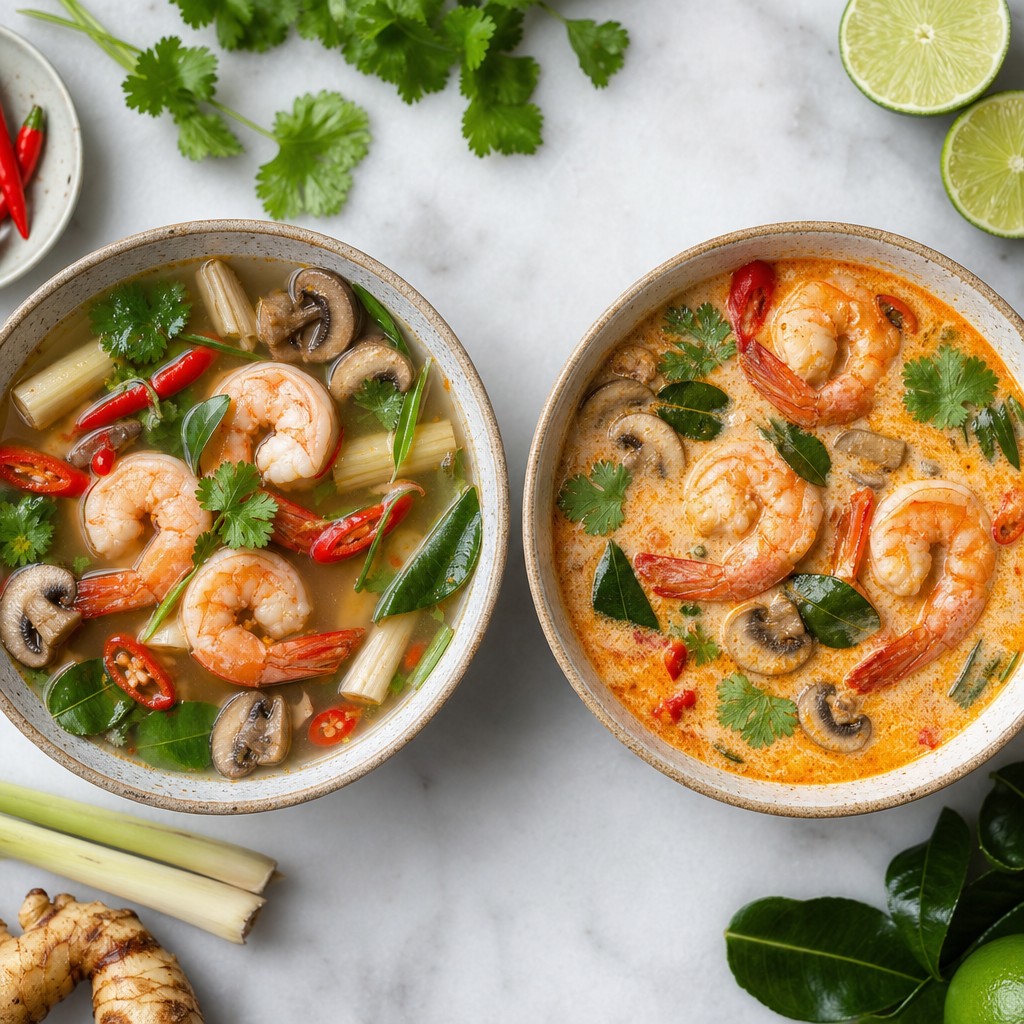
Order tom yum in two different places and you can get two very different-looking bowls: one a clear, glassy broth, the other a creamy, glowing orange. People often ask me which is the "real" one, and whether the creamy version has coconut milk in it. So let me clear it up. There are two recognised styles: tom yum nam sai (clear) and tom yum nam khon (creamy). The creamy one is made not with coconut milk, but with evaporated milk and a spoon of roasted chilli jam.
Here's the difference between the two, which is more traditional, and why "tom yum without coconut milk" is really a question with a surprising answer.
The quick answer
Nam sai (น้ำใส, "clear") is the original tom yum: a clear, light, fiercely sour-and-spicy broth with no dairy and no coconut. Nam khon (น้ำข้น, "thick") is the creamy version: the same clear broth enriched with nam prik pao (roasted chilli jam) and evaporated milk, not coconut milk. So authentic tom yum never contains coconut milk. The soup you're thinking of with coconut is tom kha, which is a different dish.
Tom yum nam sai: the clear original
Nam sai means "clear water," and this is tom yum in its original form: a transparent, brothy soup that's all about a sharp, clean hit of sour and spicy. It's built on the classic aromatics (lemongrass, galangal and kaffir lime leaves) with lime juice, fish sauce, chillies and usually mushrooms and prawns. Nothing thickens or softens it, so the flavours are bright, herbal and intense. This is the tom yum most Thais eat at home, and what you'll usually be served in Thailand.
Tom yum nam khon: the creamy version
Nam khon means "thick broth." It starts from exactly the same clear base, then two things are stirred in: nam prik pao, a sweet, smoky roasted-chilli jam, and a good splash of evaporated milk. The chilli jam adds toasty depth and that dappled orange colour; the evaporated milk rounds the soup out and tames the heat into something creamy and mellow.
It's a more recent creation, taking off in 1980s Bangkok as restaurants softened tom yum for milder, Western-leaning palates. It's delicious and completely legitimate, but it's the modern adaptation rather than the original. It's also the version most people abroad picture, because creamy tom yum goong is what many Thai restaurants in the West default to.
So what makes it creamy, and why isn't it coconut?

This is the part nearly everyone gets wrong. The creaminess in nam khon comes from unsweetened evaporated milk, not coconut milk and not sweetened condensed milk. The orange colour isn't from the milk at all; it's from the nam prik pao (and, in a really good prawn version, the rich fat squeezed from the prawn heads).
In other words, two different ingredients are doing two different jobs: nam prik pao gives colour and flavour; evaporated milk gives creaminess. They're not interchangeable, and neither of them is coconut. If a recipe tells you to pour coconut milk into tom yum, it's heading toward a different soup. Nam prik pao is the same chilli jam I recommend for adding authentic colour and depth elsewhere; see why restaurant pad thai is orange.
Does authentic tom yum ever use coconut milk?
No. Genuine tom yum, clear or creamy, doesn't use coconut milk. The confusion is completely understandable, because there's a famous Thai soup that's creamy from coconut milk: tom kha. That's where the wires get crossed. A creamy tom yum is not "tom yum with coconut added," and tom kha is not "creamy tom yum"; they're separate dishes with different souring, different richness and usually different proteins.
Clear vs creamy: how to choose
| Nam sai (clear) | Nam khon (creamy) | |
|---|---|---|
| Texture | Thin, clear broth | Rich, cloudy, creamy |
| Colour | Pale, clear | Orange (from nam prik pao) |
| Added to the base | Nothing | Nam prik pao + evaporated milk |
| Flavour | Sharp, sour, herbal, fiery | Rounder, milder, mellow |
| Origin | The original | 1980s Bangkok |
| Coconut milk? | No | No (evaporated milk) |
If you want the bright, cleansing, properly sour-spicy experience, go nam sai. If you like a gentler, richer bowl, go nam khon. Both are real tom yum; they just sit at different points on the same spectrum, and neither needs coconut.
Two things that make restaurant tom yum better

If your home tom yum never quite matches the restaurant, two small details usually explain it.
Can't decide what to eat tonight?
Take our 60-second quiz and we'll pick for you
Grab the right tin. For nam khon, it has to be unsweetened evaporated milk. It's easy to pick up sweetened condensed milk by mistake; that's a thick, sugary syrup and it will wreck the savoury-sour balance. Evaporated milk is just milk with some water removed; it adds body and a gentle creaminess without sweetness.
Use the prawn heads. A proper tom yum goong gets a lot of its colour, aroma and deep savoury richness from the fat in the prawn heads. Fry or press the heads to release that orange, flavourful oil into the broth before straining. It's the step most home cooks skip, and it's a big part of why restaurant tom yum (clear or creamy) tastes so much more intense. It also means a clear nam sai can still glow faintly orange from the prawns alone, without any chilli jam at all.
The shared heart of both: the tom yum trinity
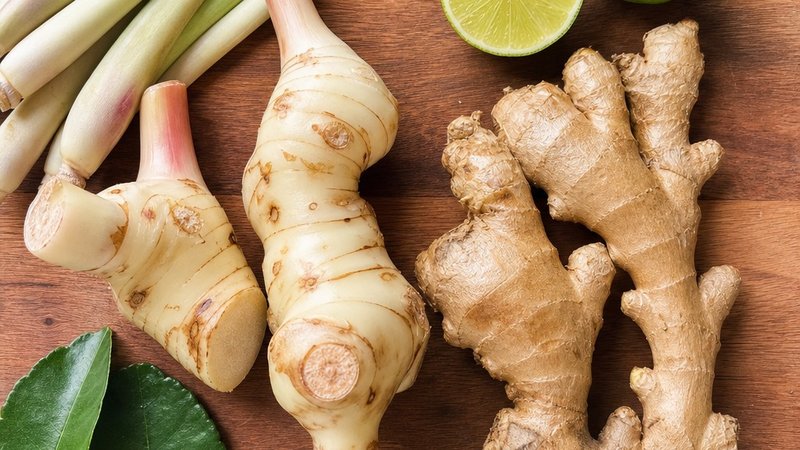
Whichever style you make, the soul of the soup is the same three aromatics: lemongrass, galangal and kaffir lime leaves, bruised and simmered to perfume a light broth, then balanced across the four Thai flavours: sour from lime, salty from fish sauce, sweet from a little palm sugar (and the nam prik pao, in nam khon) and spicy from fresh chillies. The trick is to season at the very end and taste as you go. Tom yum should make you sit up, with the sour and the heat both forward. Mushrooms (straw or button) and prawns are the usual additions, but the broth is the star.
Get that base right and you can take it clear or creamy. For a full method, see our easy tom yum soup recipe, and keep those aromatics to hand with our guide to storing galangal, lemongrass and kaffir lime leaves.
The bottom line
Clear (nam sai) is the original tom yum; creamy (nam khon) is the popular modern version, made rich with evaporated milk and coloured by nam prik pao. Authentic tom yum, either way, has no coconut milk. So if you've been adding coconut to chase that restaurant creaminess, swap it for a spoon of chilli jam and a splash of evaporated milk, and you'll be far closer to the real thing.
Frequently asked questions
Does tom yum have coconut milk?
No. Authentic tom yum doesn't use coconut milk. The clear version (nam sai) has no dairy at all, and the creamy version (nam khon) uses evaporated milk. The coconut soup you're thinking of is tom kha, which is a different dish.
What's the difference between nam sai and nam khon tom yum?
Nam sai is the original clear broth: light, sharp and intensely sour-spicy. Nam khon is the creamy version, made by stirring nam prik pao (roasted chilli jam) and evaporated milk into that same broth. Both share the same lemongrass-galangal-lime-leaf base.
What makes tom yum creamy if not coconut milk?
Unsweetened evaporated milk gives the creaminess, and nam prik pao gives the colour and a toasty, sweet-smoky depth. Use evaporated milk, not sweetened condensed milk and not coconut milk.
Why is my restaurant tom yum creamy and orange?
That's nam khon style. The creaminess is evaporated milk and the orange comes from nam prik pao (plus, in a good prawn version, the fat from the prawn heads). It became popular in 1980s Bangkok restaurants catering to milder tastes.
Is tom yum supposed to be clear or creamy?
Traditionally clear. Nam sai is the original and what most Thais eat; nam khon (creamy) is a 1980s adaptation. Both are authentic today, but the clear version is the truer-to-tradition one.
How do I make tom yum without coconut milk?
You already are. Real tom yum has none. For a clear bowl, just keep the broth as it is. For a creamy bowl without coconut, stir in a spoon of nam prik pao and a splash of evaporated milk near the end.
What is nam prik pao and why is it in tom yum?
Nam prik pao is Thai roasted chilli jam. In nam khon tom yum it adds a sweet, smoky depth and the signature orange colour, but it doesn't make the soup creamy; the evaporated milk does that.
Is tom yum the same as tom kha?
No. Tom yum is a sour-spicy broth (usually with prawns) and has no coconut milk. Tom kha is a milder, sweet-savoury soup made creamy with coconut milk (classically with chicken). Different soups, often confused.


Comments