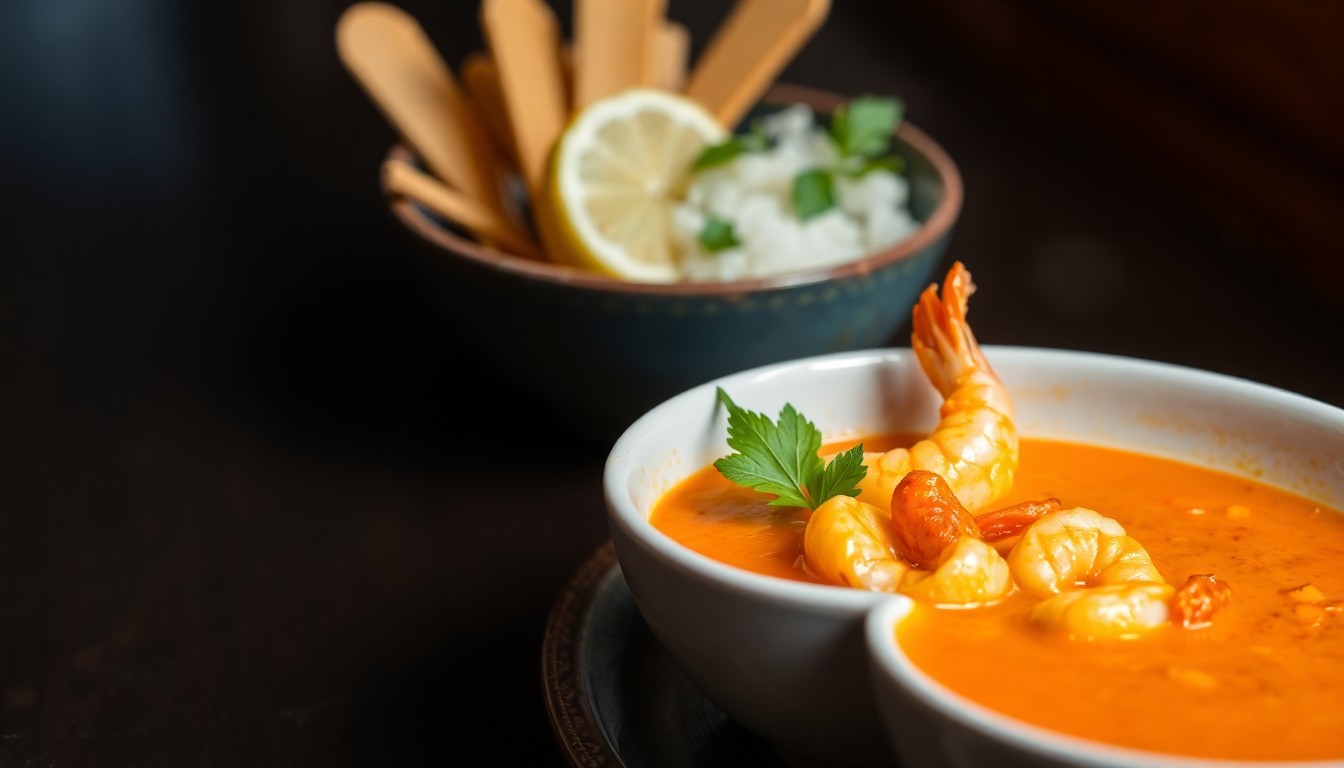
You've seen it on a Thai menu or in a photo: a thin, vivid orange curry, often with fish or prawns and vegetables, that looks nothing like the creamy red or green curries you know. People ask me about it all the time, so here's the answer: the orange Thai curry is gaeng som (also spelled kaeng som), and the name literally means "sour curry." It's tangy, spicy and made without any coconut milk, which is exactly why it looks and tastes so different.
Here's what gaeng som actually is, why it's that bright orange, what it tastes like, and how it differs from the other Thai curries.
The quick answer
The bright orange Thai curry is gaeng som (แกงส้ม), Thailand's sour curry. Its colour comes from dried red chillies and turmeric, and because it contains no coconut milk it stays thin and broth-like rather than creamy. The dominant flavour is sour (from tamarind), backed by chilli heat, the salt of fish sauce and a touch of sweetness; it's usually cooked with fish or prawns and a vegetable or two.
What is gaeng som?
Gaeng (แกง) means curry, and som (ส้ม) means sour, so gaeng som is simply "sour curry." It's one of Thailand's everyday home-style dishes: a light, brothy, intensely flavoured curry built around a sour-spicy balance rather than richness. Unlike the curries most people meet first in the West, it isn't mellowed with coconut milk, so it tastes brighter, sharper and more savoury. One quirk worth knowing: som can also mean "orange" in Thai (both the fruit and the colour), so people often assume the curry is named after how it looks. It isn't. The name points to its sourness; the orange colour is really a happy coincidence.
It's eaten across Thailand, but it's especially loved in the South, where the version known as gaeng som pak tai is hotter and more turmeric-forward.
Why is it orange?
Two things give gaeng som its colour. The first is dried red chillies, which are the backbone of the curry paste and lend a deep red-orange. The second, especially in southern versions, is fresh turmeric, which pushes the colour toward a brighter, almost golden orange and adds a gentle earthiness.
Crucially, there's no coconut milk to pale it down or thicken it, so the colour stays vivid and the texture stays thin. That clean, glowing orange broth is the signature look of gaeng som.

What does it taste like?
Sour first. The defining note is a bright tartness from tamarind (sometimes lime or other souring agents), and it's properly spicy from the dried chillies. Behind that sits the salty depth of fish sauce and usually a little palm sugar to round it off. The result is light and zingy rather than rich and creamy; it's a curry that wakes your palate up. If you love the sour-spicy hit of tom yum, gaeng som lives in the same flavour world.
What makes it sour?
The souring agent is where gaeng som gets really interesting, because it varies by region and cook. The two you'll meet most often are tamarind (which gives a deep, rounded sourness, typical of Central Thai versions) and fresh lime juice (sharper and cleaner, the southern preference; a southern pot can take the juice of a dozen or more limes). Traditional cooks also reach for less familiar souring fruits such as som khaep (Malabar tamarind) or madan, which give a brighter, almost clean tartness. It's that emphasis on real, fruit-driven sourness, not vinegar, that gives a good gaeng som its lively character.
A thickening trick: pounded fish
Here's something most write-ups skip. A traditional gaeng som isn't just paste-and-water: the broth is often given body by pounding cooked white fish into the curry paste. It melts into the liquid and thickens it very slightly, adding savoury depth without any coconut milk or flour. It's a quiet bit of technique that separates a really good, rounded gaeng som from a thin, one-note one.
What's in it?
A gaeng som starts with a pounded curry paste: dried red chillies, shallots, garlic, shrimp paste, salt, and often krachai (fingerroot) and turmeric. That's loosened into water or stock (not coconut milk), seasoned with tamarind and fish sauce, then simmered with a protein (most often fish or prawns) and whatever vegetables are fresh: daikon, white cabbage, green beans, morning glory, cauliflower or papaya. A Thai acacia (cha-om) omelette is a classic addition in the South. It's deliberately simple and quick, a weeknight curry in Thailand, not a special-occasion one.
Central and Southern gaeng som: almost two curries

Gaeng som isn't quite one fixed dish, and the difference between the Central and Southern versions trips a lot of people up. Central Thai gaeng som is the more reddish, sweet-and-sour version, soured with tamarind and built on a paste that includes krachai (fingerroot), which lends a cool, slightly medicinal aroma classic to this style. Southern gaeng som (gaeng som pak tai) is brighter yellow-orange from fresh turmeric, fiercely hot, soured mainly with lime, and typically has no sweetness and no fingerroot; it's the version most people picture.
There's even a naming twist: because the southern style is so turmeric-yellow, people in Bangkok and the Central plains often call it gaeng leung ("yellow curry") to set it apart from their own redder gaeng som. Same family, two quite different bowls.
How it's different from other Thai curries
The big dividing line is coconut milk. Red, green, yellow, massaman and panang curries are all enriched with coconut milk, which makes them creamy, mellow and thicker. Gaeng som has none, so it's thin, sour and sharp.
Can't decide what to eat tonight?
Take our 60-second quiz and we'll pick for you
| Curry | Coconut milk? | Colour | Dominant flavour |
|---|---|---|---|
| Gaeng som (sour curry) | No | Bright orange | Sour & spicy |
| Red curry | Yes | Red-brown | Rich, savoury, spicy |
| Yellow curry (gaeng kari) | Yes | Golden yellow | Mild, sweet, turmeric |
| Massaman | Yes | Brown | Mild, sweet, spiced |
People also mix gaeng som up with tom yum, because both are sour and spicy. The difference: tom yum is a soup flavoured with lemongrass, galangal and kaffir lime leaf, while gaeng som is a curry built on a chilli-and-turmeric paste with its sourness from tamarind. If you'd like to compare, see our easy tom yum soup recipe, and for the creamy coconut curries have a look at the difference between red and green Thai curry.
How gaeng som is eaten
Gaeng som is everyday, shared, rice-table food: ladled over jasmine rice as one dish among several, not eaten as a soup on its own. In the South it appears on tables several times a week, valued precisely because it's light, fierce and not heavy with coconut.
Its most famous partner is a cha-om omelette, a fluffy Thai omelette made with cha-om (acacia) leaves, cut into squares and either served alongside or dropped into the curry. The mild, eggy omelette soaks up the sour-spicy broth and softens the heat, and the pairing (gaeng som cha-om kai) is one of the great comfort combinations of southern Thai home cooking.
A note on the name
You'll see it written several ways in English: gaeng som, kaeng som or gang som, all transliterations of the Thai แกงส้ม. The southern style is gaeng som pak tai. They're all the same idea: Thailand's orange sour curry.
The bottom line
So if you've been wondering what that glowing orange Thai curry is called, it's gaeng som: the coconut-free sour curry, coloured by chilli and turmeric and built on a bright tamarind tang. It's one of the most refreshing dishes in the Thai repertoire, and once you've tried it you'll never mistake it for a creamy curry again.
Frequently asked questions
What is the orange Thai curry called?
It's gaeng som (also spelled kaeng som), which means "sour curry." It's a thin, tangy, spicy curry made without coconut milk, coloured bright orange by dried red chillies and turmeric, and usually cooked with fish or prawns and vegetables.
Why is gaeng som so orange?
The colour comes from dried red chillies in the curry paste and, especially in southern versions, fresh turmeric. Because there's no coconut milk to pale it or thicken it, the curry stays a clear, vivid orange.
Does gaeng som have coconut milk?
No. That's its defining feature: unlike red, green, yellow, massaman and panang curries, gaeng som contains no coconut milk, so it's thin and broth-like rather than creamy, and tastes much sharper and more sour.
What does gaeng som taste like?
Sour first: a bright tamarind tartness, then spicy from the dried chillies, salty from fish sauce and a touch sweet. It's light, zingy and savoury rather than rich, in the same sour-spicy family as tom yum.
What's the difference between gaeng som and tom yum?
Both are sour and spicy, but tom yum is a soup flavoured with lemongrass, galangal and kaffir lime leaf, while gaeng som is a curry built on a chilli-and-turmeric paste with its sourness coming from tamarind.
Is gaeng som the same as yellow curry?
No. Yellow curry (gaeng kari) is mild, sweet and creamy with coconut milk and lots of turmeric. Gaeng som shares the turmeric colour but has no coconut milk and is sour and spicy, not sweet and mild.
What is usually cooked in gaeng som?
Most often fish (a firm white fish) or prawns, with vegetables such as daikon, cabbage, green beans, morning glory or cauliflower. In the South, a cha-om (acacia) omelette is a classic addition.
How do you spell gaeng som?
In English you'll see gaeng som, kaeng som or gang som, all transliterations of the Thai แกงส้ม. The hotter southern style is called gaeng som pak tai.
What's the difference between Central and Southern gaeng som?
Central gaeng som is more reddish and sweet-sour, soured with tamarind and made with krachai (fingerroot). Southern gaeng som (gaeng som pak tai) is bright turmeric-orange, fiercely hot, soured with lime and not sweet. Central Thais often call the southern version "gaeng leung" (yellow curry).
What is gaeng som served with?
It's served over jasmine rice as one dish in a shared meal. The classic southern pairing is a cha-om (acacia) omelette, cut into squares and dipped into or served beside the curry; the mild egg soaks up the sour-spicy broth and softens the heat.



Comments