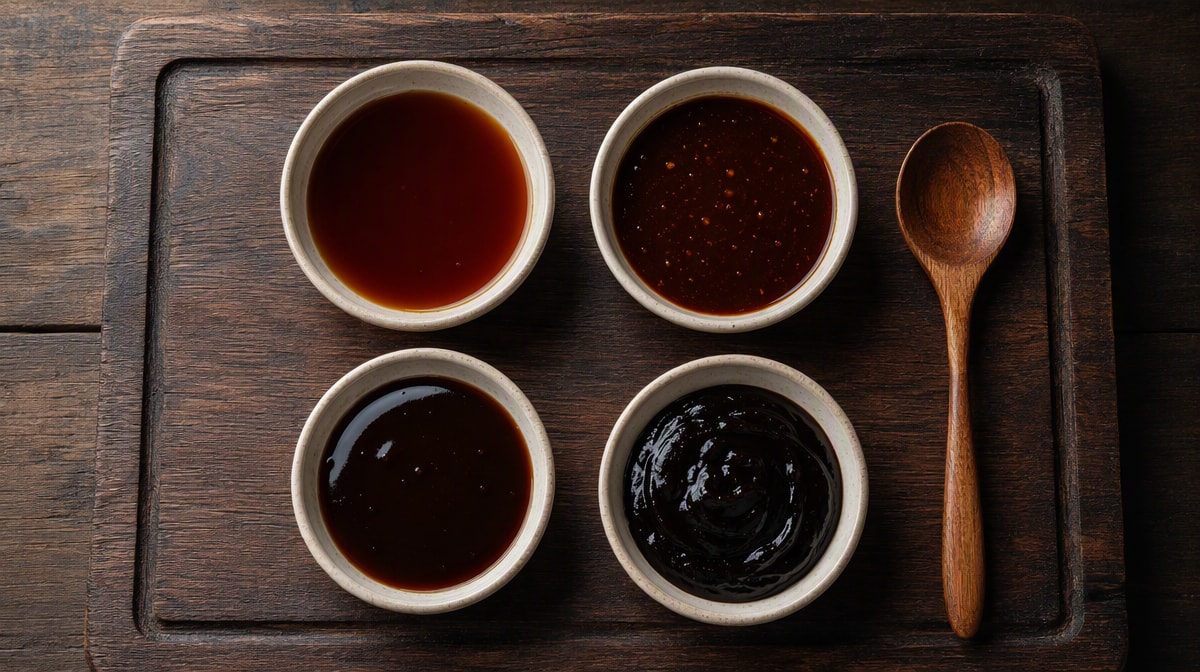
Oyster sauce isn't a traditional Thai ingredient, and the honest substitutes aren't really substitutes at all. They're different ways of getting the same two things, which are umami and gloss.
For Thai cooking specifically, the best swap is a mushroom or vegetarian oyster sauce. Yuen Chun and Kikkoman both make one, and they're what a Thai cook would use in their own kitchen.
For a home kitchen, equal parts hoisin and soy sauce is the closest single-ratio match, and fish sauce with a pinch of sugar is the closest in savoury depth.
Why oyster sauce is even in this conversation
Worth saying, because it surprises people. Oyster sauce is Chinese, not Thai. It's used widely in Thai stir-fries, in pad see ew, in pad kaprao variants, in noodle sauces and in some curry finishes, but a Thai restaurant will often season with fish sauce instead.
What people are after when they add it is umami and the glossy sheen. That combination is why it works in a stir-fry. It's the same trick as a cornflour slurry, except it brings flavour as well as gloss.
So the question isn't "what is a Thai version of oyster sauce". It's "what gives me savoury depth and a glaze". And there are several answers, of very different quality.
The swaps, ranked by what they're good at

Mushroom or vegetarian oyster sauce is the best answer for Thai cooking, and the one a Thai cook would use. Yuen Chun and Kikkoman both make proper ones. They're thick, dark, sweet-savoury, and they glaze a wok exactly as oyster sauce does. One for one, no adjustment.
This is the answer if you're vegetarian, vegan, pescatarian, or simply prefer not to cook oysters. It isn't an approximation. It's a better product for the job than a jar of oyster sauce in most cases.
Hoisin plus soy sauce. Half hoisin, half soy, which is the ratio that appears across the sources: a quarter cup of hoisin plus a quarter cup of soy replaces a half cup of oyster sauce. The hoisin supplies the sweet thick body, the soy the salt and depth. This is the closest single-ratio match in a British cupboard, and it works in a stir-fry.
Hoisin is closer to oyster sauce than most people expect. It's thick, dark, sweet and savoury, and the flavour profiles overlap more than the ingredients suggest.
Fish sauce plus sugar. About a teaspoon of fish sauce and a pinch of sugar per tablespoon of oyster sauce. This is the closest in savoury depth, and it's the right answer for a Thai dish specifically, because fish sauce is what a Thai cook would reach for. It's thinner, so you'll need to reduce or thicken, which is where a cornflour slurry comes in.
Tamari, brown sugar and rice vinegar is the most considered vegan and gluten-free answer. Tamari for the salty umami, brown sugar for the sweetness, rice vinegar for the slight tang that oyster sauce has. It takes a minute to make and it's genuinely good, if slightly more involved than a bottle.
Mushroom soy sauce, or a spoonful of miso stirred into a dark soy sauce. Less accurate than a proper vegetarian oyster sauce, but it works in a pinch and closes most of the umami gap.
Worcestershire sauce is genuinely similar. Both are fermented, sweet and savoury, and Worcestershire is itself an anchovy-based condiment. It's a decent stand-in, and it's also anchovy, so it's not vegan. Useful to know, rarely the first recommendation.
Hoisin on its own, thinned with a little water, is acceptable in a stir-fry where other things are present. Too sweet and too thin to use alone.
What isn't a substitute is plain soy sauce on its own. It's saltier, thinner and has none of the sweetness or body, and a stir-fry made with it tastes thin and over-salted at the same time.
What oyster sauce is made of, and why that matters

Understanding the composition explains every substitution on this page.
Oyster sauce is simmered oyster extract reduced down with sugar, salt and cornstarch. That's the whole thing, and the four components are doing four separable jobs.
The oyster extract is the umami. This comes from glutamate and other peptides released as the oysters break down in the simmering, which is the same class of compounds that fermented fish sauce and soy sauce provide. It's genuinely savoury rather than merely salty.
The sugar balances the salt and gives the characteristic round sweetness. Oyster sauce is noticeably sweet, and this surprises people expecting a purely savoury condiment.
The salt is substantial. A tablespoon is a real seasoning, and this is why most naive substitutions end up over-salted.
The cornstarch is the thickener and the source of the gloss. This is the component most substitutes lack entirely, and it's the reason a dish can taste correctly seasoned and still feel wrong.
So a substitute needs to cover four things, and most cover two. Vegetarian oyster sauce covers all four because it's built to the same specification with mushroom extract in place of oyster. Everything else is a partial answer, and the better partial answers cover the first two and get the third from a slurry.
Matching the two jobs separately
The insight that makes this easy is that oyster sauce does two things, and you can replace them separately.
For the umami: fish sauce, tamari, miso, mushroom, or a proper vegetarian oyster sauce.
For the glaze and the body: a cornflour slurry, hoisin, or the creaminess of coconut milk.
Most failed substitutions replace the umami and ignore the glaze, and the dish tastes thin even though the seasoning is technically right. This is the most common reason a home stir-fry doesn't have the restaurant gloss, and it's worth solving separately from the flavour.
A worked example. A chicken stir-fry where you want oyster sauce but have none. Add a tablespoon of hoisin and a tablespoon of soy sauce for the body, and a teaspoon of fish sauce at the end for depth. That's closer to a restaurant stir-fry than oyster sauce plus a cornflour slurry, because both jobs are covered by ingredients doing something useful.
If you are avoiding oyster sauce
The reasons cluster into three groups, and the best answer differs.
Shellfish allergy is the important one. Fish sauce is anchovy, not shellfish, and is generally considered safe for a shellfish allergy, but cross-contamination at the manufacturer level is a real concern, so check the label. A vegetarian oyster sauce is the cleanest answer.
Vegetarian or vegan. Mushroom or vegetarian oyster sauce, one for one, no compromise. This is the easiest case in the whole article.
Pescatarian, or simply not wanting to cook oysters. Fish sauce, which is what a Thai cook uses, plus a little sugar and a slurry for the gloss.
None of these require you to give up the flavour. That's the useful conclusion.
The recipes that actually benefit most
Not every dish needs this solved, and knowing which ones do saves effort.
Pad see ew, heavily. This is a glossy, thick, dark stir-fried noodle dish where the sauce is the dish, and the body is doing as much work as the flavour.
Any stir-fried noodle dish where the sauce needs to cling rather than pool. Same reason.
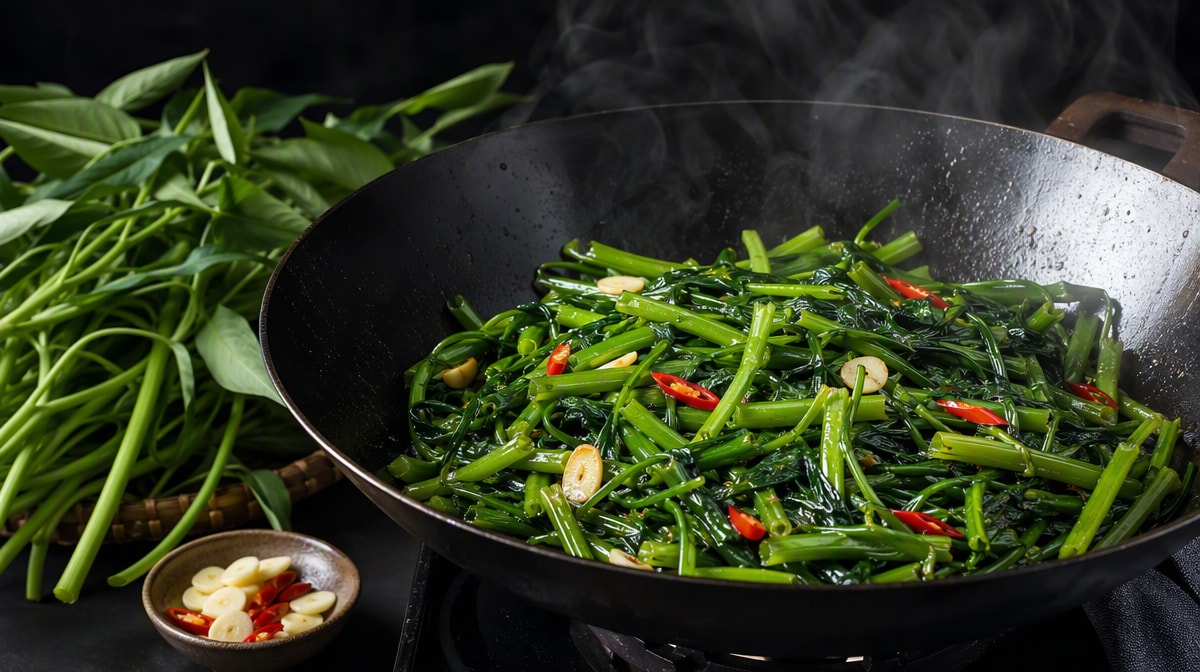
Stir-fried greens or vegetables where the sauce has to coat. A thin substitute runs off and leaves the dish looking unfinished.
Marinades, less critical, because the liquid reduces or is discarded, so gloss doesn't matter. Here it's purely a seasoning question, and fish sauce and sugar is the easy answer.
Soups and curries, barely at all. Oyster sauce in a soup is unusual, and the body is irrelevant because there's already liquid. If you want more umami in a curry, use fish sauce.
And a stir-fry where you're reducing the sauce at the end. Here the thickness partly solves itself, because a thin sauce concentrates down. This is one case where a thin substitute works without adjustment.
A note on hoisin, since it's the most recommended substitute here
Hoisin isn't a neutral stand-in. It's a sweet, thick, slightly spiced sauce in its own right, and a hoisin-heavy dish tastes like a hoisin dish. It works because it overlaps with oyster sauce in sweetness, darkness and body, but if you use more than about half oyster sauce's worth you'll start to taste the hoisin rather than the dish. Keep the ratio at or below one to one and it stays in the background.
Worcestershire deserves a second mention because it's the most surprising entry on this list and genuinely the closest in flavour to oyster sauce of anything in a British cupboard. Both are fermented, dark, sweet and savoury. Its problem is two-fold. It contains anchovies, so it's useless if you were avoiding seafood rather than shellfish, and its slight spice note is British rather than Asian. It works best in a brown stew or a marinade where those things don't matter, and less well in a Thai stir-fry where the flavour profile is more exposed.
In a Thai pantry specifically
Since this page is aimed at Thai cooking, it's worth saying which of these is actually what a Thai kitchen would have.
Fish sauce. Always. It's in every Thai kitchen and it's the seasoning everything else is built around. A small amount in a stir-fry, along with a little sugar and a slurry, gets you most of the way to what oyster sauce does.
Dark soy sauce. Common in Thai kitchens and a reasonable source of colour and salt, though it's saltier than oyster sauce and needs the sugar to balance it.
Oyster sauce itself. Widely available in Thailand, in a lot of homes, and not treated as foreign at all. It's a Chinese import that stuck, and it's on the shelf next to the fish sauce.
Mushroom-based vegetarian oyster sauce. Available but a more recent arrival, and increasingly stocked in the bigger Bangkok supermarkets.
Which means that if you move to Thailand and shop in an actual Thai supermarket, you will find oyster sauce as an ordinary item. The "is this a Thai ingredient" question is more about tradition than about availability.
Getting the body right, which is the bit people miss

Worth separating out because it's the difference between a dish that tastes right and one that looks and feels right.
Most substitutes are thinner than oyster sauce. That's the first thing to correct, and there are three ways.
A cornflour slurry. A teaspoon of cornflour whisked into a couple of tablespoons of cold water, added to the hot pan and stirred for a minute. This is the classic Chinese method and it's what gives a proper restaurant sheen. Add it too early and you'll thicken the sauce before the flavour has cooked together.
Reduce it. If the sauce is at the end of a stir-fry, just let it bubble for another minute or two. Often enough on its own.
Coconut milk. A splash at the end gives a creaminess rather than a gloss, and it's the most Thai of the three. It changes the character slightly, so it suits a curry or a green dish better than a dark stir-fry.
And a fourth option, which is the one I'd reach for: cook the sugar into the soy sauce. A teaspoon of brown sugar melted into a tablespoon of dark soy, with a splash of water, gives you something that tastes like a reduced sauce rather than a seasoned one, and it's ready in a minute.
A note on sodium
Worth a brief mention, because it's a common reason to make the swap.
Oyster sauce is high in sodium, and a tablespoon carries a substantial amount, often comparable to or above a tablespoon of soy sauce. Fish sauce is saltier per tablespoon still, though you use far less of it. Hoisin is moderate, and a vegetarian oyster sauce is on the lower side of these.
So if you're reducing sodium, the best swap is not fish sauce. It's a vegetarian oyster sauce used in a smaller quantity, or hoisin, which is both lower in sodium and lower in flavour intensity so you can use less and season with something else alongside it.
And the practical point: because all of these are salty, the substitution often needs a reduction rather than an increase. Starting at two-thirds of the oyster sauce volume and tasting is the right habit, and it's worth repeating because getting this wrong is the most common failure with every substitution on this page.
Do I need oyster sauce for Thai cooking, or is it a Western addition?
It is a Chinese condiment that has become common in Thai stir-fries and noodle dishes, and it's not traditional in the way fish sauce is. Many Thai restaurants season with fish sauce alone.
If you're cooking Thai food, you don't need oyster sauce at all. But where a recipe calls for it, usually for umami and gloss in a stir-fry, a vegetarian oyster sauce covers both.
If you buy one thing
If you buy one thing to solve this problem, buy a vegetarian oyster sauce. Yuen Chun or Kikkoman, both widely available in the UK. One jar solves the question permanently, it keeps for months, and it works in every dish oyster sauce would.
It's also the better buy for anyone who isn't strictly vegetarian. Vegetarian oyster sauce isn't a compromise product in this context. In a stir-fry it performs at least as well as the original, and it removes the oyster question entirely.
Keep a jar of hoisin in the cupboard as the backup, and fish sauce as the Thai-correct backstop. With those three you can produce the umami and the gloss in any dish, with or without oysters.
A note on sources
The composition and the ratios are consistent across sources and not contentious. The sodium figures are nutrition-label data. Brand recommendations are cook experience rather than testing, though they're consistent between the Thai-specific and the general sources. Trust the method over the brand list.
Frequently asked questions
What is the best substitute for oyster sauce in Thai cooking?
A mushroom or vegetarian oyster sauce, one for one, from Yuen Chun or Kikkoman. Both are thick, dark and savoury and they glaze a wok properly. This is also the answer if you're vegetarian, vegan or avoiding shellfish, and it isn't a compromise. In a stir-fry it performs at least as well as real oyster sauce.
Can I use soy sauce instead of oyster sauce?
On its own, no. It's saltier, thinner and has none of the sweetness or body, and the dish will taste both thin and over-salted. Half hoisin and half soy is the standard ratio, or soy plus a teaspoon of fish sauce and a pinch of sugar, and you'll be much closer.
What can I use instead of oyster sauce for umami?
Fish sauce is the Thai cook's answer, at about a teaspoon per tablespoon of oyster sauce. Tamari with a little brown sugar, a spoonful of miso, mushroom soy sauce, or a proper vegetarian oyster sauce all work. For a dish that needs a glaze as well, cover the umami and the body separately: one of these for flavour, a slurry or hoisin for gloss.
Is oyster sauce gluten free?
Traditionally it is, being made from oysters, sugar, salt and cornstarch, with no wheat. But many commercial brands add wheat flour or soy sauce for body and thickness, and a lot of Asian oyster sauces contain soy. Check the label if this matters. Tamari plus hoisin is a reliable gluten-free combination if you need to be certain.
Is fish sauce safe if I have a shellfish allergy?
Fish sauce is made from anchovy, which is a fish rather than a shellfish, and is generally considered acceptable for a shellfish allergy. The genuine concern is cross-contamination at the manufacturing stage, so check whether the producer handles shellfish. A vegetarian oyster sauce avoids the question entirely and is the simplest answer.
Can I make my own oyster sauce substitute?
Yes, and it takes two minutes. Tamari for salty umami, brown sugar for the sweetness, a splash of rice vinegar for the slight tang oyster sauce has, and a cornflour slurry if you need body. That combination is a genuinely good substitute and it's fully under your control, which is useful if you're avoiding a particular ingredient.
Does oyster sauce make a Thai curry better?
A small amount does, in green curry in particular, and it's common in Thai home cooking as a quick way to add umami. It's not traditional, and adding it to a curry that's properly seasoned with fish sauce will usually make it saltier rather than better. Use it when a curry tastes thin, not when it tastes bland.
Is there anything that actually tastes like oyster sauce without seafood?
No, and I'd rather say that plainly than dress up a substitute. Vegetarian oyster sauce reproduces the function very well: the umami, the sweetness, the body and the gloss. What it doesn't reproduce is the specific savoury depth that comes from shellfish itself, which is a mild marine note most people can't name but can identify when it's missing. In a stir-fry with other strong flavours that gap is invisible. In something plain and simple, where oyster sauce is doing most of the work, you'll taste the difference.

Comments