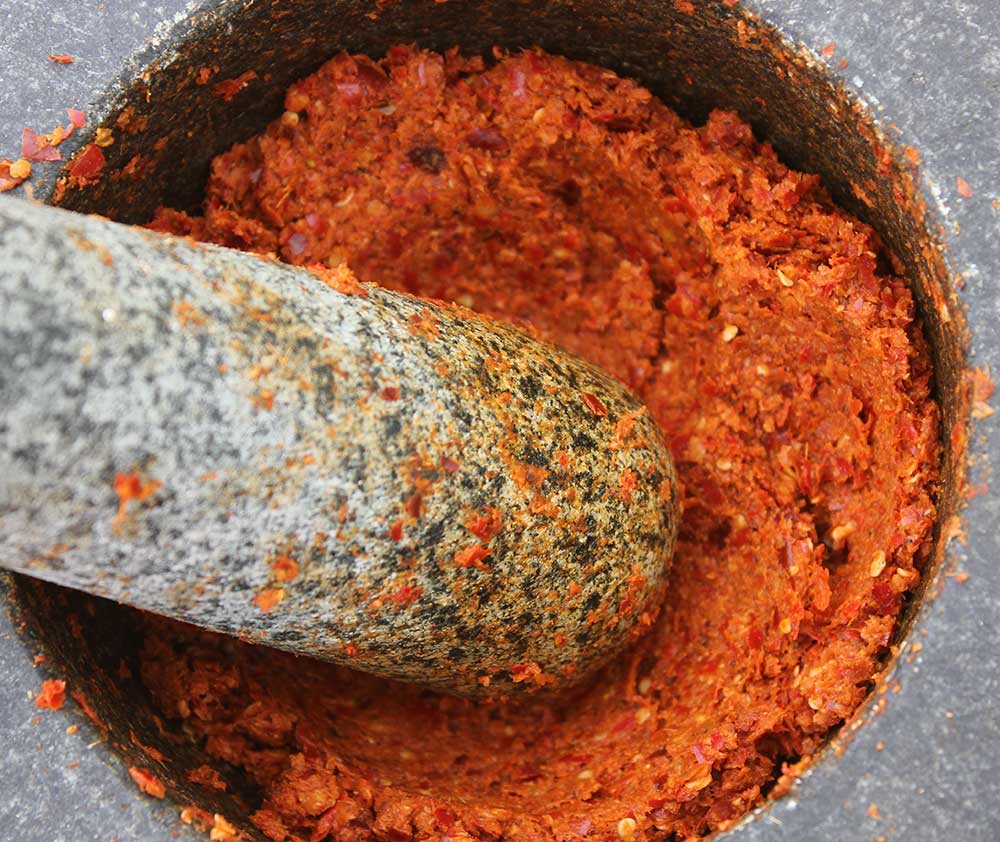
You've spent half an hour pounding a beautiful batch of curry paste and used a couple of spoonfuls, so how long will the rest keep? The short answer: homemade Thai curry paste lasts about 1 to 2 weeks in the fridge in an airtight jar, and several months in the freezer. The fresh aromatics are what limit it, but a couple of simple tricks will get you to the longer end of that range and beyond.
Here's exactly how long it keeps, how to store it properly, and how to tell when it's past its best.
The quick answer
Homemade paste keeps 1 to 2 weeks in the fridge in an airtight container, and closer to 2 if you keep it cold, airtight and topped with a thin layer of oil. Frozen, it lasts 3 to 6 months with very little flavour loss, the best option if you won't use it within a fortnight. Shop-bought paste once opened usually lasts longer because it contains preservatives; follow the jar's label, typically several weeks refrigerated.
Why homemade doesn't last as long as the jar
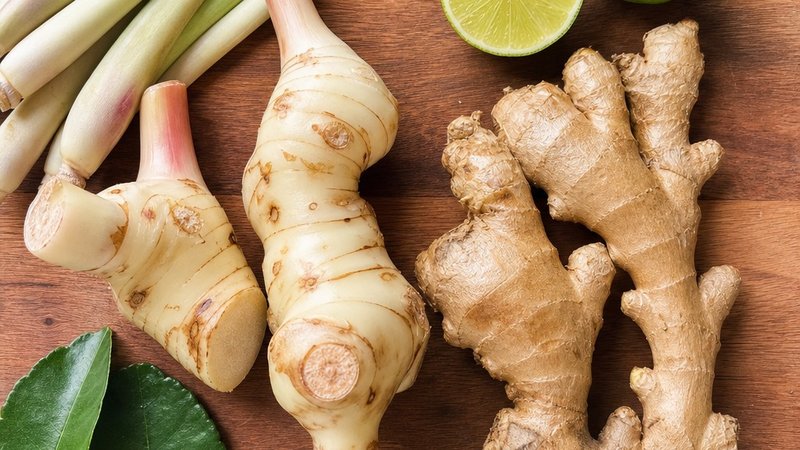
A proper Thai curry paste is just pounded fresh ingredients: chillies, lemongrass, galangal, garlic, shallots, coriander root, and usually shrimp paste. There are no added preservatives, so it behaves like any fresh food: the flavours start to fade and it eventually spoils. The upside is that it tastes incomparably brighter than anything from a jar; the trade-off is a shorter shelf life. If you've made our red Thai curry paste or green curry paste, that's exactly the paste we're talking about.
Two things actually help it keep. Salt and shrimp paste (and the fish sauce in some recipes) are mild preservatives, so a traditional paste lasts a little longer than a vegan or salt-light version, which I'd use up faster. The fish sauce in the cupboard behind it keeps far longer than the date suggests, and does fish sauce go bad covers what fades there and what does not. And air is the enemy: every time the surface meets oxygen it oxidises, darkens and loses aroma.
How to store curry paste in the fridge (and stretch it to 2 weeks)
The goal is simple: keep air and moisture out. Pack the paste into a small airtight jar with no air pockets, choosing a jar it fills rather than a half-empty big one. Add a spoonful of neutral oil over the surface to seal it from the air; it noticeably slows the darkening and is my single best fridge tip. Always use a clean, dry spoon: double-dipping with a wet or used spoon introduces bacteria and moisture, which is what turns paste mouldy early. And keep it at the back of the fridge, the coldest part, not in the door.
Freezing is the real answer
If you're not going to use the paste within a week or two, freeze it: Thai curry paste freezes beautifully and loses very little flavour. The way I do it:
- Spoon the paste into an ice-cube tray, roughly a tablespoon per cube (a handy single-curry portion).
- Freeze until solid, then pop the cubes into a labelled freezer bag.
- Cook straight from frozen: drop a cube or two into hot oil or coconut cream; no defrosting needed.
Frozen this way it keeps for 3 to 6 months, and you always have exactly the right amount to hand. Honestly, I make a big batch specifically so I can freeze most of it.

One freezing tip: raw garlic and shallot can turn slightly bitter and muddy after a long spell in the freezer. It's rarely a problem within a couple of months, but if you batch-freeze paste to keep for the full six, you can hold back the garlic and add it fresh when you cook; the rest of the paste freezes perfectly.
Red, green or yellow: does the type matter?
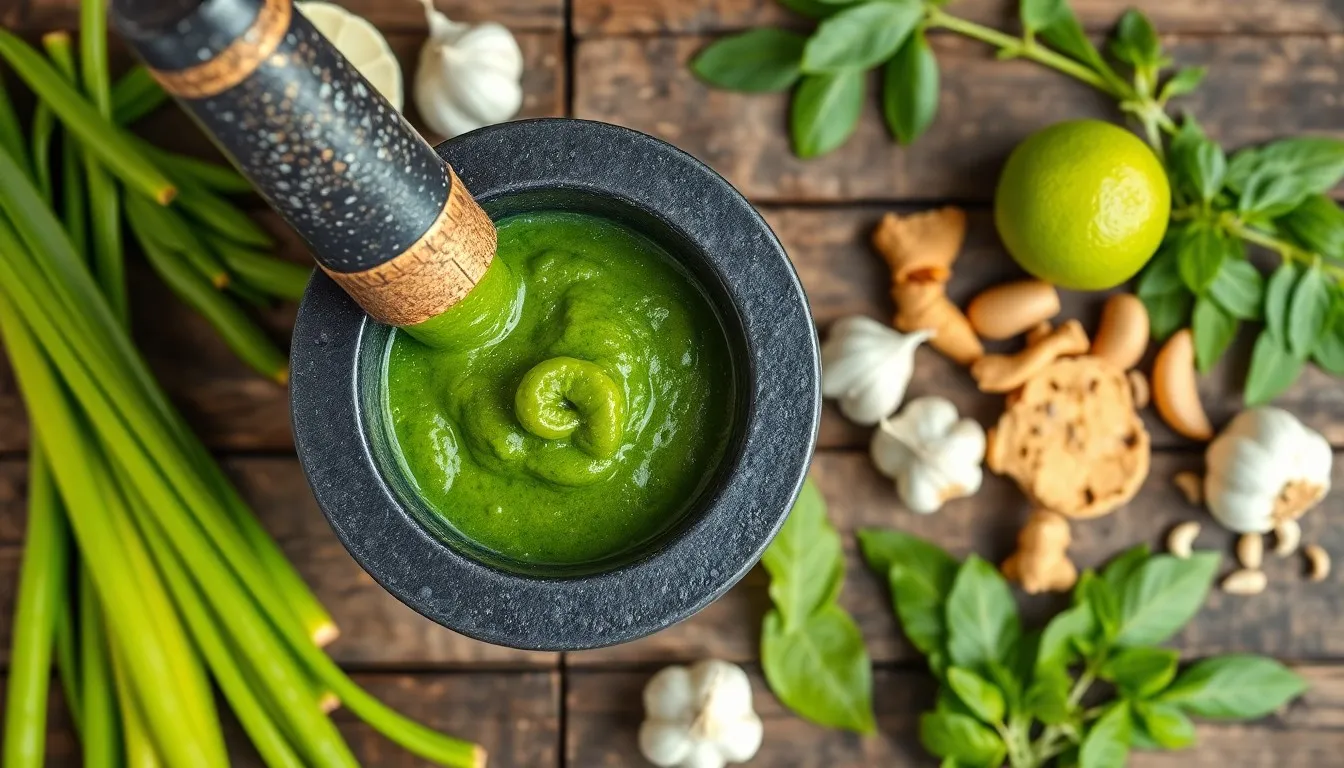
Only a little. All homemade Thai curry pastes keep for roughly the same 1–2 weeks in the fridge. The one small difference: green curry paste is built on fresh green chillies and lots of fresh herbs, so it has a touch more moisture and tends to fade and spoil a hair faster than red or yellow pastes, which lean on dried chillies. It's not a big gap; treat them all to the same airtight, oil-topped storage and freeze whatever you won't use quickly.
A quick safety note: the oil seal is for the fridge, not the worktop
This matters, so I'll be clear about it. The oil-layer trick is a refrigerator technique. Thai curry paste contains fresh garlic, and garlic sealed under oil and left at room temperature can, over time, create the airless, low-acid conditions that the bacterium behind botulism needs, for the same reason shop-bought garlic-in-oil is acidified and kept chilled. You don't need to worry when you keep your paste in the fridge and use it within a week or two, which is exactly what I'm recommending. Just never leave an oil-topped, garlicky paste sitting out on the counter, and if you're keeping it longer than a couple of weeks, freeze it rather than relying on oil at the back of a warm cupboard.
How to tell if your curry paste has gone off

Trust your senses; curry paste tells you clearly when it's done. Any fuzzy mould, white, green or black, means throw the whole jar out. A sour, fermented or "fizzy" smell is a clear sign it's spoiling (fresh paste smells bright and aromatic). Bubbles or a popping lid mean fermentation has started; bin it. Sliminess or a watery, separated texture that smells off is another sure sign.
A little surface darkening on its own isn't dangerous: that's just oxidation, and the paste underneath is usually fine if it still smells good. But if in any doubt, throw it out; a fresh batch takes minutes in a food processor.
The bottom line
Plan to use homemade Thai curry paste within 1 to 2 weeks from the fridge (airtight, oil-topped, clean spoon only) or freeze it in tablespoon cubes for 3 to 6 months and cook from frozen. That way nothing goes to waste and you've always got a real, fragrant curry ten minutes away.
Can't decide what to eat tonight?
Take our 60-second quiz and we'll pick for you
Frequently asked questions
How long does homemade Thai curry paste last in the fridge?
About 1 to 2 weeks in an airtight container. You'll reach the longer end if you keep it cold at the back of the fridge, press out air pockets and top the surface with a thin layer of oil.
Can you freeze Thai curry paste?
Yes: it freezes beautifully with very little flavour loss and is the best option if you won't use it within a fortnight. Freeze it in ice-cube trays (about a tablespoon per cube), bag the cubes, and cook straight from frozen.
How long does Thai curry paste last in the freezer?
Around 3 to 6 months. Portioning it into tablespoon cubes means you can take exactly what you need and the rest stays frozen, so quality holds up well.
How can I tell if my curry paste has gone off?
Look for mould (any fuzzy spots, bin the whole jar), a sour or fermented smell, bubbles or a popping lid, or a slimy texture. Mild surface darkening alone is just oxidation and is usually fine if it still smells fresh.
Does the oil layer trick really help?
Yes. A thin layer of neutral oil over the surface seals the paste from air, which is what causes it to darken and lose aroma. It's the simplest way to stretch fridge life toward the full two weeks.
Does shop-bought curry paste last longer than homemade?
Yes: jarred paste contains preservatives, so once opened it usually keeps for several weeks in the fridge (follow the label). Homemade has no preservatives, so it's brighter in flavour but shorter-lived.
Does vegan or fish-free curry paste spoil faster?
Slightly. The salt, shrimp paste and fish sauce in a traditional paste act as mild preservatives, so a vegan or salt-light paste is best used or frozen a little sooner.
Can I cook curry paste straight from frozen?
Absolutely: there's no need to defrost. Drop the frozen cube into hot oil or simmering coconut cream and it melts and fries off in moments, just like fresh paste.
Is it safe to store curry paste under oil?
Yes: in the fridge, used within a week or two. The oil seal is a refrigerator technique. Because the paste contains fresh garlic, don't leave an oil-topped paste at room temperature, where garlic-in-oil can pose a botulism risk over time. Keep it chilled, or freeze it for longer storage.
Does red, green or yellow curry paste keep differently?
Barely. All homemade pastes last about 1–2 weeks in the fridge. Green paste, made from fresh green chillies and herbs, holds a little more moisture and may fade slightly faster than red or yellow, which use dried chillies, but the difference is small.

Comments