Squid is tender at two moments only. About sixty to ninety seconds of hard heat, or a long slow braise of half an hour or more. Everything in between, two to eight minutes, is what makes squid rubbery.
That's the whole rule, and it's the most repeated point across every source I've read on this. Nearly every disappointing squid dish is a dish that sat in the danger zone.
In Thai cooking it rarely bites, because the traditional methods are at one end or the other. Grilled over high heat for two to four minutes. Steamed. Blanched for ten seconds and dressed raw. Or poached slowly in a curry.
The two windows

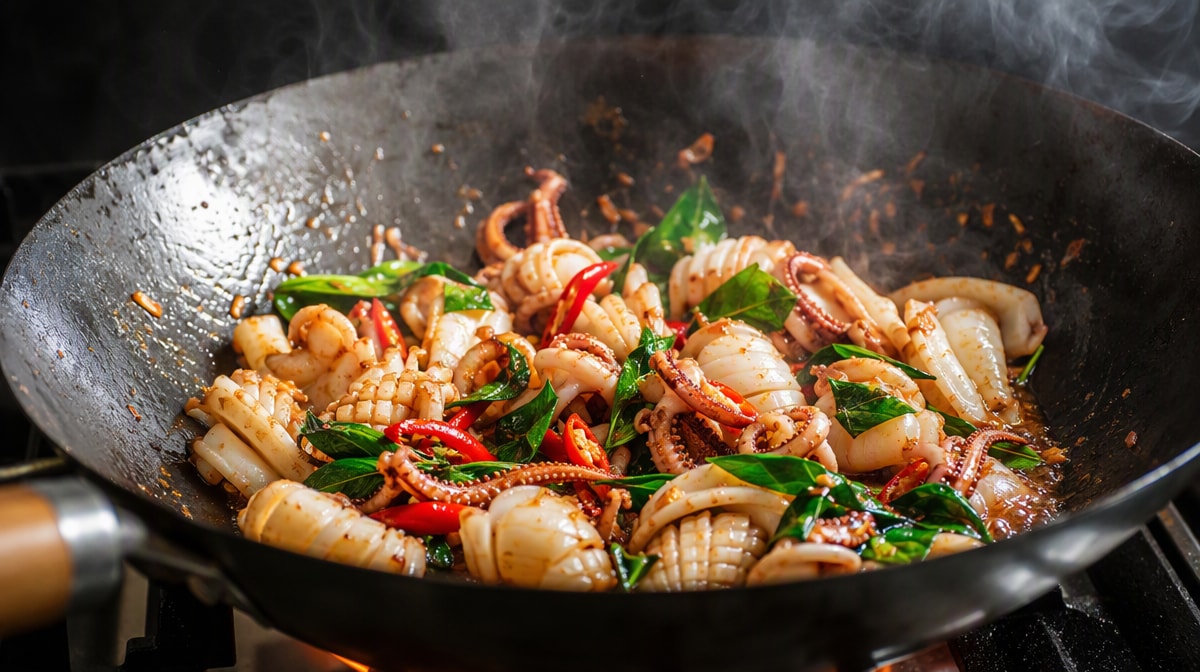
Window one is very fast, very hot. Sixty to ninety seconds in a wok that's properly smoking, until the squid turns opaque and curls. This is pad pra muek, a street-food stir-fry, and it's over in less time than it takes to read the recipe.
Window two is very slow, very long. Thirty minutes or more of gentle cooking, at which point the collagen has broken down entirely and the squid is tender in a completely different way. Dense, soft, silky rather than springy.
The danger zone in between turns squid to rubber. This isn't gradual. It goes from perfect to overcooked in a matter of seconds, because the muscle fibres tighten as the heat passes through the collagen transition and then contract hard.
The practical consequence is that once squid is done, it comes out. In a stir-fry it should be the last thing in the wok, or it should be removed early and returned at the end. It doesn't benefit from sitting.
Preparation is half of it

You can cook squid perfectly and still have a disappointing dish if the prep was wrong.
Buy small squid. Four to six inches is the sweet spot. Larger squid is genuinely tougher and needs the long-cook method. Smaller is tender almost regardless of what you do to it.
Clean it properly. Pull the tentacles out, then pull the quill, the clear plastic-like structure running through the body, and peel off the purple skin. Cut out the beak from the tentacles. Rinse.
Score the inside of the tube in a diamond pattern, without cutting through. This is the step most people skip and it does two things. It lets the squid curl as it cooks, which looks better and cooks more evenly. And it gives you a visual doneness cue, because the diamonds curl outward and go opaque when it's done, so you can tell without cutting into it.
Pat it completely dry before it goes anywhere near heat. This is the one that matters most. A wet squid steams rather than sears, and steaming is the enemy of the fast window. Surface moisture is what turns a hot-wok sear into a slow, toughening cook.
The Thai dishes, and which window each sits in
Worth knowing, because it tells you what the intended technique actually is.
Pad pra muek is squid stir-fried with Thai basil, chilli, fish sauce, oyster sauce, and sometimes shrimp paste and black pepper. Window one. Wok smoking hot, squid added last, out in a couple of minutes. This is street food and the clock is measured in seconds.
Yam pra muek, spicy squid salad, is a genuinely distinctive Thai dish. Window one at its most extreme: the squid is blanched for five to ten seconds, shocked in ice water, and then served essentially raw in a hot, sour, salty dressing with mint, Thai basil and lime leaf.
Pla muek nueng manao, steamed squid with a lime sauce, sits in neither window exactly. It's gently cooked, and the dressing does the work.
Pla muek yang, grilled squid, marinated and cooked over high heat for two to four minutes. Window one, on a grill rather than in a wok.
Pra muek tod, fried calamari, is battered and deep-fried and served with sweet chilli. Deep frying is at the fast end, because the batter insulates the squid and the oil is very hot.
And squid in a red curry is the slow window, and the one most people wouldn't think of. Thirty-plus minutes of gentle simmering, and the squid ends up tender and substantial rather than springy.
The pattern is worth noticing. Thai cooking uses squid either at absolute speed or in a sauce that cooks it through. There's very little middle ground, and that's why Thai squid is reliably tender and Western home squid so often isn't.
The stir-fry method, properly
Heat the wok until it's genuinely smoking. Not hot, not warm. Smoking. Add the oil, let it shimmer, and get everything else in and cooked first.
Cook the squid last. Everything else, the garlic, chilli, shallots, the sauce, goes in first and gets a head start. The squid joins at the end and comes out within a minute or two.
Or, better for a home kitchen, cook the squid first and take it out. Sear it for a minute, remove it to a plate, cook everything else, then return the squid for thirty seconds. This is more controllable than trying to time the last step, and it's the method that works in a domestic pan that never quite gets hot enough.
Don't crowd it. A crowded pan drops in temperature, a cool pan steams, and steaming is the failure mode. If your squid is touching, it's cooking in its own steam.
Keep it moving. Toss constantly, and don't leave it sitting in a pile.
If you want a curry instead
Use the slow window deliberately. A squid curry is a dish where the squid goes in with the sauce and simmers for half an hour or more, and this is the correct method rather than a compromise.
Add the squid once the curry base is built, after the paste has fried and the coconut milk is simmering. Then give it time.
Small squid is much better for a curry than large, because it'll be genuinely tender in the time the sauce needs rather than merely cooked.
And don't add it too late. The temptation is to add squid in the last ten minutes to avoid overcooking, which produces rubbery squid in a dish where it could have been tender. Trust the long window.
Choosing squid, which is the decision that matters most
Everything else on this page is technique. This is shopping, and it's the higher-leverage choice.
Small squid, four to six inches, is the answer for almost every Thai dish. It's naturally tender, it cooks in the fast window without any fuss, and it's what a Thai market sells because that's what works.
Large squid is a different ingredient. Meatier and better suited to a braise or a curry, where thirty minutes of cooking transforms it. It'll be rubbery in a stir-fry at any timing, because the collagen is denser and the muscle fibres thicker.
So the dish you're making should determine the squid you buy. A quick stir-fry or a salad wants small. A curry or a stew wants larger, and the larger kind gives you something substantial rather than chewy.
Frozen squid is perfectly good and often the most practical option here. It's frozen at sea, which happens fast, and the texture difference is small as long as it's thawed properly: slowly in the fridge, never in hot water, and cooked immediately.
Dried or salt-cured squid is a different ingredient again, used in Thai cooking where a strong, salty, preserved note is wanted. Not a substitute for fresh in any of the dishes on this page.
And if you've never cleaned squid, buy it cleaned. It costs a little more and it removes the single largest barrier to cooking it at home.
If it has gone wrong anyway

Rubbery squid in a stir-fry can't be rescued in the pan. The fibres have already contracted and they won't relax. The honest options are to eat it anyway, because a saucy, heavily dressed squid is more tolerable than plain rubbery squid, or to start again.
Squid that's chewy but not rubber is more forgiving. This usually means it was slightly underdone at the fast end, and given a couple more minutes in a liquid it'll improve noticeably.
Slimy, translucent squid that never turned opaque was undercooked, or the pan wasn't hot enough, or the heat wasn't distributed. There's a simple test: cooked squid is opaque white and springs back when pressed, raw squid is translucent and rubbery to the touch.
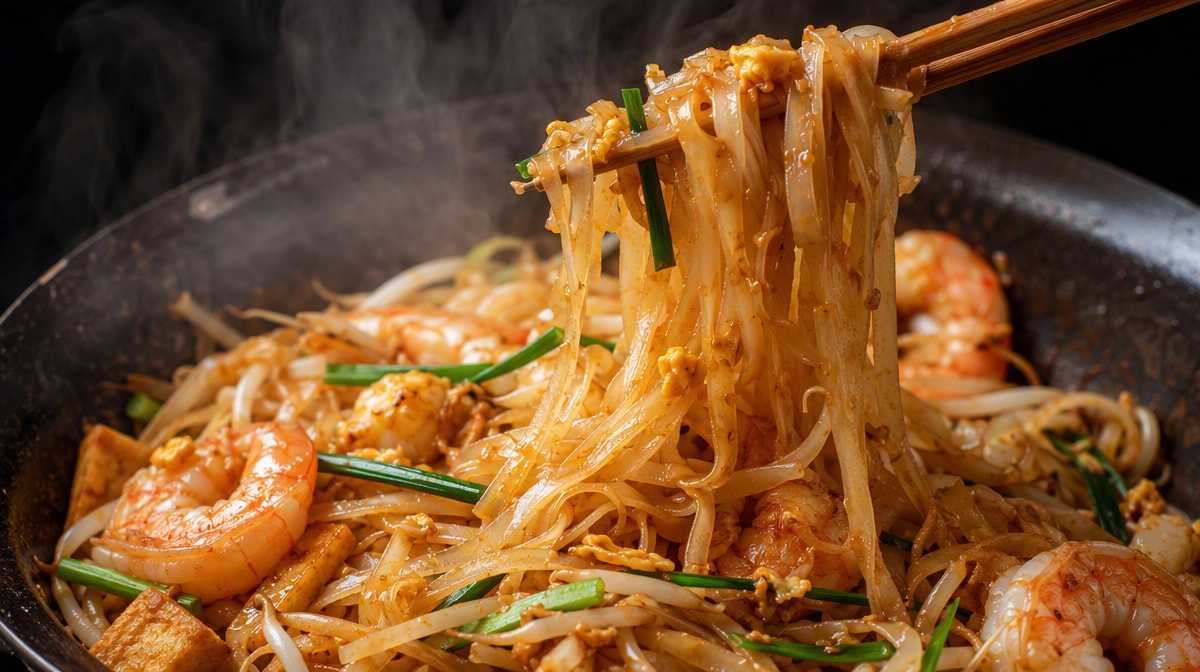
And squid that's been sitting after cooking gets worse rather than better, which is the opposite of most meat. That's why a squid stir-fry is a dish you eat immediately rather than one you make ahead. Our pad thai doneness guide covers the timing logic, and it's identical.
The dressing for yam pra muek, and why it's made to order
Worth a note, because the fresh squid salad is a genuinely Thai way of eating squid and people outside the country rarely encounter it.
Real Thai explains why Thai restaurants make seafood salads to order rather than in batches. The fresh flavours of herbs, and the fresh tastes and succulent textures of seafood, dissipate over time. A made-ahead salad goes watery and dull.
The mechanism is salt. The longer the seafood and herbs sit in the sauce, the more its saltiness and sourness draw out their juices, thus diluting the flavours in the salad. A salad dressed ten minutes early is a salad diluted by its own seasoning, and the squid texture goes from succulent to slightly dull.
So dress at the last moment. The squid is blanched and shocked, the dressing is mixed, and they're combined when you're about to eat. This is a genuinely useful piece of technique that applies to any seafood salad, and it's the reason a squid salad assembled in advance is always worse than one assembled at the table.
The same source is gentle about this being a gateway dish, pointing out that people who have never cleaned squid, or who think they don't like it, have probably not had it cooked correctly. Which is true of a great many people.
The flavour profile
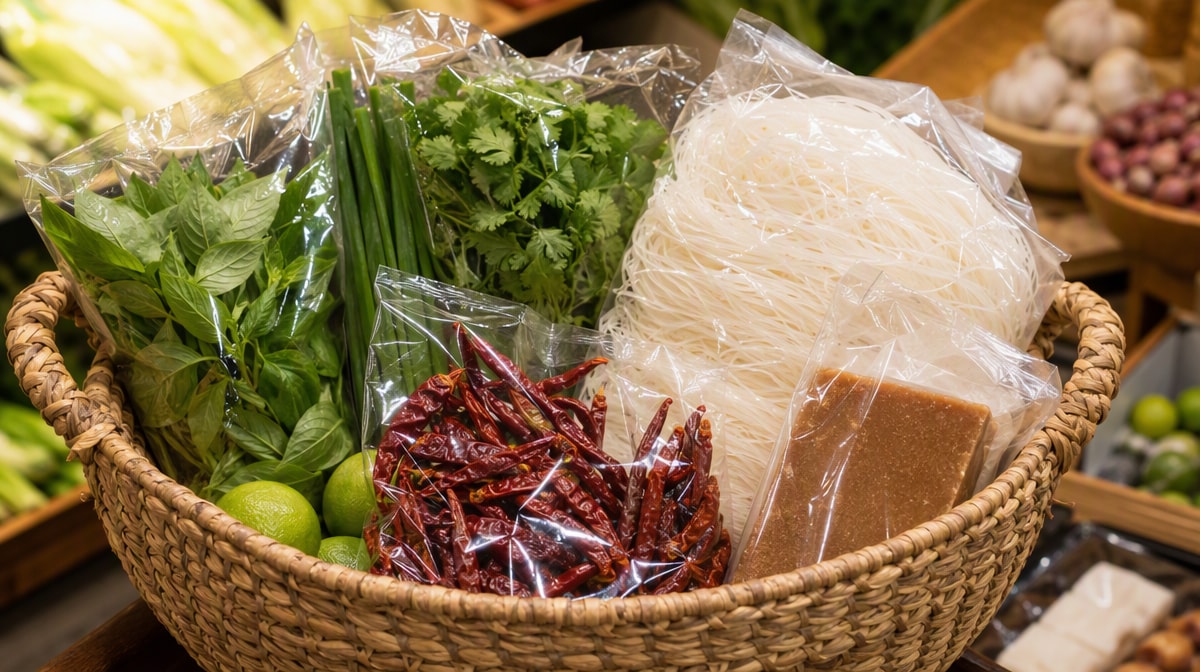
Thai squid is built on the standard four, fish sauce, lime, chilli and garlic, with a little sugar, and then the herb layer.
Thai basil for a stir-fry, added at the end. Mint and lime leaf for a salad. Kaffir lime zest in a dressing. Black pepper, which appears in street-style squid and is more prominent than people expect. And shrimp paste, or kapi, in some versions, for a deeper, funkier savoury note.
That last point is the one people miss. If you're adding shrimp paste, reduce the fish sauce, or the dish will be aggressively salty.
A few smaller things
Blanch before stir-frying if you're nervous. Five to ten seconds in boiling water, then straight into ice water. It pre-cooks the outside so the inside can't be raw while the outside overcooks, which is the most common beginner problem. It's a safety net rather than a necessity.
Marinating in milk or buttermilk to tenderise appears in the sources but is a Western and Chinese technique rather than a Thai one. It works, and if you want it, use it. Just don't expect a Thai dish to call for it.
And clean squid yourself if you haven't before. It's much less unpleasant than it sounds, and the difference between bought cleaned squid and squid you've cleaned yourself is real, particularly in texture.
A note on sources
The two-window rule is the most consistent finding in the research and is well explained chemically, so I'd trust it. The market notes on specific shops and brands are less consistent and are worth treating as guidance. The dressing-order material is the best-sourced thing on the page, because it's a specific mechanism rather than a preference.
Frequently asked questions
Why is my squid rubbery?
Almost always the cooking time. Squid is only tender cooked very fast, 60 to 90 seconds of high heat, or cooked very slowly for 30 minutes or more. Two to eight minutes in between makes it rubbery. The other common causes are a pan that wasn't hot enough, crowding, and squid that wasn't dried properly before cooking, which steams rather than sears.
How long do you cook squid for?
Sixty to ninety seconds in a smoking-hot wok for a stir-fry, until it curls and turns opaque. Alternatively thirty minutes or more of gentle simmering, which is a genuinely different and equally tender result. Anything between two and eight minutes is the danger zone that produces rubbery squid.
Should I blanch squid before stir-frying?
Not strictly necessary if your wok is hot and you're quick, but five to ten seconds in boiling water followed by an ice bath pre-cooks the outside. It means the inside can't be raw while the outside overcooks, which is the most common beginner problem. It's a useful safety net.
Does squid get more tender the longer you cook it?
Yes, but only past a long threshold. There's a brief window where longer cooking tightens the muscle fibres and it goes rubbery, and then after roughly 30 minutes of gentle cooking the collagen breaks down and it becomes genuinely tender and silky. So it isn't linear. It gets worse before it gets better, and most stir-fries are nowhere near the long-cook window.
What is Thai squid salad and how is it different?
Yam pra muek is a Thai spicy squid salad, made with squid cooked at the absolute fastest end of the scale, blanched for five to ten seconds, shocked in ice water, and dressed raw in a hot, sour, salty sauce with mint, Thai basil and lime leaf. The dressing is added at the last moment, because salt draws the juices out of the squid and dilutes the salad.
Can I add squid to a Thai curry?
Yes, and a curry is one of the best uses for the slow-cooking method. Add the squid after the paste has fried and the coconut milk is simmering, and give it thirty minutes or more. Adding it in the last ten minutes to avoid overcooking is the mistake. It produces rubbery squid in a dish that could have been excellent.
Can I use frozen squid instead of fresh?
Yes, and in the UK it's often the more practical option. Frozen-at-sea squid differs little in texture from fresh as long as it's thawed slowly in the fridge rather than in hot water, and cooked immediately once thawed. Thawing it in a microwave or in warm water is what turns frozen squid rubbery, not the freezing itself.
What size squid should I buy for a stir-fry?
Four to six inches, which is the naturally tender size and what Thai markets sell. Larger squid is denser and better suited to a curry or a braise, where thirty minutes of simmering breaks down the collagen. Large squid in a quick stir-fry will be chewy whatever timing you use.

Comments