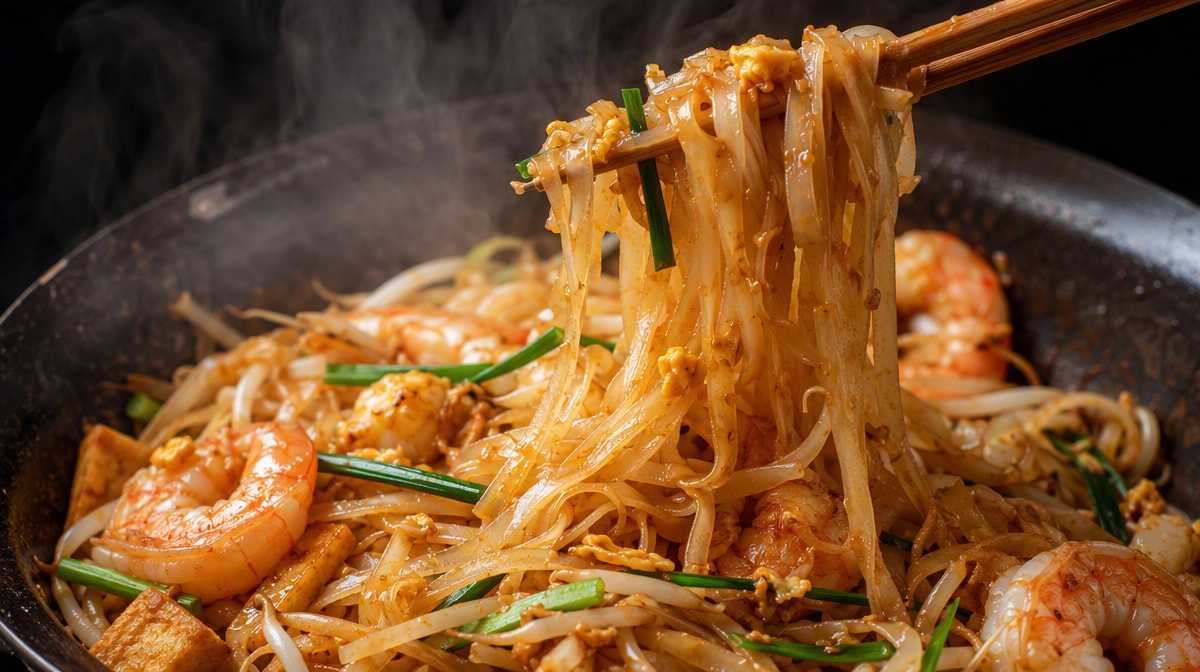
There's no timer for this. Pad thai is done when the noodles have stopped being white, they've gone tender-chewy rather than crunchy, and the whole thing is glossy with the strands moving freely rather than sitting in a clump.
All three at once. If you have all three it's done, and it will only get worse from there.
Most advice on this stops at the soaking stage, which is useful but isn't the question you're asking once the pan is in front of you. This is about the last ninety seconds and the plate.
The three tests, in the order to check them
Colour
The noodles should no longer be opaque. Dry rice noodles start as a hard white or off-white rod, and as they rehydrate and cook they become translucent.
An opaque white core with a translucent edge is the single clearest sign of underdone noodles. It's visible on a cut strand and it's much easier to spot than you'd expect once you know to look.
This is the test most worth learning, because it's visual and it works on a plated dish. Cut one strand and look.
Texture
Tender-chewy, never crunchy. The distinction matters. The failure mode of underdone pad thai isn't softness, it's crunch: a hard, brittle, gritty bite, often with the sensation of dry starch in the middle of the strand. Some bite is correct. Snap is not.
Kris Yenbamroong of Night + Market describes it as noodles that should droop but still have substance, flexible, with a slight firmness underneath. That's the target, and it's a tactile test rather than a visual one, so do it in the pan.
Gloss and movement
The dish is glossy and the strands are separate. Sauce coats every strand in a thin sheen and the noodles move independently when you toss the pan.
Clumping is the opposite signal, and it's usually overcooking or overcrowding rather than undercooking. There's a full guide to that in why pad thai is sticky and clumpy.
Belt and braces: taste one strand. Take one from the pan, blow on it, taste it cold. This is how the people who cook this daily actually judge, and it takes three seconds. The seasoning will tell you things the eye can't. If the strand is cooked but the seasoning is wrong, how to make pad thai less salty covers the corrections.
The droop test, which comes first

Everything above depends on getting the noodles out of the water at the right moment, and there's one test for that too.
Lift a strand out of the soaking water and let it hang.
Drooping, with substance, means flexible, bending under its own weight, with a distinct firmness underneath. That's ready.
Rigid, standing up, or snapping means it still needs time. The bend isn't there yet.
Slumping into mush with no resistance at all has gone too far.
The most consistent description in the sources is pliable but still slightly firm to the touch, able to wrap easily around your finger without breaking. A strand should coil rather than fold.
Thin noodles need 20 to 30 minutes and wide ones up to an hour, but that's a starting point and the test overrides it. Water temperature and brand both matter, and enough brands vary that a packet time is a guess rather than an instruction.
Under-soaked noodles feel gritty rather than merely firm. That's dry starch that hasn't been rehydrated, and it's a different problem from undercooking. Noodles that have soaked properly and then cooked too long go soft. Noodles that never soaked properly stay hard, and the only cure is more soaking rather than more heat.
Do taste them raw. Straight from the water, under-soaked rice noodles taste of dry paper, which is confusing rather than informative. Judge by feel and let the wok do the rest.
The mistake almost everyone makes: soaking too long

Noodles that are fully soft before they reach the wok are noodles that will be mush by the plate.
Every reliable source says the same thing from a different angle: pull the noodles from the soak while they're still slightly firm. They finish cooking in the wok, from the steam and the sauce. Soft on the outside and firm in the middle when they go in the pan is exactly right.
If they're already floppy in the water, there's nothing left for the wok to do except break them down further.
Width changes the timing. Thin noodles cook faster than wide, and packet times are a starting point rather than an instruction. Thai Sensations makes the general point that any thickness of dried rice noodle will do for the dish, sold as rice stick in sheets, and available in a wide range of widths. Follow the packet for the soak, then verify by feel.
For the soaking technique itself, temperatures, times, and why boiling them is a mistake, see our sticky and clumpy guide. I won't repeat it here.
The tamarind timing problem
This is the least known thing on the page and the most useful.
Acidic ingredients, tamarind above all, should not go in before the noodles are pliable.
There's a hydration threshold. The noodle has to have absorbed enough water for the starch to respond properly, and acid added before that point interferes with it. You get noodles that stay hard in the centre no matter how long you then cook them. They will not soften by waiting.
So: aromatics and sauce into the hot wok first, noodles in when they're already soft and bendable, tamarind and other sharp seasoning after the noodles have softened further.
This is the second most common reason for crunchy pad thai after under-soaking, and unlike under-soaking it isn't fixed by cooking longer. The damage at that point is already done.
The shape of a finished strand
Worth knowing, because it removes most of the uncertainty.
Cut into coins about an inch thick, on a slant. The angle isn't fussy: it exposes more of the surface, so more sauce and more oil coats the strand, and it means the coins don't stack flat and press against each other in the pan.
Coins rather than a mince if you're making soup, because you'll want to fish them out. Mince if you're making a curry, where the noodles stay in the dish and smaller pieces mean more flavour into a thick sauce.
And the size depends on cooking time. A short simmer of twenty minutes wants larger coins because they hold together. A long braise of two hours wants smaller ones, since they'll break down anyway and there's no point fishing out a large piece.
Too far: what overcooked looks like

Mushy, gummy, breaking into shards. The strands lose their structure and the dish goes from tender to soft in a very short window, because there's very little between them.
Also watch for strands snapping rather than bending when you toss, a dull rather than glossy surface, and the sauce thinning out as the starch breaks down into it.
Once you're here it's largely irreversible. The rescues are cosmetic rather than corrective: stir through fresh bean sprouts for crunch, add more sauce to re-gloss, or eat it now rather than saving it, because it will be worse tomorrow.
Why the restaurant version is better
The texture gap between a street stall and a home kitchen is almost entirely about this ninety-second window, and it comes down to three things.
The pan is genuinely hotter. Not a domestic hob on maximum, but the sustained high heat of a gas wok that's been running for hours. Noodles tossed into that environment cook in a fraction of the time, which is precisely why less damage is done to them.
The batches are small. Two or three portions at a time rather than a family dinner, so the wok never drops in temperature when the noodles go in.
And the cook tastes continuously. Not at the start and the end, but throughout. That's the whole skill, and it's not something a recipe can carry.
The takeaway for a home kitchen isn't to chase the wok temperature, because you won't close that gap. It's to cook in smaller batches than you think you need to, which is the one thing on that list that transfers directly. A crowded pan cooks unevenly and gives you some strands done and some still hard, which is the worst outcome available.
The two-minute window
Worth understanding why this dish is stressful, because the answer is structural.
Bangkok Street Food describes how Thai stir-frying actually works: all the ingredients are cut in advance, but once done you heat the oil and quickly toss in your ingredients in the right order, and the cooking should only take a few minutes because of the size of the ingredients.
The preparation takes most of the time. The cooking does not. Everything that determines whether the noodles are right has already happened before the pan gets hot: the cutting, the soaking, the sauce mixed and tasted. What's left is a short, fast, slightly unforgiving finish in which the dish is either right or it isn't.
That's why the sauce should be mixed and tasted before the pan goes on, and why everything else should be ready. The ninety seconds of cooking can't rescue ninety minutes of inattention.
If you cook this often the judgement becomes automatic in a way that's worth trusting more than any recipe. If you don't, taste the strand.
Quick checklist
The noodles are translucent, with no opaque white core.
Tender-chewy when you bite, so they bend rather than snap.
The dish is glossy, sauce coating rather than pooling.
Strands separate and moving, not clumped.
Seasoning tastes right on a cold strand.
Bean sprouts still have bite.
If the sprouts have lost their crunch, you've gone too far. They go in late for that reason, and they're the most reliable clock in the dish.
One last thing worth saying, because it trips up people who have cooked pad thai from scratch: if you made your own paste, the fish sauce in that paste has partly cooked off already, and your noodles need less fish sauce in the wok than the same recipe with a jar. Taste before you add, and add less than you think. Too much of it, or too little heat to cook it off, is what makes a dish taste of fish, and why your pad thai tastes too fishy covers that failure.
A note on sources
Almost everything published on this topic is about the soaking stage rather than the finished dish, and video-led answers dominate the search results without being readable. The colour test and the acid-timing mechanism are the two things here that go beyond the common advice, and both are well supported across the sources rather than resting on a single claim.
The food-safety framing, that undercooked rice noodles carry a bacterial risk, appeared in only one low-authority source. There's a real argument that thorough rehydration matters for that reason, but I'd not state it as established, and it isn't a reason to keep cooking noodles past the point where they're tender.
Frequently asked questions
How do I know pad thai is cooked without a recipe or a timer?
By three things at once: the noodles are translucent with no opaque white core, they're tender-chewy so they bend rather than snap, and the dish is glossy with the strands moving freely. Tasting one cold strand is the fastest confirmation, and it's what cooks who make this daily rely on.
Why are my pad thai noodles still crunchy in the middle?
Usually one of three things. They weren't soaked long enough or the water was too cold, leaving dry starch in the core. The wok was overcrowded so there wasn't enough steam to cook them through. Or the tamarind went in before the noodles were pliable, which locks the starch and stops them softening however long you cook them.
Should pad thai noodles be completely soft before going in the wok?
No, the opposite. Pull them from the soak while they're still slightly firm, so they finish cooking in the wok from the steam and the sauce. Noodles that are already floppy before the pan goes on will be mush by the plate, because there's nothing left for the wok to do except break them down.
When should I add tamarind to pad thai?
After the noodles are in and have softened, not before. Acid added before the noodles have absorbed enough water interferes with the starch and leaves a hard core that won't soften however long you cook. Aromatics and sauce go in first, then the noodles, then the sharp seasoning.
How do I rescue overcooked mushy pad thai?
Mostly you can't, and it's worth accepting quickly. The workarounds are cosmetic: stir through fresh bean sprouts for crunch, add a little more sauce to restore the gloss, and eat it immediately rather than saving it. Next time, pull the noodles while they're still firm and watch the bean sprouts as your clock.
Is my pad thai underdone or just soft?
Underdone feels hard, brittle or crunchy, sometimes with a gritty starchy core and an opaque white centre when you cut a strand. Correct is tender-chewy, so it bends easily when you toss it and has a slight firmness. The window between the two is narrow, and bean sprouts are the most reliable check. If they've lost their crunch, you've gone past it.
Does noodle width change how long it takes?
Yes, more than the packet suggests. Thin noodles rehydrate and cook faster than wide ones, and dried noodles need the full soak while fresh ones need only a brief warm one. Follow the packet time for soaking, then verify by feel rather than trusting the clock. The droop test is more reliable than any timing.
Can I boil pad thai noodles instead of soaking them?
No. Boiling pre-cooks them, and they arrive in the wok already part of the way to falling apart, so they turn to mush almost immediately. They're rehydrated, not cooked, at the soaking stage. This is the single most common reason a home pad thai goes soft and pasty, and our sticky and clumpy guide covers the soaking method in full.



Comments