Most Thai dishes contain no gluten by nature, because Thai cooking is built on rice rather than wheat. The gluten arrives in a bottle: soy sauce, oyster sauce, seasoning powders. Safe without much conversation: clear and coconut soups, curries made with a paste you have checked, salads dressed with fish sauce, grilled meat, plain and sticky rice. Worth asking about: pad thai, fried rice, satay, any curry made from a jar. Not safe as British kitchens usually make them: pad see ew, drunken noodles, pad krapow, khao soi, egg noodles, fried spring rolls. Under all of it sits the shared wok.
Why is Thai food mostly gluten-free by nature?
Because the kitchen it comes from runs on rice. Rice is the starch, rice flour makes the noodles, coconut milk does the job cream does in a French sauce, and there is no roux, no breadcrumb and no pastry in the tradition. That is not a modern accommodation for coeliac diners. It is how the cuisine was built.
When a Thai dish does contain gluten, it arrived from outside: a Chinese-origin noodle, a bottled sauce, a batter. The menu is friendlier than an Italian or Chinese one for a structural reason, not because Thai restaurants are careful. Wheat was never in the recipe.
What a Thai kitchen is built on
The Food and Culture of Thailand puts the hierarchy plainly: the main dish of a Thai dinner is rice, and everything else, the soup, the salad, the curry, the dipping sauces, is treated as a side dish that complements it. Foods of Thailand gives the quantity with it: about a pound (0.45 kg) of rice per person per day, a large lidded bowl as the centrepiece, with small dishes of meat, fish, vegetables and spicy sauces around it. The noodles follow the same logic. The same book describes them as rice flour and water, sold in a block the cook cuts into strips, and the clear bean threads as mung beans and water. Yellow noodles are the exception: their colour comes from eggs added to a wheat flour dough.
Sticky rice: the name, not the grain
It does not, and the name is the entire cause of the confusion. Foods of Thailand explains how the rice got it: glutinous or sticky rice, when cooked, has chewy grains that stick together in a lump, and that is what "glutinous" describes. Texture, not the gluten protein. The same book describes eating it: rolled into a ball in the palms and dipped into a spicy sauce, the grains sticking to each other rather than to your hands.
We get this question constantly, and people land on our rice pages without getting the answer they came for. The practical versions are the main types of rice in Thailand, how to cook sticky rice and the best rice for sticky rice. The same grain is what the puddings are made of: Thai coconut desserts run on rice and coconut milk rather than wheat.
Where does gluten hide in Thai cooking?

In three bottles, a powder, and anything made from wheat flour. Not in the dish itself, which is why "no gluten ingredients" on a menu tells you much less than it seems to.
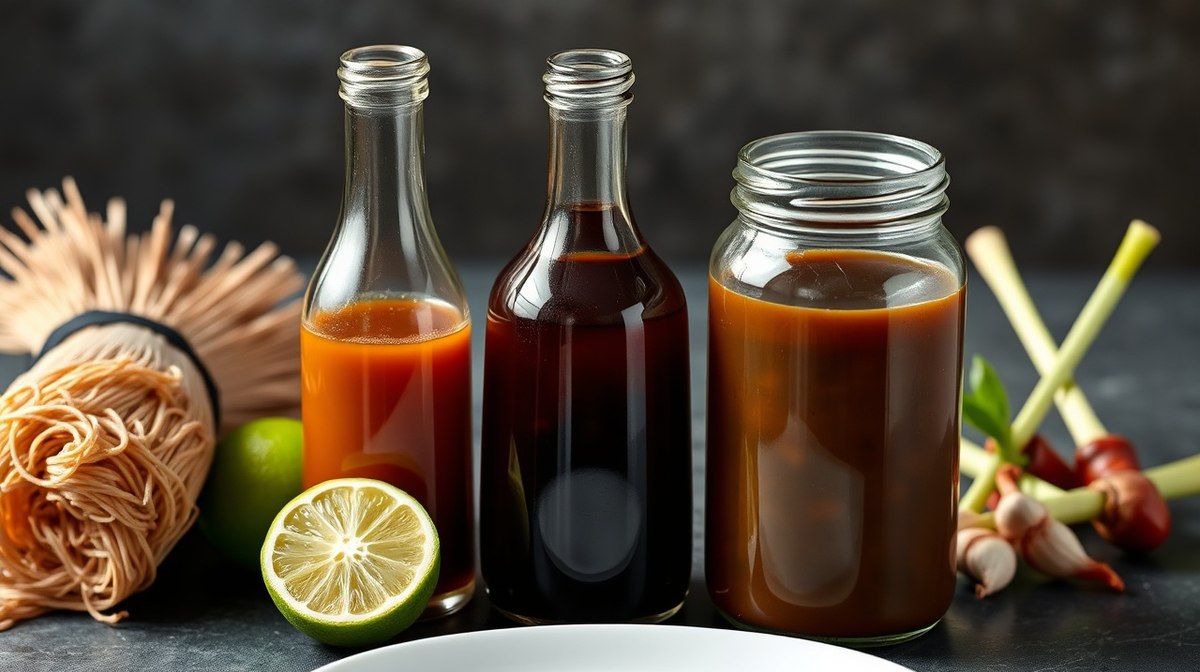
Soy sauce is the big one, and the wheat in it is not a trace. Traditional brewing is roughly equal parts soy and wheat: one Thai cooking site puts it as "wheat makes up roughly 40-60% of the ingredients", and an allergen guide gives the Japanese koikuchi style as about 50% wheat. Light soy (si-io khao), dark soy (si-io dam) and sweet soy all contain it, and it goes into stir-fry sauces, fried rice, marinades, dips and noodle dishes.
Oyster sauce is a double trap. Wheat appears twice in the same bottle: as the soy ingredient in the formulation, and as wheat flour used as a thickener.
Seasoning and stock powders are the route nobody mentions. Charm Thai Cafe in Doncaster lists pad krapow under "dishes we cannot offer gluten-free" and gives the reason: "the powder base contains gluten". That is the seasoning powder, not the basil and not the meat. Stock cubes and bouillon powders carry wheat in any kitchen, and a Thai kitchen uses seasoned powders far more readily than a British one. It is not MSG, which contains no gluten; our page on whether Thai food has MSG keeps the two apart.
Fish sauce is mostly safe and mostly not the problem. Plain nam pla is fish and salt. Some brands add hydrolysed wheat protein, and one Thai cooking instructor lists fish sauce among the gluten-containing seasonings rather than the safe ones. Read the label rather than arguing about the category; the detail is in why Thais use squid fish sauce and does fish sauce go bad.
Wheat noodles, wrappers, batters and garnishes. Yellow egg noodles (ba mee) are wheat and egg. Spring roll wrappers and the batters on fried chicken and fried bananas are wheat. Vegetarian mock meat, sold under the yellow jay flag in Thailand, is usually wheat gluten. Smaller carriers: imitation crab, crispy onions, fried garlic, coated peanuts. If a home curry needs body, thickening curry without flour or cornflour is the Thai way anyway.
| What to look for | Thai | Where you meet it |
|---|---|---|
| Light soy sauce | si-io khao (ซีอิ๊วขาว) | Stir-fries, fried rice, soups, dips |
| Dark soy sauce | si-io dam (ซีอิ๊วดำ) | Pad see ew, drunken noodles, fried rice |
| Oyster sauce | nam man hoi (น้ำมันหอย) | Stir-fried vegetables, noodles, marinades |
| Seasoning or stock powder | - | Pad krapow, fried rice, soups, marinades |
| Wheat flour | paeng sali (แป้งสาลี) | Batters, wrappers, egg noodles, mock meat |
| Egg noodles | ba mee (บะหมี่) | Noodle soups, dry noodle bowls, khao soi |
In Thailand, wheat flour is paeng sali (แป้งสาลี), and Thai labelling law is stricter than visitors expect: pre-packed food must name gluten cereals, including a "may contain" warning. In the UK the number to know is the NHS's: "By law, food labelled as gluten-free can contain no more than 20 parts per million (ppm) of gluten."
Which Thai dishes are safe by default?

Nothing in this group needs a conversation with the cook first. Each has exactly one thing that could spoil it.
Tom yum and tom kha gai. A clear or coconut soup seasoned with lemongrass, galangal, lime leaf, chilli, lime and fish sauce contains no wheat at all. The risk is a stock or seasoning powder added for speed, so ask whether it is made from scratch. What the real thing contains is in our tom yum recipe.
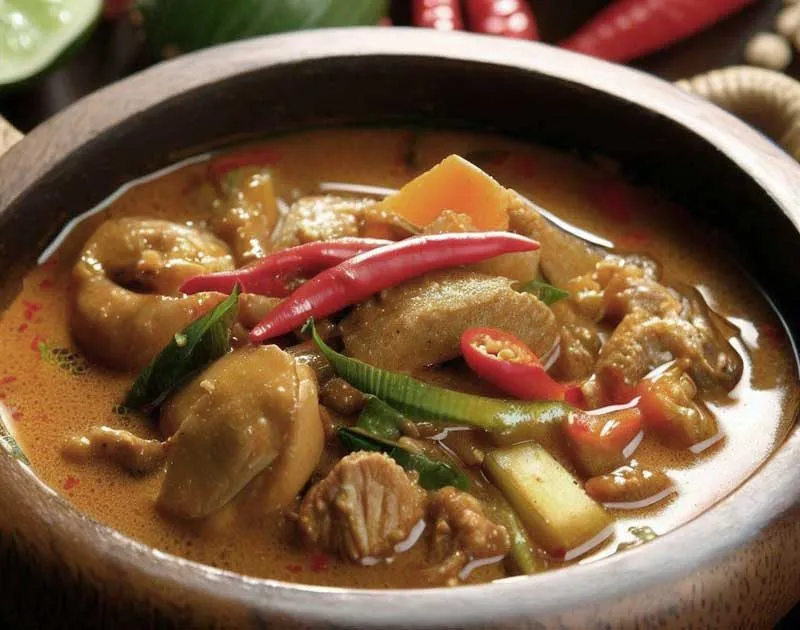
Curries made from a paste you have verified. The structure of a Thai curry, paste, coconut milk, protein, vegetables, herbs, has no gluten in it. Restaurant versions pick it up from oyster sauce or a stock base, so check the paste and the sauces rather than the name of the curry.
Som tam and other salads. Green papaya salad is dressed with fish sauce, lime, palm sugar, chilli and peanuts. Ask whether soy sauce went into the dressing, and if you have coeliac disease ask about the mortar, because it is shared.
Larb. Minced meat toasted with ground rice, mint, coriander, lime, chilli and fish sauce. The toasted rice powder (khao khua) is rice, not flour, which is what makes the dish safe. Ask that it is plain toasted rice with no seasoning powder in it. Our larb recipe is the method, and why my larb tastes bland is the seasoning a British kitchen gets wrong.
Grilled meat and skewers. Gai yang, moo ping, satay, grilled pork neck, whole grilled fish: dry heat, no batter, no flour. The marinade is the risk, because a sweet soy and oyster sauce marinade is standard. Ask for the meat plain, with the sauce in a separate dish.
Plain rice, sticky rice and fresh rice-paper rolls. Jasmine rice, sticky rice and the rice-flour wrapper of a fresh roll are all gluten-free. The risks are a shared serving spoon, and a peanut or hoisin-style dipping sauce.
Mango sticky rice. Rice, mango, coconut cream, sugar. In Thailand, buy it from a stall that sells only fruit and mango sticky rice, so nothing wheat-containing is cooked within it. At home: mango sticky rice without a steamer.
Which Thai dishes should I check before ordering?
These are usually fixable with one sentence to the kitchen. One of them is not what the internet says it is.
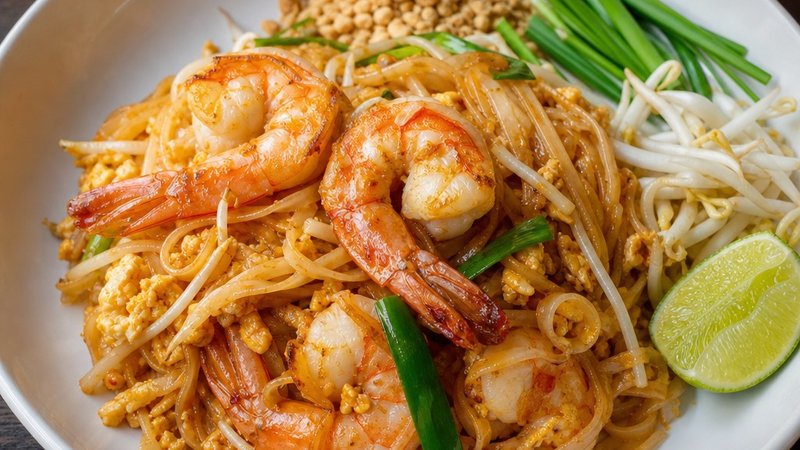
Pad thai. The sources contradict each other, so name the disagreement. One gluten-free shop says "Traditional Pad Thai uses soy sauce (which contains wheat)". Several travel and cooking sites say the classic sauce is tamarind, fish sauce and palm sugar with no soy at all, and one puts pad thai in its hall of fame of gluten-free dishes.
In my kitchen the second group is right about the dish. Pad thai is rice noodles, tamarind, fish sauce, palm sugar, egg, garlic, pickled radish and tofu. The sour is tamarind and there is no soy in it. What British kitchens do is add a splash of dark soy for colour, which is the shortcut we describe in why restaurant pad thai is orange. So pad thai is gluten-free by tradition and can be made with wheat in a British wok. What decides it is whether the kitchen builds its sauce with soy, and whether it will use a clean wok. Our version at home is the prawn pad thai recipe.
Thai fried rice. Almost always cooked with soy sauce, and the soy is what gives it its colour. Ask for fish sauce instead and a clean wok. That does not fix the other reasons a fried rice comes out mushy, but it does make it gluten-free.
Satay, and marinades generally. The skewers are usually fine; the peanut sauce is the question, because takeaway peanut sauces are often built on soy sauce, oyster sauce or a wheat thickener. Barbecued pork and the sweet soy marinades on grilled dishes are wheat-based. A sauce you cannot see is a sauce you cannot check, so ask what it is built on.
Any curry made from a jar. Restaurant curries are usually safe, but commercial pastes can carry soy sauce, hydrolysed wheat protein or wheat as a thickener, and massaman and panang are the ones to check hardest because their recipes vary widely. The brand table and a homemade gluten-free paste are on our Thai curry and gluten guide, which owns the curry deep-dive, so this page does not repeat it. For the dishes: beef panang curry and the massaman curry guide.
Which Thai dishes are not gluten-free as they are made?
Pad see ew and drunken noodles. Both are wide rice noodles, and the noodles are not the problem. Pad see ew is built on dark soy sauce, a lot of it, and drunken noodles (pad kee mao) on the same dark soy plus oyster sauce. Changing the noodle changes nothing, and the Doncaster restaurant says it plainly about its dark noodle soup: "Choosing rice noodles does not change that." Our drunken noodles recipe shows how much sauce the dish carries.
Pad krapow gai. Holy basil, chilli, garlic, mince, egg. In Thailand I make it with fish sauce and oyster sauce and it is fine. In this country the version most kitchens cook is seasoned with a powder base that contains gluten, which is why some places now say they cannot make it gluten-free at all. Ours is pad krapow gai.
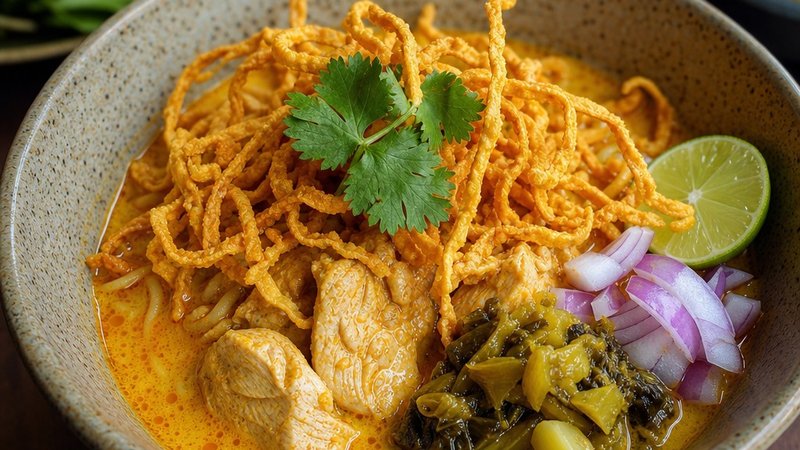
Khao soi. A northern curry noodle soup that reads as safe and is not. The noodles in the bowl are wheat egg noodles and the crispy topping is fried egg noodle too. Almost no gluten-free guide flags it. Ours explains what the dish actually is: khao soi.
Egg and wheat noodles, and anything fried or breaded. Anything yellow counts as wheat, as does anything listed simply as "wheat noodles"; the family of them is in how to cook wheat noodles. Spring roll wrappers are wheat and the fryer is shared with them. Roti, fried banana, fried chicken and tempura-style snacks are all wheat batter.
The shared wok problem

A dish made entirely from gluten-free ingredients can still be unsafe, and this is where "no gluten ingredients" stops being good enough.
The routes into your plate are enumerable: a wok previously used with regular soy sauce; a shared fryer that cooked wheat-wrapped spring rolls; noodle water shared with egg noodles; the same strainer for rice and egg noodles; ladles moved between sauces; boards and knives carrying sauce residue; shared containers of sugar, spices and garnishes; protein marinated before you ordered.
The wok is the one that catches people. One account of a busy service describes it exactly: a wok that has just cooked pad see ew in dark soy sauce is rinsed with water and used for the next order, and "the rinse removes visible food debris. It does not remove the soy sauce residue that is polymerized onto the wok surface." Rinsing is not cleaning. A safe stir-fry needs a wok scrubbed with soap and water, which most kitchens will not do mid-service unless you ask.
The fryer is worse, because gluten is not destroyed by heat: it stays in the oil. If that oil has fried spring rolls in it, nothing you ask about the sauce makes your fried anything safe. The same logic covers noodle water and shared strainers, where residue sits in small openings. So ask for a wok scrubbed rather than rinsed, no fried items or a separate fryer, your own strainer, and sauces ladled with a clean spoon rather than the one already in the bottle.
What does "gluten-free" mean on a UK Thai menu?
Two different claims travel under one phrase, and the difference between them is the most useful thing a UK diner can learn.
"No gluten ingredients" means nobody put wheat in the recipe. "Gluten-free" on a pre-packed product is a legal claim with a number attached: no more than 20 ppm, per the NHS. For food cooked in a restaurant there is no legal definition of the phrase at all. UK law requires kitchens to declare cereals containing gluten as an ingredient, but it does not require any restaurant to offer gluten-free dishes, and it does not stop a kitchen calling something gluten-free while wheat flour is used a few feet away. So the question is always the second half: is there cross-contact?
A chain allergen chart is the honest version. Thai Express publishes one with separate vegetarian and gluten-free rows for fried rice, pad thai and pad see ew, marked "T" for trace. Read properly it is a useful document: the recipe has no gluten in it, and the kitchen is telling you it cannot control the wok.
Thaikhun runs a QR code with allergen information, and coeliac diners describe what that produces in practice: most of the main menu available, but only soups and salads among the starters because the fried things share a fryer, and mango sticky rice or ice cream for dessert. A good night out with a real limit on it, and the limit is exactly the cross-contact question.
A small independent says the same thing in prose. Charm Thai Cafe names the two dishes it cannot make gluten-free and why, then states what most places avoid: "We handle wheat, meat, seafood, egg, nuts and other allergens in the kitchen. We cannot guarantee freedom from cross-contact." Coeliac UK's guidance is the same test in other words: avoid wheat noodles and soy sauce, and check that the meat, fish and vegetables have not been cooked in soy sauce or in oil used for something wrapped in wheat.
Ordering a gluten-free Thai takeaway in the UK
Phone ahead, outside the rush if you can, and say the diagnosis rather than the preference: "I have coeliac disease. I cannot have wheat, barley or rye, not even a trace." Then ask four questions rather than one.
- "Can you cook this without soy sauce, oyster sauce or any seasoning powder?" That is the question that actually clears the dish.
- "Is the meat or tofu already marinated?" Marinated protein is prepared before you ring, and it is the thing a "no soy sauce" request most often misses.
- "Can it be cooked in a clean wok, scrubbed rather than rinsed?" Say scrubbed. Every kitchen understands the difference.
- "Is anything in my order from the deep fryer?" If the answer is yes, take something that is not fried.
A good answer is specific: "we'll use fish sauce instead and do your pan separately." A bad answer is "we can leave the soy sauce out", which rules out one bottle and nothing else. If the person on the phone cannot tell you what is in the sauce, or does not understand the wok question, order somewhere else.
The safest phone order is the boring one: plain or grilled rice, grilled meat with no marinade, a curry or soup the kitchen will make from scratch, and vegetables stir-fried with garlic. Short ingredient lists are easy to verify. Complicated stir-fries with three bottled sauces are not.
Gluten-free Thai shopping in the UK

You can cook all of this at home without a specialist shop, but you have to read labels rather than recognise bottles.
Curry pastes. Mae Jum, a UK Thai paste maker, states that its pastes are gluten-free, and they are also made without shrimp paste or fish sauce, which helps if you are cooking for more than one restriction. Tiger Tiger red curry paste is sold labelled gluten-free at The Asian Cook Shop, and its ingredient list is the clean kind: chilli, lemongrass, garlic, shallot, galangal, soybean oil, kaffir lime peel, spices. The rest of the brand table, including the US brands, is on our curry and gluten guide. Once you have a paste you trust, how long Thai curry paste lasts decides how much to buy.
Oyster sauce. The standard bottles from Lee Kum Kee and Maekrua contain wheat. Lee Kum Kee makes a gluten-free oyster sauce that uses cornstarch instead of wheat as its thickener, and Megachef is named across several gluten-free guides. A mushroom or vegetarian oyster sauce is usually but not always gluten-free, so check the label rather than assuming it because there is no oyster in it.
Soy, tamari and coconut aminos. Tamari is the swap every article recommends and it is not automatically safe: some tamari contains wheat unless it is specifically labelled gluten-free. Buy the labelled bottle. Coconut aminos is the option if you want no soy at all.
Noodles. Dried rice noodles, wide rice noodles and mung-bean vermicelli are gluten-free in themselves, but check the ingredients, because some wide noodles sold as rice noodles are cut with wheat flour.
A British supermarket carries rice noodles, coconut milk and one or two pastes. The Asian grocer is where the good paste, the gluten-free oyster sauce and the fresh herbs are, and it is usually cheaper for the same things.
Feeding a gluten-free guest at a Thai event

Nobody writes about this part of the subject, and it is the part that decides whether a coeliac guest eats at your wedding or stands by the drinks table.
One guest among thirty is not a menu problem. It is a separation problem. When I cook for an event with a gluten-free guest, the curries that are safe are cooked in their own pan, held in their own tray, and given their own serving spoon. The tray goes on the counter apart from the dishes that are not safe, not at the end of the same row, and it is labelled. The pan it was cooked in is not the pan that held pad see ew.
The things that go wrong at events are service rather than cooking: a serving spoon that wanders back from the pad see ew into the green curry, a tray topped up from the wrong pan, a fryer that has had spring rolls in it all afternoon. Nobody notices any of them. One is enough to make a guest ill.
Coeliac UK runs a Gluten Free Accreditation scheme, set up in 2012, and more than 2,500 UK venues hold its mark. Caterers who do this properly mention cross-contact before you ask, because it is the biggest single risk at a buffet. A small caterer does not need the badge to cook safely, but the standard behind it is worth copying either way: separate preparation, separate equipment, labelled dishes, and staff who can answer when a guest asks. That is what we do, and it is on our corporate event catering and private event catering pages.
Eating Thai in Thailand with coeliac disease
Thailand is easier than people expect, and difficult in a different way to Britain. The food is the easy half: rice, rice noodles, grilled meat, soups, salads, fruit. The labelling is genuinely good. Under Thai Ministry of Public Health rules pre-packed food must declare cereals containing gluten, including a "may contain" warning, and a phone camera reads Thai ingredient lists well. The word to look for is paeng sali (แป้งสาลี), wheat flour.
Spoken Thai gets misheard over a busy stall, so show a written card to the person cooking rather than only the person taking the order. The phrases that work are mai sai paeng sali (ไม่ใส่แป้งสาลี), no wheat flour, and mai sai si-io (ไม่ใส่ซีอิ๊ว), no soy sauce, plus a request for a clean wok.
Two traps. The yellow jay flag marking vegetarian food is not a gluten-free sign: mock meat is often wheat gluten and the dishes are seasoned with soy sauce. And at a street stall, pick the one that sells a single thing. A mango sticky rice vendor selling only fruit and sticky rice is a safer bet than the one next door that also fries spring rolls.
Frequently asked questions
Is pad thai gluten free?
Usually, in the version that exists in Thailand: rice noodles with tamarind, fish sauce and palm sugar, and no soy. The confusion comes from British kitchens adding dark soy sauce for colour, which does put wheat in the dish. Ask for it without soy or oyster sauce, and with a clean wok if you have coeliac disease.
Does sticky rice contain gluten?
No. "Glutinous" describes the texture of the cooked grains, which stick together in a lump, not the gluten protein. Sticky rice, including the black sticky rice used in puddings, is naturally gluten-free. Mango sticky rice is safe too, subject to the stall's fryer rather than the recipe.
Is fish sauce gluten free?
Usually. nam pla is fish and salt, and neither carries gluten. The exceptions are bottles with a wheat-derived protein added, and the seasoning blends that use fish sauce as their base. If coeliac disease is in play, read the ingredients on the specific bottle in the kitchen rather than trusting the name.
Can I ask a Thai takeaway to leave the soy sauce out?
Yes, and it is not enough on its own. Leaving the soy out does not rule out oyster sauce, a seasoning or stock powder, a pre-marinated protein, or a shared fryer. Ask for the dish cooked without those, in a scrubbed clean wok, and ask whether the protein was already marinated.
Is tamari gluten free?
Often, but not automatically. Tamari is brewed with much less wheat than ordinary soy sauce, and some brands still contain it. UK food-safety guides warn that tamari may contain wheat unless it is specifically labelled gluten-free. Buy the labelled bottle, or use coconut aminos if you want no soy at all.
Are Thai soups gluten free?
Tom yum and tom kha gai are built on herbs, lime, chilli, coconut milk and fish sauce, none of which contain gluten. The risk is a stock or seasoning powder stirred in for speed, and a shared pot. Ask whether the soup is made from scratch, and if you have coeliac disease, ask that.
Which Thai dishes are safe at a British curry house?
Plain or grilled rice, grilled meat with the sauce on the side, soups, salads dressed with fish sauce, and curries the kitchen confirms are made without oyster sauce or a stock powder. Avoid pad see ew, drunken noodles, pad krapow, khao soi, egg noodles, fried spring rolls and anything breaded, and treat anything from the shared fryer as unsafe.
Can Thai food be catered gluten free for a wedding?
Yes, and the cooking is the easy part: the curries and grilled dishes are naturally gluten-free. The risk is the buffet. A safe dish needs a pan that has not held anything with a wheat sauce, its own spoon, and a place apart from the dishes that are not. Ask any caterer how they handle cross-contact before you book.
Is peanut sauce gluten free?
Not reliably. Peanuts, coconut milk and tamarind are fine, but takeaway peanut sauces are frequently built with soy sauce, oyster sauce or a wheat-based thickener. Ask, and take the sauce on the side so you can see what is in it. Fresh rice-paper rolls are safe; the sauce is the question.
Do Thai curries use flour to thicken them?
No. A Thai curry gets its body from coconut milk and from pounding the paste fine, not from a roux. If a British restaurant curry is thickened with flour that is a local shortcut, and it is a common reason a curry that looks safe contains gluten. Ask whether anything was added, and check the paste and any oyster sauce first.

Comments