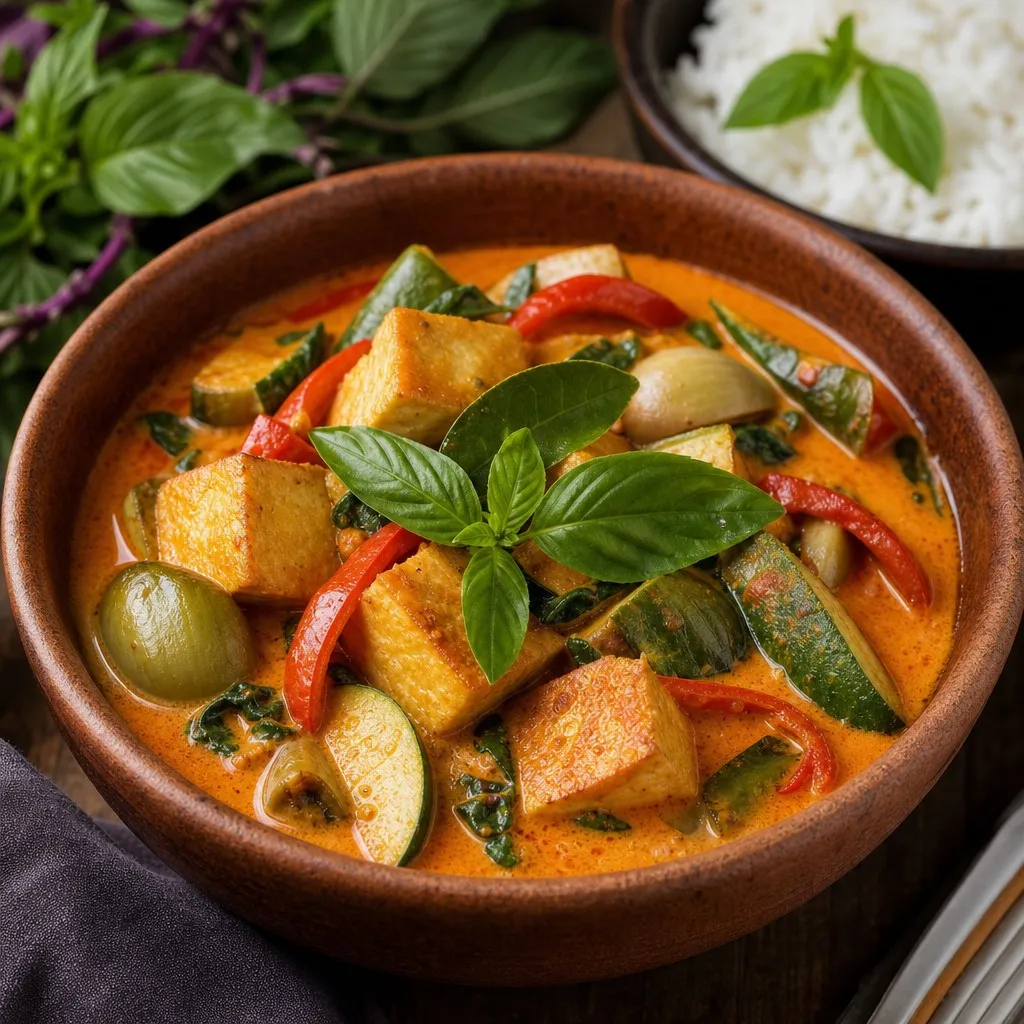
If you think vegan Thai food means missing out, think again. This vegan red Thai curry is one of the most satisfying dishes I make, and I promise you nobody is going to miss the meat. The secret is getting a really good red curry paste. The aromatics do all the heavy lifting. From there, coconut milk brings everything together into a rich, creamy sauce that just coats the vegetables beautifully.
Why Thai chefs go vegan
Vegetarian cooking has deep roots in Thai culture. For centuries, Buddhist monks have practised plant-based eating, and this tradition inspired home cooks across Thailand to develop vegetarian versions of classic dishes. In the last decade, plant-based Thai restaurants have boomed in Bangkok, Chiang Mai, and across the UK. Not about compromise. About flavour.
The genius of Thai cooking is that it doesn't rely on meat for depth. The aromatics do it all: curry paste, coconut milk, fish sauce (or soy sauce alternatives), palm sugar, lime juice, and fresh basil create a flavour bomb that tofu is absolutely delighted to swim in. When you get the balance right, you've got a curry that's just as moreish as any traditional version.
The tofu science
The biggest fear people have about tofu is that it'll turn to mush in the curry. That doesn't happen if you press it properly and give it a quick pan-fry first. Here's the physics: pressing removes excess water through osmotic pressure, forcing out the moisture that would otherwise absorb too much sauce and make everything soggy.
I wrap the tofu block in a clean kitchen towel or muslin, then place a weight (a book works fine) on top for 20–30 minutes. If you have time, freeze the block overnight before pressing; freezing ruptures the cellular structure, which improves water absorption during pressing and gives you a firmer, more flavourful result.
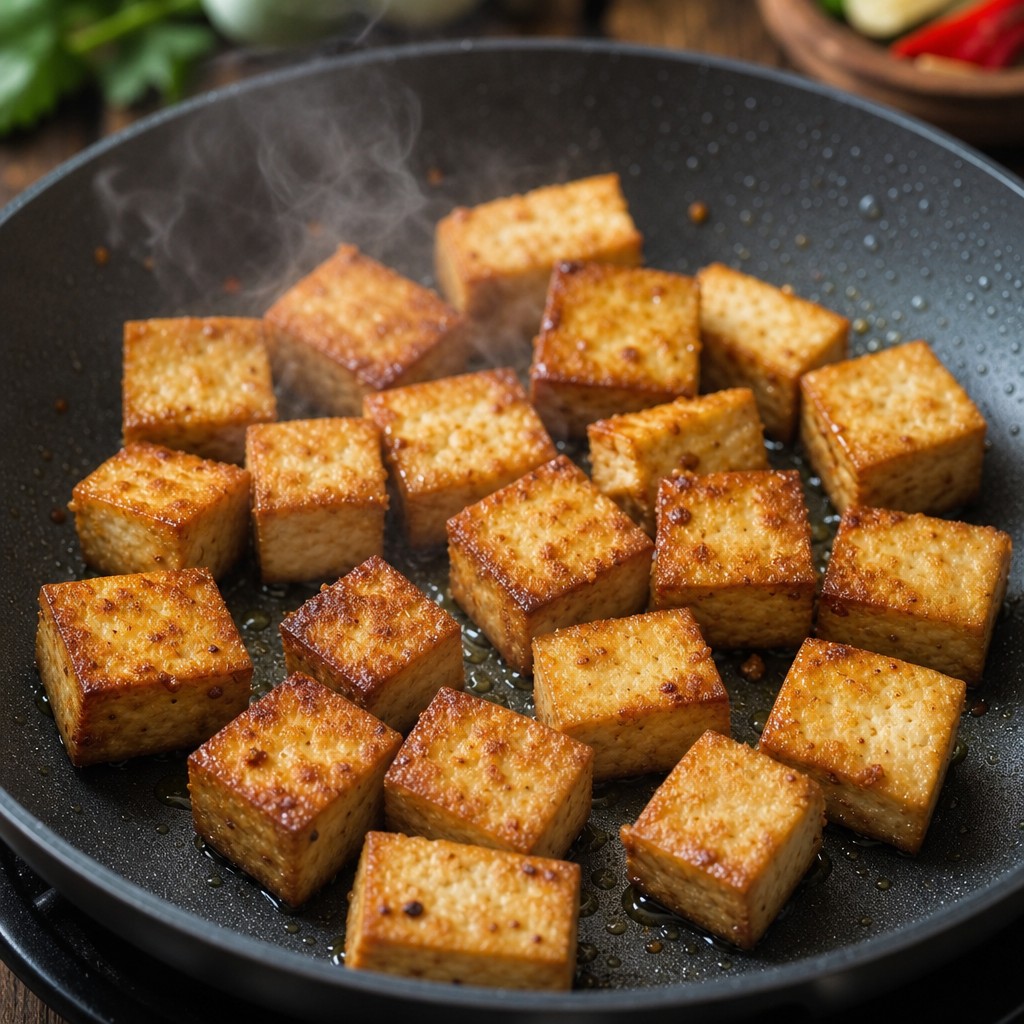
Once pressed, I cut the tofu into cubes and pan-fry them in a hot wok or skillet with a little oil. If you coat them lightly in cornstarch first, you'll get a golden crust through the Maillard reaction, the browning that creates new flavour compounds. Two to three minutes per side is enough to develop that crust without cooking the inside too much. This step is crucial: it traps the flavour inside and stops the tofu turning watery in the curry.
Use firm or extra-firm tofu for curries. Silken varieties are for blending into smoothies or puddings. They'll disintegrate in the sauce and you'll end up with curry soup instead.
Choosing your curry paste
Not all red curry pastes are created equal, and not all are vegan.
Thai Kitchen and Taste of Thai are reliably vegan. Check the label anyway. Maesri is also vegan and has a slightly different profile (more balanced, less creamy). Aroy-D is authentic and complex, made with whole chillis and herbs. Mae Ploy, however, contains shrimp paste, so avoid it if you're plant-based.
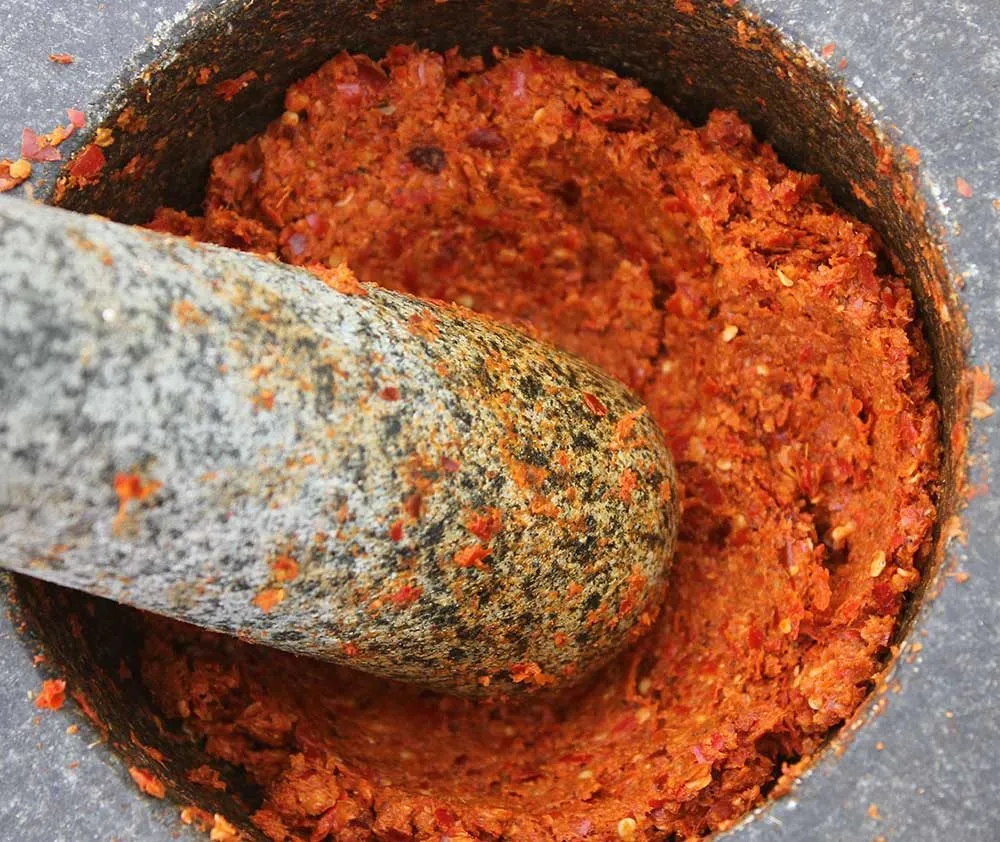
If you can't find vegan paste, making your own red curry paste isn't difficult. You'll need dried red chillis (or fresh), garlic, lemongrass, galangal, kaffir lime leaves, and coriander; blend them into a thick paste with a bit of oil. It takes 10 minutes and tastes more vibrant than shop-bought.
Coconut milk matters
The difference between lite and full-fat coconut milk is night and day in a curry. Full-fat is about 13–14g of fat per 100ml; lite is 1–2g. That fat carries flavour, creates creaminess, and gives the sauce its gorgeous mouthfeel.
If you use lite coconut milk to cut calories, you'll end up with a thinner sauce that tastes a bit flat. The trade-off isn't worth it unless you're making this for someone on a very strict diet. Full-fat is the way to make an authentic curry.
That said, sometimes coconut sauce splits. You'll see little flecks of oil separating. This happens if the temperature spikes or if you boil it too vigorously. If it happens to you, here's the rescue: pour the curry into a blender with a little cold coconut milk, blitz it smooth, then heat gently on the stove, stirring constantly. The emulsification process brings it back together.
The umami question: soy sauce vs fish sauce
Fish sauce is basically liquid umami: fermented fish and salt, and the secret weapon in traditional Thai cooking. The problem is it's not vegan, and some people find the smell off-putting even if they're not plant-based.
Soy sauce is fermented soy, and it does bring umami, but it's not quite as deep or complex as fish sauce. If you're relying on soy sauce alone, the curry might taste a bit flat. Here's how I layer umami without fish sauce: use soy sauce as the base, add a teaspoon of miso paste (fermented soybean) for depth, and a sprinkle of nutritional yeast for that savoury, almost meaty quality.
Taste as you go. You'll notice the difference immediately: the curry becomes more rounded, more satisfying, less one-dimensional.
Kaffir lime and citrus
Kaffir lime leaves are non-negotiable in a Thai curry, and they're completely different from regular lime juice. The leaves contain volatile oils that create an aromatic, almost perfumed citrus note. Lime juice gives you acid and brightness, but it doesn't have that complexity.
If you can't find kaffir lime leaves, you can substitute: zest half a regular lime (for the oils) and add it along with the juice. Or combine lime juice with fresh lemongrass (another source of citrus-forward volatiles). It won't be identical, but it'll get you close.
Always add the kaffir lime leaves early, during the curry paste blooming stage, so they infuse the whole sauce. If you add them at the end, their flavour won't penetrate.
Technique masterclass
Paste blooming is the most important step and most people rush it. When you add the dry curry paste to hot oil, it'll sizzle and smell amazing. Don't add the coconut milk yet. Let it sit for 30–60 seconds, stirring constantly. You'll see the colour deepen slightly and the aroma intensify. This toasting activates the spices and releases their essential oils — rush it and you'll notice a harsh, metallic edge in the finished curry.
For heat management: start high to fry off the tofu (until it's golden on all sides), drop to medium for the paste blooming, then go to medium-low for simmering. You want gentle bubbles, not a rolling boil. A boil will split the coconut sauce and overcook the vegetables.
Not all vegetables cook at the same rate. I add firm vegetables (carrots, cauliflower) first, simmer for 2–3 minutes, then add quicker-cooking ones (courgette, peppers, baby corn) so everything finishes tender but not mushy. Leafy herbs like Thai basil go in right at the end; 30 seconds in the hot sauce is enough to wilt them.
Protein beyond tofu
Tofu is brilliant, but if you fancy something different, here are your options.
Tempeh is fermented soy, firmer than tofu, with a nuttier flavour. Slice it thin, pan-fry until crispy (about 2 minutes per side), then add to the curry. It holds its shape well and won't absorb as much sauce as tofu.
Seitan is wheat gluten with serious chew. Cube it and add it straight to the curry, no pre-frying needed. It absorbs sauce like a sponge, so if you like your curry really flavourful, seitan is your friend. Cook it for 10–12 minutes instead of 8–10.
Tinned chickpeas work well if you're looking for something starchy and substantial. They won't fall apart; chickpeas are sturdy. Add them straight to the curry and cook for the full 10 minutes. They're also cheaper than tofu if you're feeding a crowd.
Serving and pairing
Serve the curry hot, ideally straight from the pan while the vegetables still have that gentle bite. The traditional pairing is jasmine rice (it's neutral and absorbent), but sticky rice is more authentic to Northern and Northeastern Thai tradition.
If you fancy something lighter, try rice noodles. If you want texture contrast, serve with crispy roti or flatbread on the side. And always put out lime wedges, a small bowl of fresh Thai basil, and sriracha or chilli flakes so people can season it to their taste.
Storage and make-ahead
Vegan red curry keeps beautifully. In the fridge, it's good for 4–5 days (the sauce actually tastes better on day two as flavours deepen). In the freezer, it'll keep for three months.
Here's the pro tip: if you're batch-cooking, freeze it in portions with a bit of extra coconut milk in each container. When you reheat it gently on the stove (low heat, 5–7 minutes, stirring), the extra coconut milk ensures the sauce doesn't split. If it does split slightly, blend it smooth again.
The vegetables will soften a bit after freezing and reheating, which is fine; they're already cooked. If you're meal-prepping and want to keep vegetables fresher, freeze the sauce separately and add freshly cooked veg when you reheat.
Ingredients
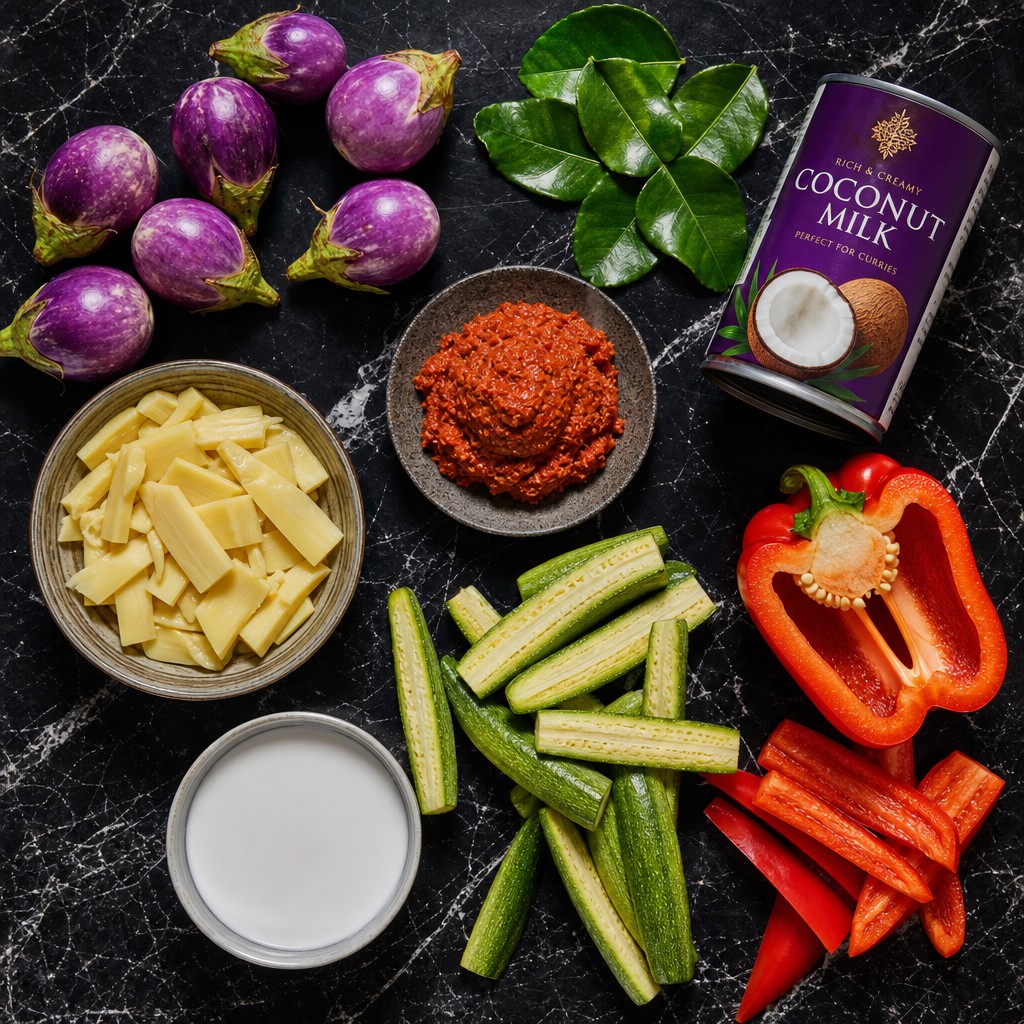
- 2 tbsp red curry paste
- 400ml coconut milk
- 200g firm tofu, cubed
- 1 courgette, sliced
- 1 red pepper, sliced
- 100g baby corn
- 4 kaffir lime leaves
- 1 tbsp soy sauce (in place of fish sauce)
- 1 tsp palm sugar or brown sugar
- Handful of fresh Thai basil
- Cooking oil
How to make vegan red Thai curry
Start by heating a little oil in a wok or wide pan over a medium heat. Add the red curry paste and fry it for a minute or two. You want it to become really fragrant before you add anything else. This step wakes up all the spices and makes a huge difference to the final flavour.
Pour in about half the coconut milk and stir it into the paste. Add your kaffir lime leaves at this point. You'll start to see the sauce come together and smell absolutely wonderful.
Add the tofu and let it cook for a few minutes, then in goes the courgette, red pepper, and baby corn. Pour over the rest of the coconut milk and season with soy sauce and palm sugar. Give everything a gentle stir.
Simmer for around 8–10 minutes. You want the vegetables to be cooked through but still have a little bite to them (nobody wants a soggy curry). Taste and adjust the seasoning if needed.
Finish with a generous handful of Thai basil stirred through at the very end. Serve straight away over jasmine rice.
Frequently asked questions
How do I properly press tofu?
Wrap your tofu block in a clean kitchen towel or muslin cloth. Place a weight on top (a book, a cast iron pan, or even a tin of beans works fine) and let it sit for 20–30 minutes. This forces out excess water through osmotic pressure. If you have time, freeze the block overnight before pressing; freezing ruptures the cellular structure and improves the texture significantly. The drier your tofu, the better it will brown in the pan and the less watery your curry will be.
Can I use lite coconut milk instead of full-fat?
You can, but the result will be noticeably thinner and less creamy. Full-fat coconut milk has about 13–14g of fat per 100ml, which carries flavour and creates that luxurious mouthfeel. Lite has only 1–2g of fat. If you're cutting calories, you'll lose the authentic taste of the curry. If you do use lite, add a teaspoon of miso paste or nutritional yeast to compensate for the missing depth. Honestly, full-fat is worth it.
Which vegan curry paste brands should I buy?
Thai Kitchen and Taste of Thai are reliably vegan. Always check the label. Maesri is also vegan with a more balanced flavour profile. Aroy-D is authentic and complex. Avoid Mae Ploy unless the label specifically says vegan, as most versions contain shrimp paste. If you want maximum confidence, make your own: blend dried red chillis, garlic, lemongrass, galangal, and kaffir lime leaves with a bit of oil. It takes 10 minutes and tastes more vibrant than shop-bought.
How do I fix a split or broken coconut sauce?
If you see little flecks of oil separating from your sauce, don't panic. Pour the curry into a blender with a splash of cold coconut milk, blitz it smooth, then return it to the pan and reheat gently on low heat, stirring constantly. The blending re-emulsifies the sauce and brings it back together. This usually happens if the temperature spikes or you boil it too vigorously. Lower heat and gentle simmering prevent it.
What's the difference between soy sauce and fish sauce?
Fish sauce is fermented fish and salt. It's basically liquid umami, and it's not vegan. Soy sauce is fermented soy, which does bring umami, but it's not as deep or complex. If you're using soy sauce, layer the umami by adding a teaspoon of miso paste (fermented soybean) and a sprinkle of nutritional yeast. This combination gives you the savoury, almost meaty depth that makes the curry satisfying. Taste as you go and adjust to your preference.
Can I substitute kaffir lime leaves?
Kaffir lime leaves contain volatile oils that create a complex, aromatic citrus note. They're different from regular lime juice, which just adds acid. If you can't find them, zest half a regular lime (for the oils) and add it along with the juice. Or combine lime juice with fresh lemongrass, which provides similar citrus-forward volatiles. It won't be identical, but it gets you close. Always add kaffir lime leaves early in the cooking process so they infuse the whole sauce.
What should I serve with vegan Thai red curry?
Jasmine rice is the classic pairing: neutral and absorbent. Sticky rice is more authentic to Northern Thai tradition. For something lighter, try rice noodles. If you want texture contrast, serve crispy roti or flatbread on the side. Always put out lime wedges, fresh Thai basil, and sriracha or chilli flakes so people can season it to their taste. A squeeze of fresh lime right at the table really brightens the flavours.
How do I meal prep and reheat vegan curry?
Vegan red curry keeps beautifully for 4–5 days in the fridge (it tastes even better on day two as flavours deepen). It freezes well for three months. Pro tip: freeze it in portions with a bit of extra coconut milk in each container. When you reheat on low heat (5–7 minutes, stirring gently), the extra coconut milk prevents the sauce from splitting. If it does split, blend it smooth again. For meal prep, freeze the sauce separately from freshly cooked vegetables if you want them to stay fresher.
Watch the video
Written by Manaow Prasatthong, 3rd Generation Thai Chef