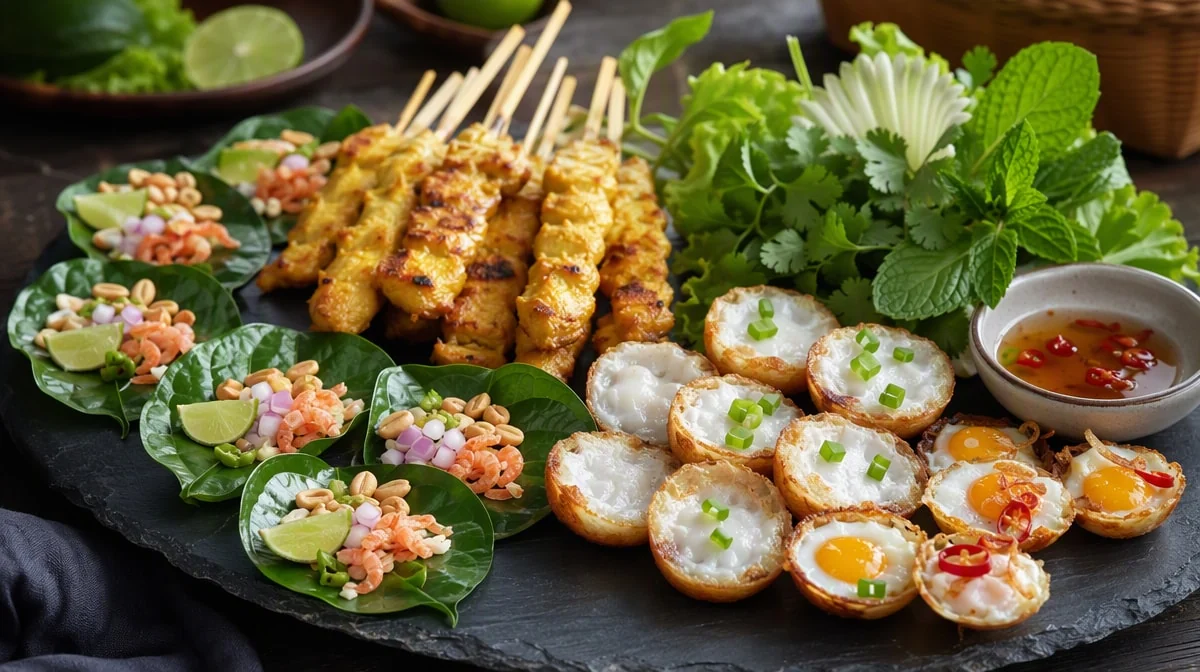
Thai party food works because Thai food is already built for sharing. A Thai meal is not a starter, a main and a pudding. It is a table of dishes, served family style, with rice at the centre and everyone taking a little at a time. That structure makes it unusually good for a party: you can scale the number of dishes rather than the size of one plate, and most of the work can be done before the doorbell rings.
For a drinks party, the easy answer is one-bite food: miang, satay, small fried eggs, coconut pancakes. For a sit- down dinner, it is three or four shared dishes plus rice and a salad. For a crowd where you would rather not cook, it is a catering tray or a hot-food station. This page covers all three, and it does not pretend they are the same job.
Thai Party Food Ideas for a Dinner Party
The first decision is whether you are serving a Thai meal or Thai food at a party. They are different. A Thai meal is a shared table: rice, a curry, a fish or meat dish, a vegetable, a salad and a soup, all at once. Thai food at a party can be a tray of canapés, a buffet, or a single dish in a bowl. Both work, but the menu changes.
For a dinner party, go with the shared table. It is less work than it sounds because the dishes can be made in advance and reheated, and it gives guests something to do with their hands. Pick one curry, one salad, one vegetable, one protein and rice. That is four dishes plus rice, which is enough for six to eight people. If you want a soup, add one; if you want a dessert, make it something cold and make-ahead.
For a drinks party, go with one-bite food. The rule is that everything must be eatable in one bite without a knife, a fork or a plate. That rules out most curries and noodles, and it points you at the Thai forms that were designed for it: leaf wraps, small fried eggs, coconut pancakes, skewers.
The third option is the hybrid: a table of one-bite starters for the first hour, then a shared meal. That is the format most UK guests expect, and it lets you serve the dishes that do not work as canapés.
Thai Finger Food and Bites

Thai finger food is not a separate cuisine. It is the part of the repertoire that happens to be small. The cooking-school book in the corpus gives several: a Lao savoury bite wrapped in spinach, a tuna tartar in a crisp tartlet, fried duck eggs with sweet fish sauce, and a crème-brûlée-style khanom khrok filled with tom kha chicken. That last one is not a traditional street pancake; it is a restaurant interpretation, and it is a useful reminder that Thai chefs adapt the one-bite form too.
For a UK party, the reliable forms are:
- Miang: a leaf wrapped around a small amount of coconut, dried shrimp, ginger, lime, chilli, peanuts and a sweet-savoury sauce. The cooking-school version uses spinach leaves and a pork filling; the royal version uses betel or tong lang leaves. It is a one-bite dish by design.
- Satay: small skewers of marinated meat with a peanut sauce. It is not in the corpus as a party recipe, but it is the most familiar Thai finger food in the UK and it scales easily.
- Fried eggs: the cooking-school recipe fries duck eggs in hot oil and serves them with a sweet fish sauce. A quail egg version is easier to eat standing up.
- Coconut pancakes: khanom khrok, cooked in a dimpled pan, are one or two bites each. Khanom khrok has its own recipe page.
- Spring rolls and fish cakes: not in the corpus as party recipes, but they are the standard UK Thai takeaway finger food and they freeze well.
The point is not to make all of them. Pick three, add one cold dish and one dip, and you have a drinks party.
The One-Bite Dishes Thai Kitchens Actually Make
The one-bite form is older than the cocktail party. The royal-cookery book gives a recipe for mueng kam, a leaf-wrapped snack with toasted coconut, dried shrimp, ginger, peanuts, shallots, lime, chilli and shrimp paste sauce. The serving instruction is explicit: take a leaf, add about half a teaspoon of shrimp paste, wrap, and eat in one bite. That is the grammar of the form.
The cooking-school miang lao is the same idea with a different filling: spinach leaves, cooked pork, dried shrimp, palm sugar, fish sauce, tamarind, peanuts, ginger, lemon, fried shallots, crispy garlic and pork rind. Each leaf gets a teaspoon of pork and a little of each garnish, then it is rolled and eaten. It is a complete flavour package: salty, sour, sweet, rich and crunchy in one mouthful.
The fried duck egg is the other end of the scale. It is not a wrap or a pancake; it is a fried egg with a sweet fish sauce, coriander, fried shallots and fried chilli. It works as a one-bite canapé if you use quail eggs, and as a breakfast if you use a duck egg. The cooking-school version uses a whole duck egg and a small saucepan of hot oil.
These dishes are worth learning because they solve the party problem that most canapé recipes ignore: they are meant to be eaten in one bite, so they do not need a plate, a fork or a lap.
A Thai Dinner Party Menu That Works
The guidebook's rule for a Thai meal is a balance of flavours and textures: "Traditionally the party orders a curry, a steamed or fried fish, a stir-fried vegetable dish and a soup, taking great care to balance cool and hot, sour and sweet, salty and plain." That is a good menu template for a dinner party, even if you do not serve all four courses at once.
Here is a menu that works for six to eight people, using dishes the site already has:
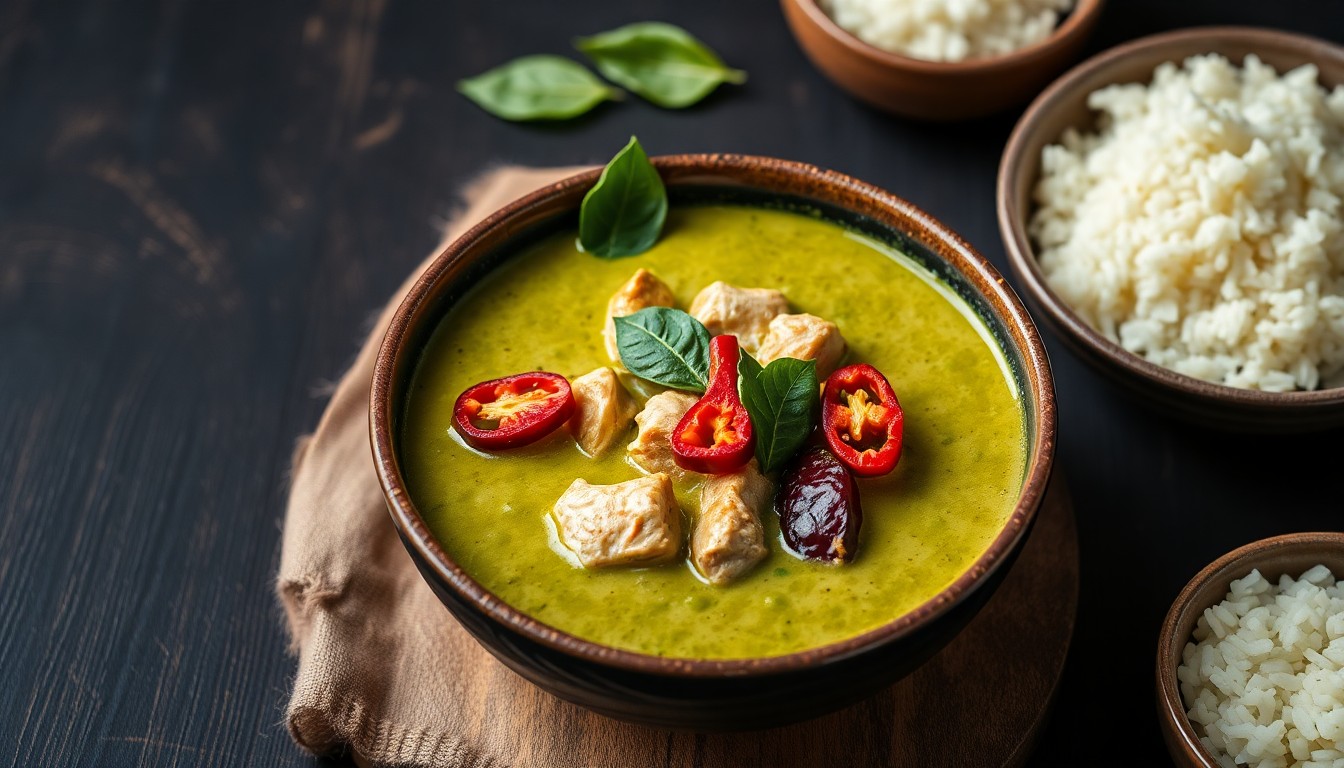
- A curry: green curry or massaman. Green is fresh and hot; massaman is mild and rich. Pick one, not both, unless you have a big table.
- A salad: som tam or larb. Both are sharp and herby and cut through the curry.
- A vegetable: stir-fried morning glory, broccoli or green beans with garlic and oyster sauce. This is the plain dish that balances the heat.
- A protein: grilled chicken, fried fish or the curry's meat. If the curry already has meat, keep this vegetable-led.
- Rice: jasmine rice, or sticky rice if you are serving Isaan food. The sticky rice guide covers the method.
- A dessert: coconut desserts or mango sticky rice. Make it ahead and keep it cold.
That is five dishes plus rice. It is more than enough. The mistake UK hosts make is cooking five curries and no plain dish; the Thai balance needs the plain, cool and crunchy elements as much as the hot ones.
Vegetarian, Vegan and Gluten-Free Swaps
Thai food is not automatically vegetarian. Fish sauce is in most savoury dishes, shrimp paste is in many curry pastes, and dried shrimp turns up in salads. The good news is that the swaps are simple once you know where the fish is hiding.
For vegetarian or vegan guests, use soy sauce or mushroom sauce instead of fish sauce, check the curry paste label for shrimp paste, and replace dried shrimp with toasted coconut or crushed peanuts. Green curry paste is often shrimp-free, but not always; the green curry paste page is the place to check. A vegan green curry is a good main for a mixed table because it is a complete dish, not a side.
For gluten-free guests, rice noodles, rice, fish sauce and coconut milk are usually fine, but soy sauce and some curry pastes are not. Check the labels. Thai food is a good fit for a mixed-diet party because so much of it is rice-based and naturally gluten-free, but "Thai" is not a guarantee.
The practical approach is to label everything. A small card in front of each dish with the allergens and the vegan/vegetarian status takes five minutes and saves a hundred questions. UK caterers do this as standard; home hosts should too.
Thai Party Catering in the UK

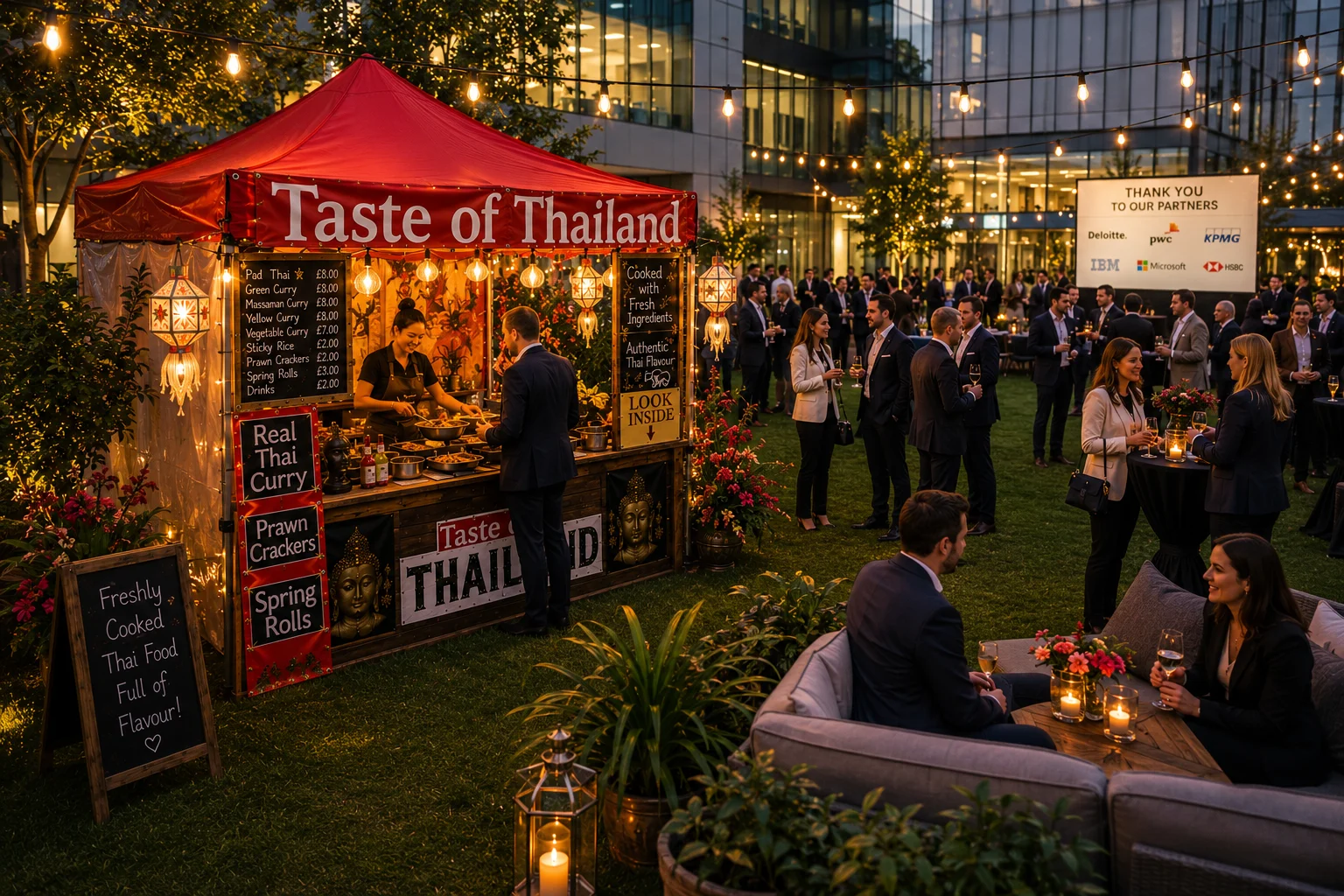
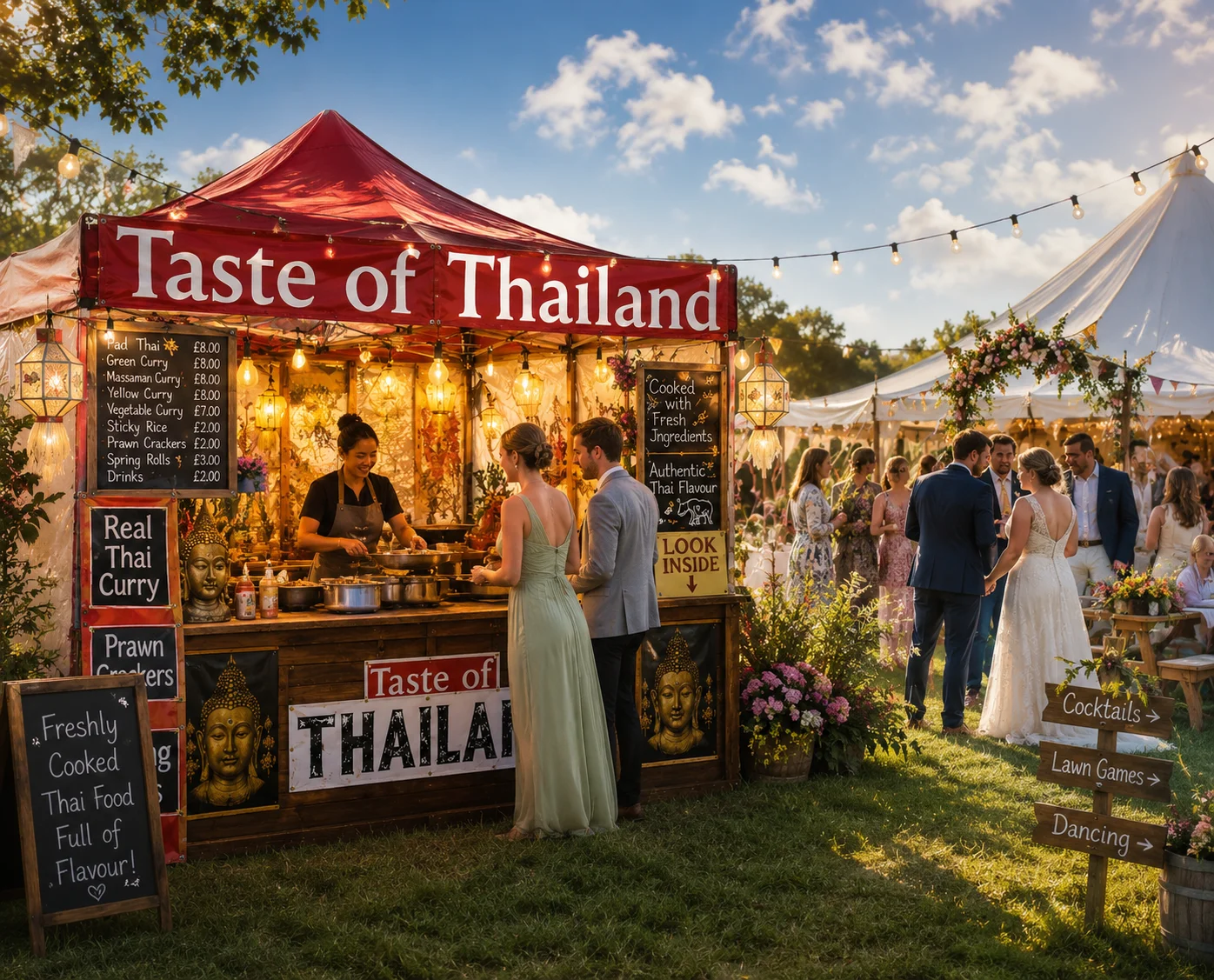
If you are feeding a crowd and would rather not cook, Thai catering is a good fit because the food holds well in trays and the menu can cover most diets. UK Thai caterers commonly quote per guest or per canapé, label allergens and serve from hot-food stations; one published corporate menu runs from 20 to 450 guests. The format varies: delivered trays, a buffet, a hot-food station, or staff handing canapés.
Our own corporate event catering and private event catering pages carry the current menus and the quote process. This page does not publish prices, minimum numbers or service areas, because those are the owner's terms and they change. If you are planning a party, ask for a quote with the date, the number of guests, the venue and the dietary requirements; that is the information any caterer needs.
The catering half of this page is deliberately short. The editorial half is about the food; the commercial half is about the format. Keeping them separate stops the page turning into a menu with a recipe attached.
Party Trays, Buffets and Per-Head Catering
There are three catering formats worth knowing. A party tray is a single dish in a large tray, delivered hot or cold. It is the easiest way to feed a crowd without staff. A buffet is a table of dishes, usually with rice, salads and a curry or two. It needs serving space and a queue. A hot-food station is a caterer cooking or finishing dishes in front of guests; it is the most theatrical and the most expensive.
For a home party, trays are the practical choice. Order one tray of curry, one of rice, one of salad and one of vegetables, and you have a meal. For a wedding or a corporate event, a buffet or station gives you more control over timing and presentation. For a drinks reception, canapés are the format, and they are priced per piece rather than per head.
The mistake is to order all curry. A tray of green curry, a tray of massaman and a tray of red curry is three versions of the same thing. Order one curry, one salad, one vegetable, one rice and one protein, and the table will look and taste like a Thai meal.
How to Plan Quantities Without Guessing
The only reliable number is the caterer's, because it depends on the dishes, the time of day and how much people are drinking. For a home party, use a simple rule: two pieces of each one-bite dish per guest for the first hour, then one piece per guest per hour after that. For a sit-down meal, one shared dish per four people is a good starting point, plus rice.
The dishes that run out first are the ones people can eat with their hands: miang, satay, fried eggs, coconut pancakes. The dishes that last are the curries. If you are unsure, make more one-bite food and less curry. It is easier to reheat a tray than to fry another hundred canapés.
Always ask about allergies before you shop. Nuts, shellfish, fish sauce and gluten are the four that come up most in Thai food. If you are catering for a mixed group, label the dishes and keep the plain rice and the vegetable dish free of fish sauce so there is always something safe.
What to Do the Day Before
The day before is for the things that improve with time: curry paste, marinades, fried shallots, sauces and desserts. Make the curry paste and cook the curry; it tastes better the next day. Marinate the meat for satay or grilling. Fry the shallots and garlic and store them in an airtight jar. Make the dipping sauces and keep them in the fridge. Make the dessert and keep it cold.
The day itself is for the fresh things: herbs, salads, rice, eggs and the one-bite assembly. Do not make miang hours in advance; the leaves wilt and the fillings go soft. Do not cook the rice too early; it needs to be hot or freshly cooled. Do not fry the eggs until people arrive, unless you are serving them cold.
The last thing is the table. Thai food is served family style, from common platters, with the plates appearing as the kitchen finishes them. That is not a formal service style, and it is exactly what a party needs: a table that fills up over the first hour, rather than a plate that arrives all at once.
Frequently asked questions
How much Thai food per person?
For a shared meal, one dish per four people plus rice is a good start. For a drinks party, two one-bite pieces per guest for the first hour. The exact amount depends on the dishes and the crowd. It is easier to add rice and vegetables than to add another curry.
What are good Thai finger foods?
Miang leaf wraps, satay skewers, quail eggs fried with sweet fish sauce, khanom khrok coconut pancakes, spring rolls and fish cakes. The rule is one bite, no cutlery. Pick three and add a cold dish and a dip; that is enough for a drinks party.
Can I make Thai party food ahead?
Yes, most of it. Curries, pastes, marinades, fried shallots, sauces and desserts are better made ahead. Fresh herbs, salads, rice and leaf wraps should be done on the day. Do not assemble miang in advance; the leaves wilt and the fillings soften.
Is Thai food good for a buffet?
Yes. Thai food is served family style, from shared platters, so it suits a buffet better than most cuisines. The one rule is to balance the table: one curry, one salad, one vegetable, one protein and rice. Five curries is not a buffet; it is a theme.
What is miang?
Miang is a Thai one-bite leaf wrap. A leaf is filled with small amounts of coconut, dried shrimp, ginger, lime, chilli, peanuts and a sweet-savoury sauce, then rolled and eaten in one bite. There are many versions, including the Lao miang and the royal mueng kam.
What sauces should I serve with Thai party food?
At minimum, a sweet chilli sauce, a peanut sauce and a fish sauce with lime and chilli. For miang, the sauce is part of the filling. For satay, peanut sauce. For fried food, sweet chilli. Do not put out five sauces; three is enough.
How many dishes for a Thai dinner party?
Four shared dishes plus rice is enough for six to eight people: a curry, a salad, a vegetable and a protein. Add a soup if you want a fifth. The balance matters more than the number, so include something cool, sour and plain as well as hot and rich.
Can I cater Thai food for a mixed-diet group?
Yes. Thai food covers vegetarian, vegan and gluten-free well, but fish sauce and shrimp paste are common, so check the labels. Offer a vegan curry, a plain vegetable dish, rice and a salad, and label everything. Most guests can find a full meal.
Do I need a wok to make Thai party food?
No. A large frying pan and a saucepan will do most of it. A wok helps for stir-fries and frying, but it is not essential. The one piece of kit worth having for khanom khrok is a dimpled pan, and a takoyaki pan works.
How do I keep Thai food warm for a party?
Keep curries in a low oven or a slow cooker, rice in a covered pot, and fried food in a warm oven with the door slightly open so it stays crisp. Do not keep food warm for hours; reheat in batches and put out smaller amounts.

Comments