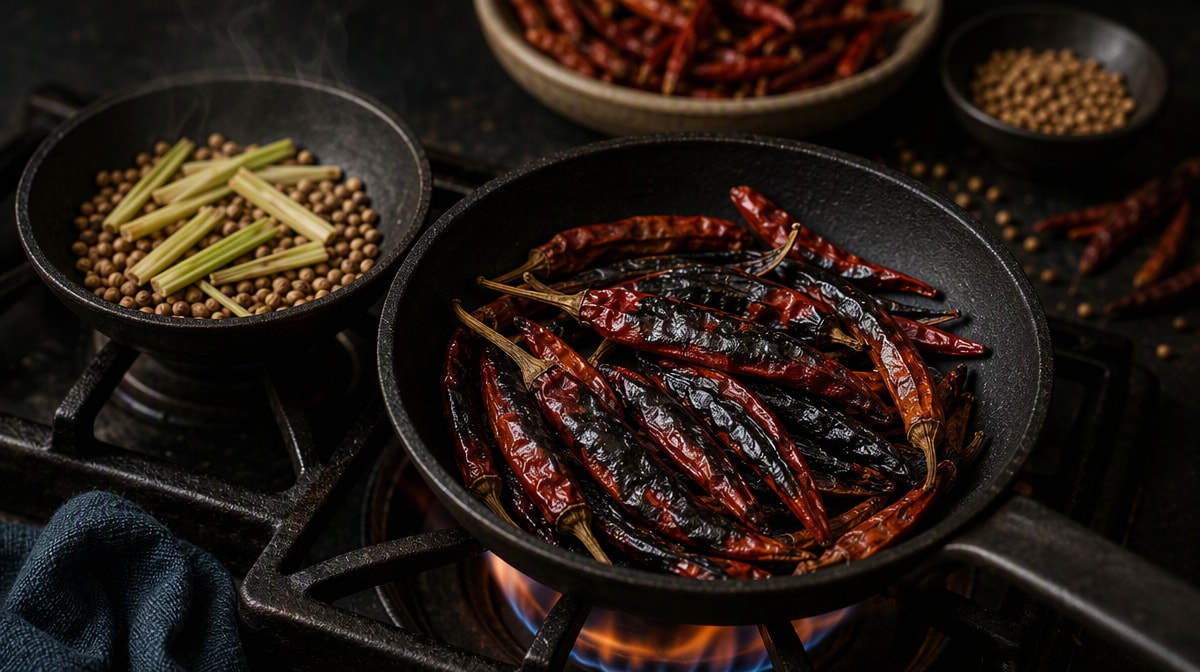
Three to five minutes in a dry pan over medium-low heat, stirring constantly, until the chillies darken slightly and smell smoky. That's the whole technique, and the reason it matters is that the browning happens in that window and not outside it.
This isn't the same as soaking, and the two are used for opposite purposes. Soaking is for curry paste. Dry roasting is for nam prik pao, roasted chilli paste, and it's the step that gives a paste its depth.
Dry roasting against soaking, which is the confusion

If you're making red, green, yellow or panang curry paste, soak your dried chillies. Don't dry-roast them. The paste is built on the fresh aromatics, and soaking rehydrates the chillies so they pound down into the paste rather than sitting as grit in it.
If you're making nam prik pao, dry-roast them. This is the condiment that goes on the table in a jar, and its smokiness is the entire point.
Dry-roasting a chilli for a curry paste that should have been soaked is a real mistake and it tastes wrong. You get a smokier, thinner paste than the recipe was going for, and the smoke competes with the lemongrass and galangal rather than sitting behind them.
Our red curry paste recipe soaks, and the green curry paste recipe follows the same logic.
The method

A completely dry pan. No oil. This is dry roasting, and oil turns it into frying. Heat the pan first, empty, over medium-low.
Add the dried chillies in a single layer. Not a heap, because they need to lie against the metal.
Stir constantly, for three to five minutes. Constantly is the operative word. They go from pale to burnt quickly and unevenly if you leave them.
Watch for the signs: they darken slightly, they smell smoky and roasted rather than raw, and a few char spots appear. Smell is the most reliable test.
Take them out immediately at that point. Don't wait for a deeper colour.
Overheating gives you a bitter paste, and there's no recovering from it. The window between "lightly toasted" and "burnt" is roughly a minute. This is why the heat is medium-low and the pan is dry rather than hot. A hot pan scorches the outside before the inside has warmed.
Charring shallots and garlic alongside
For nam prik pao, the shallots and garlic go in the same dry pan and are charred with the chillies. A little blackening on the shallots is desirable here, because it's a condiment paste and the char is flavour rather than error.
Modern Thai Food describes the wider sequence for a curry paste, and it's worth reading as a model of the whole process: place a wok over medium heat and dry-roast the onions and garlic, adding a little water to prevent burning. When slightly colored, after 5 to 10 minutes, add the lemongrass, coriander roots and galangal. Cover the wok to help the cooking process.
Note the water. It's a surprising and important detail. A splash of water slows the cooking and prevents scorching without stopping the caramelisation. It's the difference between roasting and burning.
Doing it without a proper pan
You don't need a wok, and you don't need a special dry roasting pan. What you need is a pan that holds heat and a bit of room to move the chillies around.
A heavy cast iron or stainless pan on a medium flame does it perfectly well. A thin non-stick is the one to avoid, because it can't sustain a temperature and the chillies scorch before the middle of the pan is warm.
A small dry frying pan is better than a large one, for the same reason batch size keeps coming up on this page. A crowded pan drops in temperature and the chilli on the bottom overcooks while the one on top is still pale.
If you're doing this with the window open, use a hood if you have one. This is a dry method and it will produce smoke for about ninety seconds, which is correct rather than a warning sign. The smoke alarm going off is a sign you've gone too far.
The dry spices, roasted separately
The one thing to take from that method is that the dry spices are roasted separately, and after.
Modern Thai Food continues: in another wok or pan, roast the coriander, mace, cumin, cardamom and cloves until fragrant. Combine with the peppercorns and grind to a fine powder. Blend all the cooked curry paste ingredients in a food processor to a fine paste, then add the ground spices.
Why separate? Seeds and bark need different treatment from chillies. Whole coriander and cumin seeds are dense and take real heat for a couple of minutes. A chilli skin burns in seconds. Put them in together and the spices scorch while the chillies are still pale.
Roast until fragrant, and only until fragrant. Fragrance is the signal for seeds, the same way colour is the signal for chillies.
What you're actually doing, chemically
It's the Maillard reaction, and it's worth understanding because it tells you when to stop.
Browning is a reaction between amino acids and reducing sugars at heat. It produces hundreds of new aromatic compounds that don't exist in the raw ingredient. The heady, roasted, almost smoky smell of a toasted chilli isn't the chilli aromatic. It's the products of browning.
Two practical consequences.
It accumulates. Browning generates more browning compounds as it goes, and so does the bitter, acrid note once the compounds have themselves charred. The pleasant part of the roast is early and the unpleasant part arrives faster than you expect.
And it's the same process as the second step of a curry paste in oil. When you fry curry paste in oil before adding liquid, the step we make much of elsewhere on this site, you're running the same reaction in oil rather than dry. See our yellow curry guide for why that step isn't optional.
It doesn't change the heat. Toasting a chilli doesn't make it hotter or milder in any meaningful sense. It changes the flavour entirely while leaving the capsaicin where it was. So don't toast a chilli to tame it.
Choosing the chillies
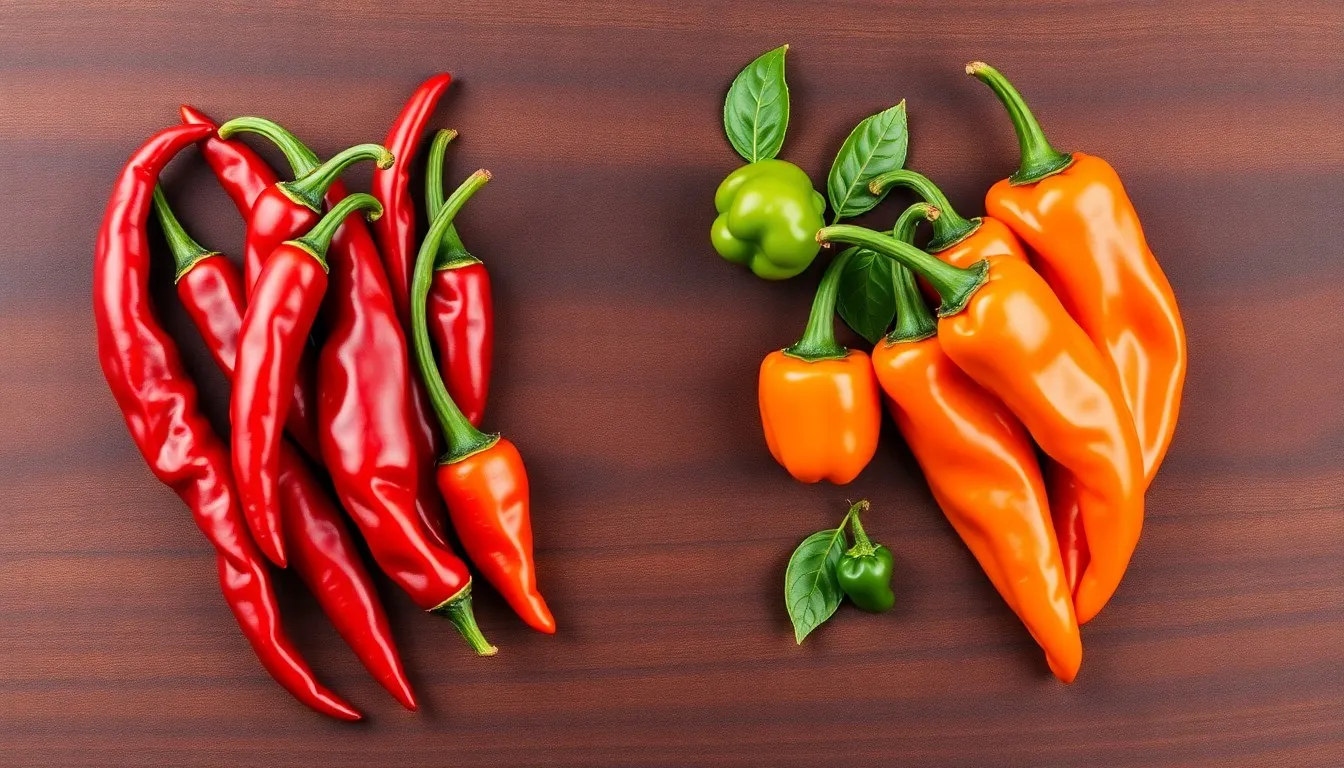
For nam prik pao, large mild dried chillies. Guajillo, puya or spur chillies are the usual choices, because the point is the roast and the body rather than the burn.
For a spicier paste, dried bird's eye, prik haeng, which is a deeper and smokier ingredient than fresh bird's eye. We have covered the varieties and what's actually authentically bird's eye in our chilli guide.
Mixing types is a good idea and several sources recommend it. A large mild chilli for body and a hotter one for heat, which is more controllable than one chilli doing both jobs.
A lighter roast, for when you want depth without smoke
Adjusting the roast level is rarely covered and it's more useful than it sounds.
A light roast is barely coloured, just fragrant, no char. You get a faint warmth in the background and none of the smoke. This is the right choice when the chilli is going into a curry that already has a lot going on.
Medium is the default described above, with a few char spots. Noticeably roasted, still edible as paste.
Dark is well charred, and only for a nam prik pao meant to be eaten on its own with rice. Beyond this it's bitter and you should start again.
What a good nam prik pao looks like
Since you can't always judge by smell alone, here's what you're aiming for.
The colour is a deep brick red going to brown, not black. Genuine char spots are scattered across the chillies rather than one end being darker than the other, which is what happens when they're too spread out or the pan is too cold in places.
The texture when you handle them is leathery and flexible rather than crisp. If they're still snapping, they need longer, though check they're not so old they've gone brittle.
The smell is the real test and it's the one to trust. Toasted, slightly smoky, sweet-ish. Not acrid, not burnt, and definitely not like a burning rubber. If you catch any of the latter, start again.
And once ground with the garlic and shallots, the paste should be thick enough to hold a spoon upright for a moment before it slumps. If it's runny you didn't cook off enough moisture.
If something goes wrong

A light roast, for the sake of troubleshooting, comes in stages. Chillies scorched in patches rather than evenly is usually too much heat or too many in the pan. Use a medium-low flame, spread them in a single layer, and move them constantly. Crowding drops the pan temperature and then the ones underneath overcook.
They went from pale to black in seconds means the pan was too hot. Start cold or warm rather than screaming hot, and remember the pan continues to heat while you work.
The whole kitchen is smoky and the paste is still weak means dry roasting is a dry method and you're supposed to be getting aroma rather than a smoke bomb. The window is short, and if you're getting heavy smoke you've gone well past fragrant. Open a window, use a hood if you have one, and go faster.
They're evenly toasted but the paste still tastes flat is almost always not the roast. Check that you fried the paste in oil afterwards, which is the step that concentrates it, and check your dry spices were roasted and ground separately rather than added raw.
Chillies that are brittle and shattering rather than pliable were already brittle, either over-dried or old. They'll still roast, but they fragment and some scorch before others change. Keep them moving and accept some unevenness.
And nothing appearing to happen in the first minute is normal. The pan has to heat and the chillies have to lose moisture before anything browns. It starts at about ninety seconds, and both pan temperature and quantity affect it, which is why the smell rather than the clock is the signal.
The paste, once you've made it
Once the paste is made it's worth knowing what you're looking at, because nam prik pao behaves differently from a curry paste in the pan.
It keeps longer, because the roast has driven off moisture and the oil and shrimp paste in it are both stable. About a week in the fridge and considerably longer frozen, and unlike a fresh curry paste it actually improves for the first few days as the flavours marry.
It's thicker and darker than any curry paste, closer to a jam than a sauce. If you thin it with water you get something closer to a dipping sauce, which is a legitimate thing to do and how some people serve it.
And the heat is more present than a curry paste of the same chilli count would give you, because there's no coconut milk in there to buffer it. Treat a spoonful as a chilli in its own right rather than as a mild seasoning.
What a real paste takes
Thai Sensations describes buying paste in a Bangkok market and notes that this leaves it to the experts to pound and blend the 15 to 30 different ingredients required for each paste.
Nobody builds that profile in a jar of powder, and it's why pound-your-own is worth the effort if you cook this often. Our green curry paste recipe and red curry paste recipe have the quantities, and the pestle method guide covers the equipment if you have no processor.
Most Thai households buy their paste rather than making it, and that's a reasonable position rather than a shortcut. One of our sources puts it plainly: homemade is for special occasions or for when controlling the heat matters.
After the roast
Grind it with the fried or charred aromatics, then fry the paste in oil for a few minutes before it goes into anything else. That last fry drives off moisture and concentrates it further.
Nam prik pao keeps about a week in the fridge or longer frozen, and one of our sources suggests freezing it outright if you're not using it quickly. Ice cube trays are the practical way, a cube being about a tablespoon.
It's genuinely versatile at the table. Tom yum, pad thai, fried rice, and stirred into things where you want heat and depth without a fresh chilli.
Doing this for a curry paste, and the mistake people make
Worth saying one more time because it's the most common error on this technique.
If you dry-roast chillies for a red or green curry paste, you will notice the curry tastes smokier and thinner than the recipe promised, and you'll probably conclude you need more paste or more coconut milk. Neither is true. The fix is to soak rather than roast, and to re-make the paste.
The reason is that soaking does two jobs. It rehydrates the chilli so it pounds down into the paste rather than staying as separate pieces, and it softens the skin so the whole thing becomes cohesive. Dry-roasting does the opposite to the second job, because a dried chilli that has already been dried stays firm however long you soak it afterwards.
So if you're using supermarket dried chillies, which are already fully dried, soaking is even more important than with fresh ones. Ten to fifteen minutes in warm water, not a splash in cold, and don't skip it because you think they'll fall apart anyway.
And if you want both smokiness and a curry paste, make two pastes and combine them off the heat, which is what a lot of Thai kitchens end up doing anyway.
A note on sources
The chemistry here is well established. The timings are consistent across the sources and have clearly been written by people doing it rather than describing it. The chilli selection advice is accumulated cook experience and varies by what you can get hold of, which is more restrictive in the UK than in Thailand.
Trust the smell over the clock, and over both of them over anyone's timer.
Frequently asked questions
How long do you dry roast chillies for?
Three to five minutes in a dry pan over medium-low heat, stirring constantly, until they darken slightly and smell smoky and roasted. Take them off the moment you smell it rather than waiting for colour. The window between perfectly toasted and burnt is about a minute, which is why the heat stays low and the stirring stays constant.
Should I dry roast or soak chillies for curry paste?
Soak them for red, green, yellow and panang curry paste. Rehydration is what lets them pound into the paste rather than sit as grit. Dry-roast them only if you're making nam prik pao, the roasted chilli condiment, where the smoke is the point. Dry-roasting chillies for a curry paste gives a smokier, thinner result than intended.
Do I put oil in the pan when dry roasting chillies?
No. Dry roasting means a completely dry pan, and oil turns it into frying, which is a different process with a different result. The pan should be heated empty first, then the chillies added in a single layer rather than a heap, so they sit against the metal.
Why are my dry-roasted chillies bitter?
You went too far, and it can't be undone. The pleasant roasted compounds form early in the browning reaction and the acrid bitterness arrives faster than most people expect. Use medium-low heat, stir constantly, and take them off when they smell roasted rather than waiting for a deeper colour.
Does dry roasting make a chilli hotter or milder?
Neither, meaningfully. It changes the flavour completely by triggering the browning reaction, but the capsaicin is unaffected. Don't toast a chilli to tame it. Deseed it and remove the white pith instead, which is where most of the heat actually is.
What is nam prik pao and where is it used?
It's roasted chilli paste, made from dry-roasted chillies ground with charred garlic and shallots, and it's a staple table condiment rather than a curry ingredient. It's used in tom yum, pad thai, fried rice, and eaten with rice. It keeps about a week in the fridge and freezes well.
Should I roast the spices at the same time as the chillies?
No, roast them separately and after. Whole seeds and bark like coriander, cumin, cardamom, mace and cloves need a couple of minutes at real heat, while a chilli skin burns in seconds. Put them together and the spices scorch while the chillies are still pale. Roast each until fragrant, not until dark.
Can I dry roast chillies in the oven instead?
Yes, and it's a reasonable alternative. A low oven on a tray works, and it's more forgiving than a pan because the heat is less aggressive. The trade is that the roasting is less even and you lose the immediacy of a pan, where you smell the moment it's right. For a pan method this is a five-minute job that can't be left to walk away from.


Comments