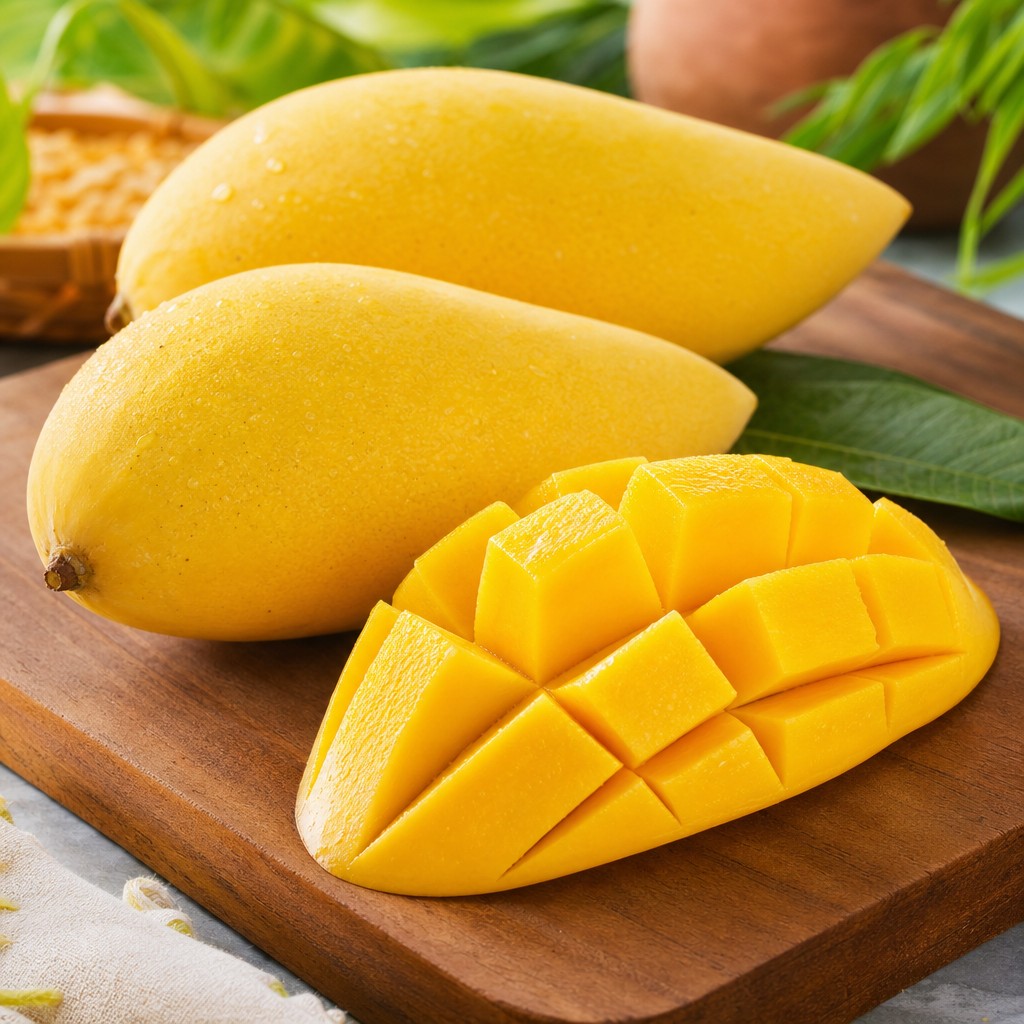
You've planned to make mango sticky rice, but the mango from the supermarket is rock-hard and sour. It happens constantly: mangoes are picked under-ripe to survive shipping. The good news is you can speed up ripening considerably at home. The bad news, which I'll be honest about, is that you can't truly ripen a mango in minutes: real ripening takes a day or two. Here's how to do it as fast as nature allows, and how to spot the myths that don't actually work.
The quick answer
Pop the mango in a paper bag with a ripe banana, fold it loosely closed, and leave it at room temperature. The banana floods the bag with ethylene (the natural gas that ripens fruit) and a slightly-underripe mango can be ready in a day, sometimes less. Burying it in a jar of uncooked rice works even faster. What doesn't work is the microwave: it softens the fruit but never makes it sweet.
Why mangoes ripen — the ethylene trick
Mangoes are one of those fruits that keep ripening after they're picked, driven by a natural plant hormone called ethylene that the fruit gives off as it matures. Ethylene is what turns starch into sugar and firm flesh into soft, sweet fruit. Every method below is really just a way to concentrate ethylene around the mango, or to add more of it from another fruit.
The fastest methods that actually work
1. Paper bag + a ripe banana (fastest reliable method)
Put the mango in a brown paper bag with a ripe banana (or an apple), and fold the top over loosely. Don't seal it tight. The banana is an ethylene factory, and trapping that gas around the mango speeds things up dramatically. A mango that's only slightly firm can soften and sweeten in as little as a day; a harder one takes one to two. Check it morning and night.
Why a paper bag and not plastic? Paper lets a little air through, so moisture escapes and the fruit doesn't go mouldy, while still holding the ethylene in. A sealed plastic bag traps damp and the mango rots before it ripens.

2. The rice (or popcorn) jar — even faster
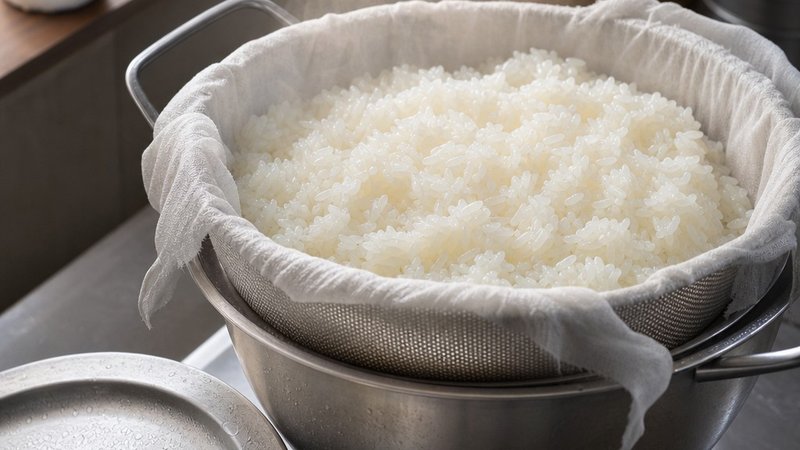
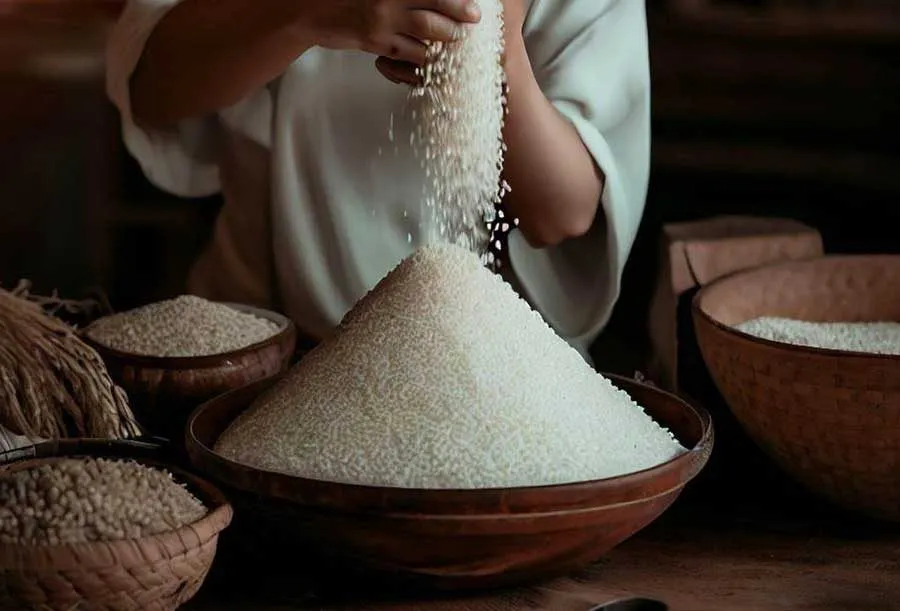
An old trick that genuinely works: bury the whole mango in a container of uncooked rice (or dry popcorn kernels). The grains trap a lot of air and concentrate the ethylene tightly around the fruit, so it can ripen in 6–12 hours. The catch is that it's so fast you must check it every few hours; it's easy to go from hard to over-ripe overnight.
3. A warm spot on the counter (slowest, best flavour)
If you're not in a rush, just leave the mango on the counter, out of direct sun, somewhere warm. It'll take longer (up to 5–8 days from quite green), but slow, natural ripening gives the best flavour of all. Never put an unripe mango in the fridge: cold halts ripening completely.
Which method should you use?
| Method | Speed | Notes |
|---|---|---|
| Rice / popcorn jar | 6–12 hours | Fastest; check often, it over-ripens easily |
| Paper bag + banana | ~1 day | Fast and reliable; the one I'd use |
| Paper bag alone | 1–2 days | Steady, low-effort |
| Warm counter | 5–8 days | Slowest, but the best flavour |
In short: rice jar if it's an emergency, paper bag and a banana for most occasions, and the open counter if you've planned ahead.
The myths: microwave and oven "ripening"
You'll see hacks telling you to microwave a pricked mango in bursts, or warm it in a low oven. Don't bother for mango sticky rice. Heat softens the flesh by breaking down its cell walls, but it does not ripen the fruit; it doesn't convert the starch to sugar, so you end up with a mango that's mushy and still bland. Ripening is a chemical process driven by ethylene over time; there's no genuine shortcut around it.
Can't decide what to eat tonight?
Take our 60-second quiz and we'll pick for you
How to tell when a mango is ripe
Don't trust colour alone: it varies by variety (some mangoes stay green even when perfectly ripe). Instead:
- Smell the stem end: the most reliable test. A ripe mango smells sweet and fragrant there. No smell means it's not ready.
- Give it a gentle squeeze: it should yield slightly, like a ripe avocado, not feel hard and not squash to mush.
- Heft: a ripe mango feels heavy for its size, full of juice.
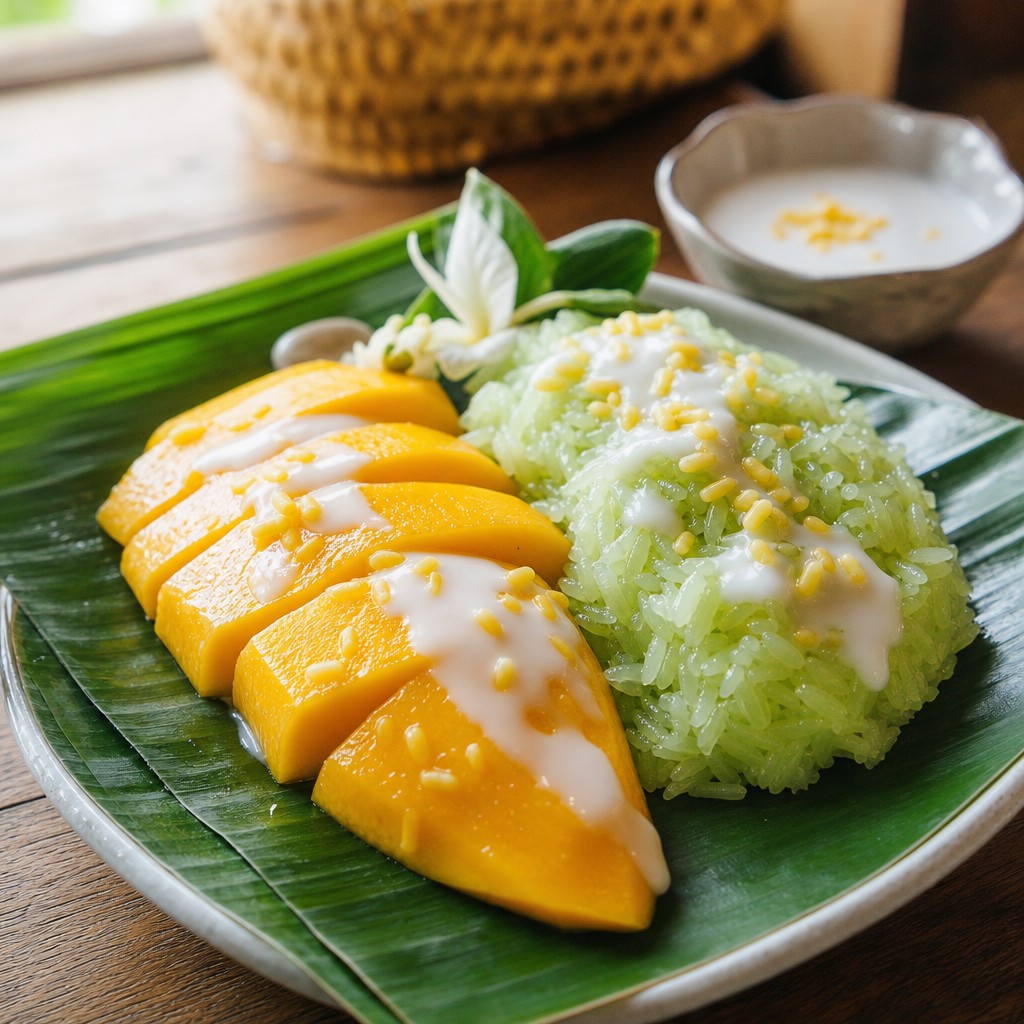
For mango sticky rice specifically, you want it ripe and sweet but still firm enough to slice cleanly, not collapsing. A slightly-soft, fragrant mango is perfect; an over-soft, wrinkled one will be hard to slice and can taste fermented.
Which mango — and what colour means
The classic Thai choice is nam dok mai, which ripens to a smooth golden yellow and is sweet and fibre-free. The best widely-available substitute is a honey (Ataulfo) mango: small, deep gold, and it wrinkles slightly when ripe. Be careful with colour as a guide, though: a Keitt mango, for example, stays green even when fully ripe, so go by smell and feel, not looks.
| Variety | Ripe colour | Good for sticky rice? |
|---|---|---|
| Nam dok mai | Golden yellow | Best; sweet, fibre-free |
| Honey / Ataulfo | Deep gold, slight wrinkles | Excellent substitute |
| Keitt | Stays green | OK; judge by smell/feel, not colour |
| Tommy Atkins | Golden with red blush | Workable but more fibrous |
And a last thought: if you have the time, the slow counter method gives the sweetest, most fragrant fruit. The bag and rice tricks are about speed, not flavour: great when you're cooking tonight, but a few patient days on the worktop is what a perfect mango really wants.
Once it's ripe
As soon as the mango is ripe, you can move it to the fridge to hold it for a few days (3–7) until you're ready to cook; the cold simply pauses things. Just bring it back to room temperature before serving, because mango sticky rice is best when nothing is fridge-cold. If you end up with more ripe mango than you need, peel and cube it and freeze it for up to a few months; perfect for smoothies, though for sticky rice you'll always want fresh. Then all that's left is to make the rice; see how to make mango sticky rice without a steamer.
Ripen it well and the difference is night and day: a properly ripe, fragrant mango is what turns a good plate of sticky rice into a great one.
Frequently Asked Questions
How do you ripen a mango quickly?
Put it in a paper bag with a ripe banana or apple, fold the top loosely and leave it at room temperature; a slightly underripe mango can be ready in a day. Burying it in uncooked rice is even faster (6–12 hours). Both work by concentrating ethylene gas around the fruit.
Does the paper bag method really work?
Yes. A mango gives off ethylene as it ripens, and a paper bag traps that gas around it to speed things up. Fold the bag loosely rather than sealing it, so moisture can escape and the fruit doesn't go mouldy. Adding a banana makes it faster still.
Can you ripen a mango in the microwave?
Not really. The microwave softens the flesh but doesn't ripen it; it won't turn the starch into sugar, so the mango ends up mushy and still bland. For sweet fruit you need real ethylene ripening over a day or two.
How long does it take to ripen a mango?
On the counter from quite green, about 5–8 days. In a paper bag with a banana, often just 1–2 days. In a jar of rice, as little as 6–12 hours; check it frequently so it doesn't over-ripen.
How do you know when a mango is ripe?
Smell the stem end (a ripe mango smells sweet and fragrant there) and give it a gentle squeeze; it should yield slightly like a ripe avocado. Don't rely on colour, as some varieties stay green when ripe.
Should you ripen a mango in the fridge?
No: cold halts ripening. Keep an unripe mango at room temperature. Only put it in the fridge once it's ripe, to hold it for a few days until you need it.
Can you ripen a mango after it's been cut?
No. Once the skin is cut the fruit can't keep ripening, so an underripe cut mango will stay firm and sour. Use it in something like a salad or salsa instead, and ripen whole mangoes before cutting.
What ripeness should the mango be for mango sticky rice?
Ripe and sweet, but still firm enough to slice cleanly, not mushy. It should smell fragrant and give slightly when pressed. A nam dok mai or honey (Ataulfo) mango at that stage is ideal.

Comments